









FinTech brand guardianship: Why consistency is your most underrated growth strategy

In the rapidly evolving financial technology landscape, enterprises face a constant challenge: balancing innovation with recognition. While product development and technological advancement often take centre stage, FinTech brand guardianship remains curiously undervalued as a strategic growth lever.
The most successful FinTech organisations recognise that consistent branding isn’t merely an administrative exercise—it’s a powerful catalyst for sustainable expansion and customer trust that delivers substantial brand consistency benefits.
As established FinTech enterprises navigate new market opportunities, mergers, acquisitions, and product launches, the integrity of their brand becomes increasingly vulnerable.
Yet this vulnerability creates a remarkable opportunity: when managed strategically through effective FinTech brand management, brand consistency becomes a formidable competitive advantage with measurable brand consistency benefits.
Understanding the strategic nature of brand consistency requires first acknowledging its complexity.
While many organisations recognise the superficial importance of visual cohesion, fewer appreciate how FinTech brand guardianship fundamentally shapes customer perception, team alignment, and market positioning—creating a foundation for sustainable growth that technical innovation alone cannot provide.
Why FinTech brands struggle with consistency
Even the most established financial technology enterprises face significant challenges in maintaining brand consistency as they scale. The very nature of rapid growth creates natural pressure points where brand integrity becomes compromised.
Complexity increases with growth
As FinTech organisations expand across borders, acquire complementary businesses, or launch new product lines, their brand ecosystem grows increasingly complex.
Each new territory introduces unique regulatory requirements, cultural nuances, and market expectations—all of which create tension with centralised brand management.
Without strategic brand management strategy, this complexity creates inconsistencies that undermine customer recognition and trust.
When a FinTech company operates across multiple markets with different visual expressions, messaging approaches, or product naming conventions, the cumulative brand equity built over years can quickly fragment.
This fragmentation represents a significant challenge for FinTech brand management efforts.
Internal teams and external partners dilute brand integrity
The distributed nature of modern marketing operations presents another substantial challenge. As teams grow across different locations, and as external agencies, freelancers, and implementation partners multiply, interpretation of the brand naturally diversifies.
Marketing teams in separate regions may develop localised interpretations of central guidelines.
Product teams might create features with naming conventions that don’t align with broader brand architecture. External agencies may prioritise creative expression over brand consistency.
The result is gradual but significant brand dilution that erodes the very foundations of customer trust.

What is FinTech brand guardianship—and why does it matter?
FinTech brand guardianship represents a proactive, strategic approach to brand management that goes far beyond enforcing static guidelines.
It embodies a dynamic system of principles, processes, and tools that ensure brand consistency while enabling necessary evolution.
Moving beyond guidelines: Dynamic brand stewardship
While brand guidelines for FinTech companies provide essential foundations, truly effective guardianship requires living brand systems that evolve alongside the business.
Static PDF guidelines quickly become outdated as organisations introduce new products, enter new markets, or respond to competitive pressures.
Dynamic stewardship acknowledges the tension between consistency and evolution. It creates frameworks that preserve core brand elements while allowing for contextual adaptation. This approach ensures the brand remains recognisable while responding to changing market conditions.
Research from McKinsey’s “The growth triple play: Creativity, analytics, and purpose” shows that companies integrating creativity, analytics, and purpose grow twice as fast as their peers.
This principle extends to brand management, where consistent expression across touchpoints significantly improves customer satisfaction and revenue performance.
For FinTech enterprises operating in high-trust environments, these consistency benefits directly impact customer acquisition costs and lifetime value.
Brand guardianship as a strategic growth lever
When elevated from tactical concern to strategic imperative, brand consistency in FinTech becomes a powerful growth accelerator.
Consider Zurich’s One product naming initiative, where strategic guardianship drove significant improvements in customer understanding and product uptake.
By embedding new offerings within a coherent naming architecture, Zurich created immediate recognition and comprehension advantages.
Customers could intuitively understand how products related to one another, significantly reducing education costs and accelerating adoption rates.
This architectural consistency directly supported Zurich’s expansion strategy while strengthening its market position.
Forrester’s research on branding consistency reinforces this strategic perspective, revealing that enterprises with strong brand governance frameworks achieve significant improvements in market performance and digital conversion rates.
These measurable outcomes demonstrate why effective FinTech brand guardianship must be considered a strategic priority.

Four pillars of effective brand guardianship
Implementing effective FinTech brand guardianship requires focus on four essential pillars that collectively create a robust foundation for consistent expression across all touchpoints.
When strategically implemented, these pillars transform brand management from a passive compliance exercise into a dynamic growth engine.
Tone of voice consistency
- Establishing clear tone of voice in FinTech communications ensures messages resonate with consistency across all channels and contexts.
- Creating practical guidelines that define personality attributes, communication principles, and contextual adaptations helps teams maintain verbal identity regardless of content type or channel.
- Implementing regular content audits across digital properties, marketing materials, product interfaces, and customer communications identifies inconsistencies before they become entrenched.
- Developing training programmes that help customer-facing teams embody brand voice authentically rather than mechanically following rules.
- Creating governance frameworks that maintain consistency whilst enabling necessary adaptation for specific audiences or regulatory environments.
Visual identity discipline
- Maintaining strong visual identity in FinTech sectors creates instant recognition in crowded marketplaces.
- Developing comprehensive design systems rather than isolated assets enables teams to adapt visuals for new contexts while preserving core identity elements.
- Creating centralised asset management platforms with versioning control prevents outdated or unauthorised visuals from undermining brand consistency.
- Establishing clear hierarchies for visual elements ensures the most distinctive brand assets receive appropriate prominence.
- Implementing regular visual audits across all touchpoints identifies inconsistencies and opportunities for strengthening recognition.
Asset and content management
- Implementing robust digital asset management solutions creates a single source of truth for all bra materials.
- Developing clear approval workflows and governance processes ensures new assets adhere to brand guidelines for FinTech businesses before reaching market.
- Creating education programmes that help internal teams understand not just how to apply guidelines, but why consistency matters to business outcomes.
- Establishing centralised oversight with distributed access enables both control and operational efficiency.
- Developing clear archiving protocols ensures outdated assets don’t resurface and compromise brand integrity.
Brand architecture management
- Establishing clear relationships between master brands, sub-brands, product brands, and descriptors creates natural clarity for customers.
- Developing naming conventions that scale across product portfolios ensures cohesive presentation even as offerings expand.
- Implementing consistent brand architecture principles during mergers and acquisitions preserves existing equity while integrating new properties.
- Creating decision frameworks for new product naming and branding ensures strategic coherence rather than ad hoc decisions.
- Establishing governance protocols for partnerships and co-branding opportunities protects core brand equity.
Brand guardianship in action: A FinTech success story
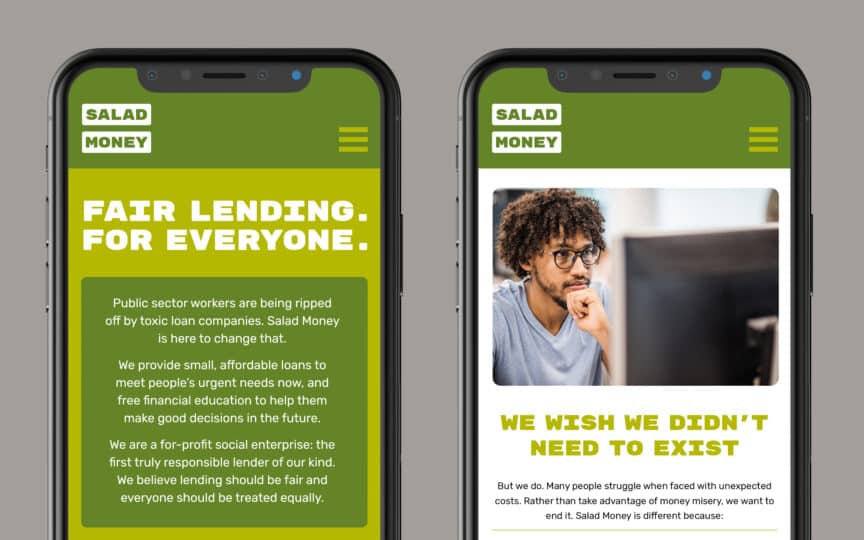
The abstract principles of brand guardianship become tangible when examining concrete examples of implementation. Salad Money demonstrates how strategic brand consistency in FinTech directly contributes to market recognition and business performance.
As a responsible lender focused on NHS and public sector workers, Salad Money operates in a highly competitive and regulated environment.
By implementing rigorous visual consistency across all touchpoints—from digital applications to marketing communications—Salad Money created immediate recognition advantages in a crowded marketplace.
Their distinctive visual identity, consistently applied across all channels, created a cumulative familiarity effect that accelerated brand recognition.
This visual discipline didn’t just strengthen reputation; it directly contributed to Salad Money’s recognition as “LendTech of the Year” at industry awards.
The consistency extended beyond visual elements to encompass clear product naming conventions and straightforward service descriptions.
This clarity helped customers navigate offerings confidently, supporting Salad Money’s mission to provide responsible financial services to underserved public sector workers.
Most notably, Salad Money demonstrates how FinTech brand guardianship directly supports business objectives when elevated from administrative function to strategic initiative.
Their brand consistency wasn’t simply about visual uniformity—it was a deliberate strategy to build recognition, trust, and efficiency throughout the customer journey.

How to future-proof your FinTech brand guardianship
Implementing effective brand guardianship requires systematic approaches that anticipate future challenges while solving immediate consistency issues. For FinTech enterprises navigating rapid change, these practices create resilience within brand management.
Regular brand audits
Systematic assessment provides the foundation for effective guardianship.
Consider implementing:
- Quarterly consistency reviews across all customer touchpoints, from marketing materials to digital platforms and product interfaces.
- Structured evaluation of brand expression across different territories and business units.
- Assessment of partner and third-party implementations against established guidelines.
- Regular compliance checks for regulated communications elements.
- Competitive analysis to identify potential distinctiveness erosion.
Research from The Financial Brand emphasises that proactive brand management is critical in the financial sector.
Their insights indicate that organisations with systematic audit processes identify and address brand inconsistencies significantly faster than those taking a reactive approach—a crucial advantage in rapidly evolving FinTech markets.
Evolving guidelines for new challenges
Static guidelines quickly become irrelevant in rapidly changing environments.
Future-proof your FinTech brand strategy by:
- Developing modular guideline systems that can incorporate new requirements without complete redesign.
- Creating digital guideline platforms rather than static PDFs to enable real-time updates.
- Establishing clear processes for guideline evolution that balance consistency with necessary adaptation.
- Implementing version control and clear communication when guidelines change.
- Incorporating flexibility for market-specific requirements while preserving core identity elements.
Zable’s modernisation of their FinTech visual identity demonstrates how guidelines can evolve while maintaining recognition.
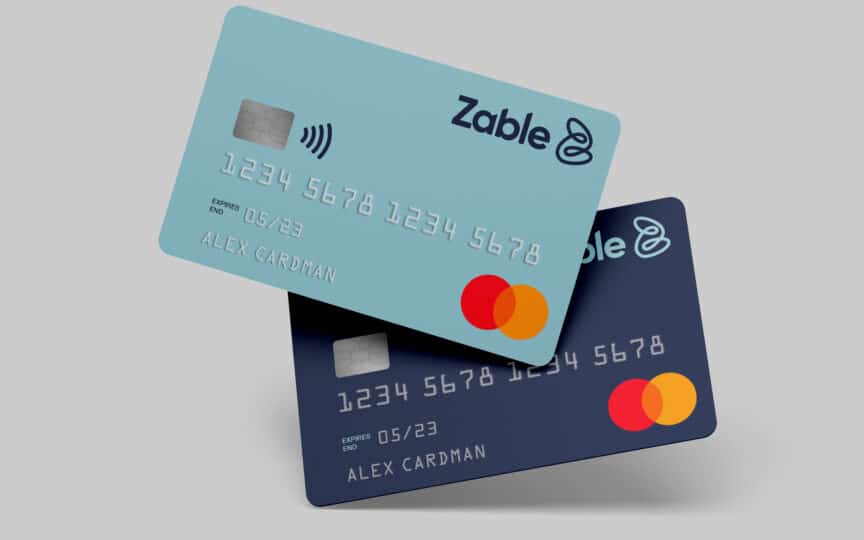
By updating their visual system incrementally rather than revolutionarily, they preserved valuable brand equity while addressing changing marketplace expectations.
Aligning internal and external teams
Even perfect guidelines fail without proper implementation.
Strengthen your brand consistency in FinTech by:
- Creating comprehensive onboarding programmes that explain both functional guidelines and strategic rationale.
- Developing certification processes for key brand implementers across territories.
- Establishing clear governance structures with defined responsibilities and escalation paths.
- Building collaborative review processes that identify inconsistencies early in development.
- Creating ongoing education programmes as guidelines evolve.
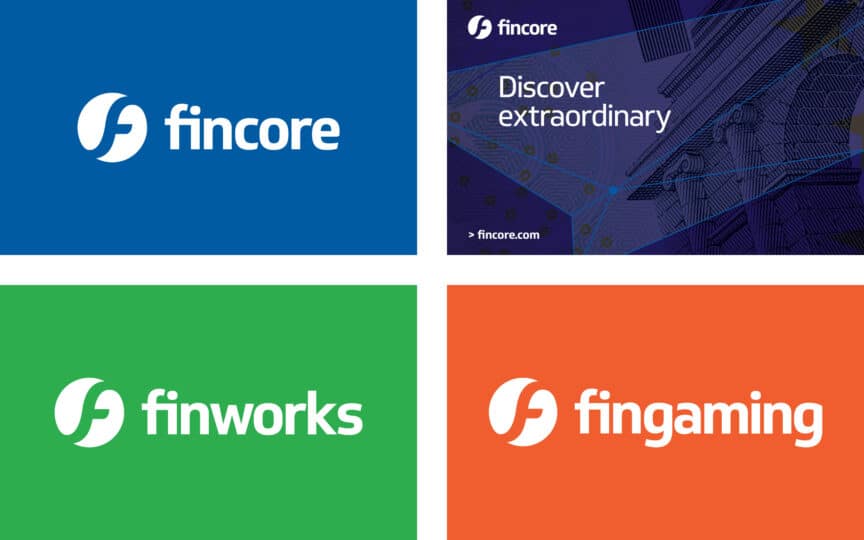
Fincore’s brand architecture refresh demonstrates the importance of stakeholder alignment.
By involving their team in guideline development rather than simply imposing standards, Fincore achieved significantly higher compliance rates and reduced local resistance to brand governance.
The strategic advantage of brand guardianship
For FinTech enterprises navigating increasingly complex competitive landscapes, FinTech brand guardianship represents a surprisingly powerful strategic advantage.
When consistency becomes a deliberate strategy rather than an administrative burden, it creates significant operational benefits while strengthening market position.
Consistency reduces friction throughout the customer journey, from acquisition through onboarding to ongoing engagement.
When customers encounter coherent experiences regardless of touchpoint, their confidence increases—particularly important in financial services where trust remains paramount.
Perhaps most importantly, strategic brand guardianship creates cumulative advantages over time. Each consistent interaction builds upon previous experiences, strengthening recognition and trust rather than diluting it.
This compounding effect represents the true strategic value of brand consistency in FinTech—creating momentum that accelerates rather than diminishes as organisations grow.
Research from McKinsey confirms that organisations with strong brand governance frameworks consistently outperform competitors across key financial metrics.
Meanwhile, a study by Demand Metric found that brands with consistent presentation are 3.5 times more likely to achieve excellent brand visibility.
This disciplined approach to brand management can also improve customer retention and reduce acquisition costs—particularly for FinTech enterprises, where trust, clarity and recognition are essential to gaining a competitive edge.
By elevating brand guardianship from tactical concern to strategic imperative, FinTech leaders position their organisations for sustainable growth built on the foundation of coherent, recognisable experiences across all touchpoints.
In an industry where differentiation increasingly depends on customer experience rather than feature sets alone, this consistency creates powerful competitive advantages that compound over time.
The most successful FinTech enterprises recognise that FinTech brand guardianship isn’t simply an administrative exercise—it’s a sophisticated growth strategy that delivers measurable results when implemented with strategic intent and operational discipline.
When FinTech leaders elevate brand consistency from tactical concern to strategic priority, they create compounding advantages that traditional approaches cannot match.
Effective guardianship doesn’t merely preserve brand equity—it systematically builds it through every customer interaction, market expansion, and product launch.
For marketing leaders seeking sustainable competitive advantage in increasingly crowded markets, the message is clear: FinTech brand guardianship represents your most underutilised strategic asset.
By implementing robust governance frameworks, living brand systems, and systematic oversight, you transform consistency from administrative burden to powerful growth engine—creating momentum that accelerates rather than diminishes as your organisation expands.

Ready to transform your FinTech brand strategy?
Is your organisation fully leveraging the untapped power of brand consistency?
The examples of Zurich, Salad Money and Fincore show what’s possible when FinTech companies embrace professional brand guardianship—yet many still rely on outdated methods that hold back growth.
At Fabrik, we turn brand consistency from a compliance task into a competitive tool. Our methodology reshapes how financial technology enterprises manage their brand ecosystems, unlocking measurable improvements in customer acquisition, recognition and trust.
Kick-start your journey with a comprehensive brand audit—pinpointing misalignments, surfacing opportunities, and building frameworks that enable consistency to drive growth, not just governance.
Contact Fabrik today to learn how our expertise in FinTech brand stewardship can enhance your competitive position, fuel scalable growth, and deliver long-term value in a crowded market.
The most successful FinTech companies know this: brand management isn’t just best practice—it’s a growth engine hiding in plain sight.
Fabrik: A branding agency for our times.

Clarity starts with a conversation.
Thanks—we’ll get back to you shortly.
Whether you're navigating a rebrand, merger, or simply need a clearer identity—we’re here to help. No hard sell, just honest advice from people who know the sector.
Let’s start with a simple question…
Prefer to email? Drop us a line.
Fabrik’s been helping organisations rethink and reshape their brands for over 25 years. We’ve guided companies through mergers, rebrands and new launches. Whatever stage you’re at, we’ll meet you there.
