






Brand books vs style guides: What’s the difference (and which do you need?)
If you’ve ever found yourself scratching your head over the brand books vs style guides debate, you’re not alone. These terms get thrown around interchangeably, yet they serve distinctly different purposes in your brand ecosystem.
Getting this clarity right isn’t just semantic nitpicking—it’s the difference between brand chaos and brand mastery.
Defining brand books and style guides
Before we dive into the brand books vs style guides debate, let’s establish what we’re actually talking about. These documents might seem similar on the surface, but they serve fundamentally different roles in your brand architecture.
What is a brand book?
A brand book is your brand’s biography and blueprint rolled into one. It’s the definitive document that captures your brand’s DNA—everything from your core purpose and values to your positioning strategy and brand personality.
Think of it as the foundational text that answers the big questions:
- Why do we exist?
- What do we stand for?
- How do we want to be perceived?
- Who are we serving, and what makes us different?
At Fabrik, we’ve developed brand books for organisations ranging from nimble startups to global enterprises. The best ones we’ve created don’t just list brand attributes—they tell a compelling story that brings the brand to life for anyone who reads it.
A comprehensive brand book typically includes your brand story and origin narrative, market positioning and competitive differentiation, plus detailed audience insights and personas.
It also covers your core values and cultural principles, brand personality and character traits, and comprehensive messaging architecture.
Finally, it establishes visual identity principles with clear rationale and strategic guidelines for brand evolution.
We recently worked with MAXA Group, formed through the strategic merger of ATE-UK and the TrailParts Group—two industry leaders in workshop equipment and trailer parts. Their brand book became essential for unifying two distinct company legacies under one coherent identity.
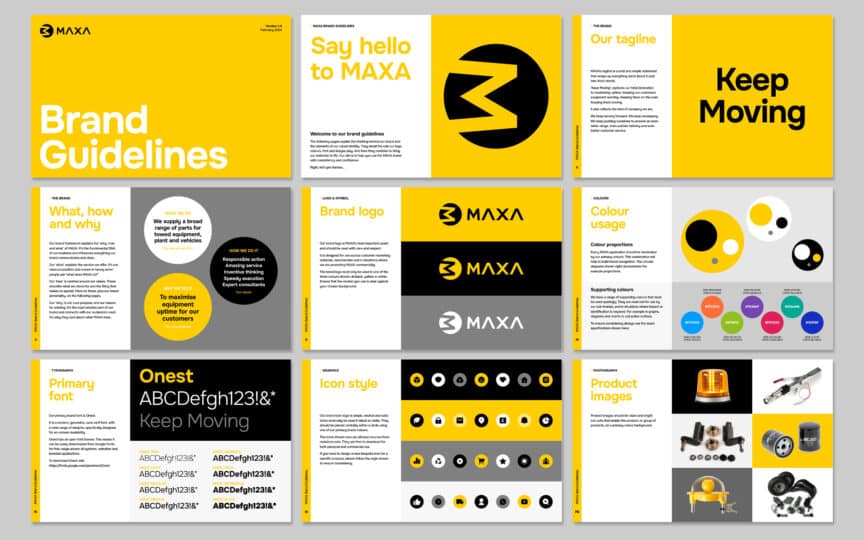
By clearly defining the merged organisation’s shared values of reliability, speed, and customer focus, the brand book helped teams from both companies understand their combined mission whilst preserving the strengths that made each business successful.
What is a style guide?
A style guide, by contrast, is your brand’s instruction manual. Where a brand book explores the ‘why’ and ‘what’ of your brand, a style guide tackles the ‘how’.
It’s the practical toolkit that ensures your brand looks, sounds, and feels consistent across every touchpoint—from your website copy to your email signatures, from social media posts to printed brochures.
Style guides are the documents your creative teams reach for daily.
They contain the nuts and bolts:
- Logo usage rules with clear do’s and don’ts.
- Colour palettes with hex codes and usage contexts.
- Typography specifications including font hierarchies.
- Tone of voice guidelines with practical examples.
- Approved imagery styles and photography direction.
- Iconography and graphic element libraries.
- Layout principles for different formats.
Essentially, they’re your brand assets organised for practical application.
The most effective style guides we’ve created at Fabrik go beyond simple rules—they explain the reasoning behind each guideline.
When a designer understands why a particular colour combination works, or why certain tone of voice principles matter, they’re better equipped to make smart decisions in scenarios the guide doesn’t explicitly cover.
We often describe style guides to our clients as the bridge between brand strategy and brand execution. They translate high-level brand concepts into actionable instructions that anyone can follow, regardless of their design or marketing experience.

Key differences (and why they matter)
Understanding the distinction between brand books vs style guides comes down to recognising their different functions within your brand ecosystem:
Purpose and scope: Brand books establish the strategic foundation and emotional territory of your brand, whilst style guides provide tactical implementation guidelines. One sets the direction; the other ensures you stay on course.
Typical audience: Brand books speak to leadership teams, new starters, and strategic partners who need to understand your brand’s essence. Style guides serve designers, copywriters, marketing teams, and anyone creating brand materials.
Level of detail and authority: Brand books operate at 30,000 feet, focusing on principles and positioning. Style guides get granular, specifying exact Pantone colours and approved sentence structures.
Visual and verbal guidance: Both documents address visual and verbal elements, but with different emphasis. Brand books establish the conceptual framework for how you should look and sound, whilst style guides provide the specific rules for achieving that consistency.
Longevity and adaptability: Brand books tend to have longer shelf lives, evolving gradually as your brand matures. Style guides require more frequent updates as you expand into new channels and formats.
The key insight? This isn’t an either-or decision. The most successful brands we work with understand that these documents complement rather than compete with each other.

When should you use a brand book vs a style guide?
The question of when to use a brand book vs style guide depends largely on where you are in your brand journey and what challenges you’re facing.
Deploy a brand book when you’re establishing a new brand identity from scratch, onboarding senior leadership or key stakeholders who need strategic context, or launching into new markets or audience segments.
It’s also essential when going through a rebrand or significant strategic shift, or when struggling with inconsistent brand messaging across departments.
Additionally, brand books prove invaluable when seeking investment or partnership opportunities where brand story matters, or when training new team members on your brand’s core principles and market position.
We worked with Lumeon (formerly Qinec), a healthcare technology pioneer formed with a mission to address common challenges healthcare organisations face, from reducing costs to improving the patient journey.
The company launched with an incredible vision but initially struggled to build a brand that connected with its target audience. Their comprehensive brand book became essential for establishing clear positioning in the competitive healthcare technology market.
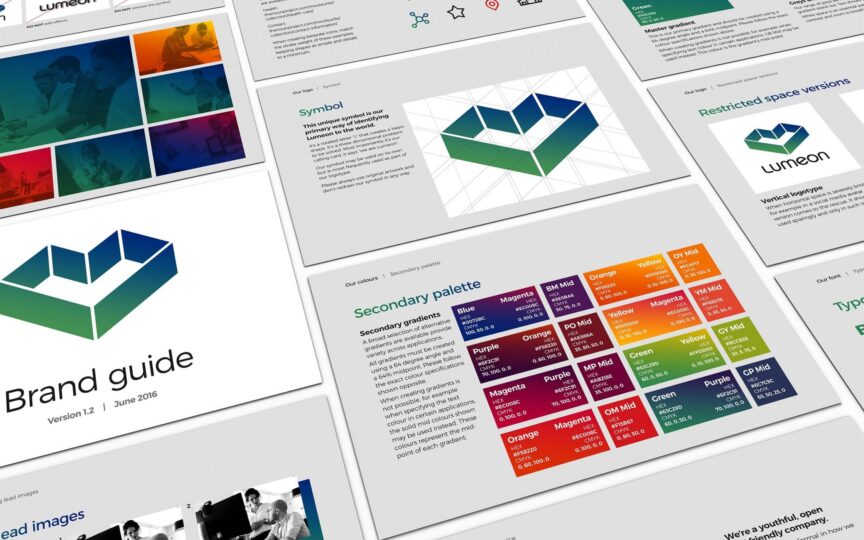
By articulating their mission, values, and unique approach to healthcare innovation, the brand book helped align internal teams and communicate their value proposition more effectively to potential clients and partners.
Reach for a style guide when you’re scaling content production across multiple teams and channels, ensuring consistency across various marketing touchpoints, or briefing external agencies, freelancers, or new team members.
They’re also essential when maintaining quality control as your organisation grows or implementing a rebrand across existing materials and platforms.
Additionally, style guides prove invaluable when launching new products or services that need consistent presentation or managing brand consistency across different geographical markets or business units.
Slamcore, a robotics technology innovator specialising in spatial intelligence software, faced exactly this challenge.
As a company founded by leading SLAM research academics from Imperial College, they needed to communicate complex technology concepts across multiple audiences—from technical developers to business stakeholders.
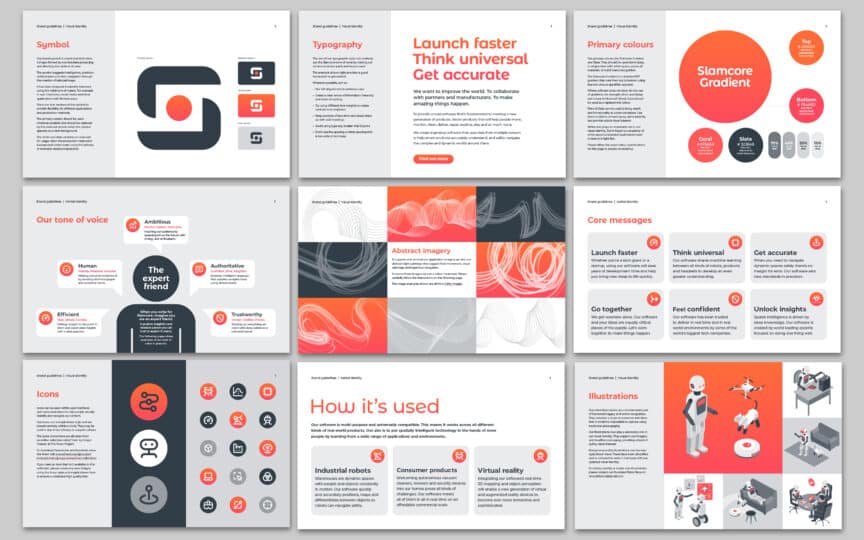
Their detailed style guide became the essential reference that maintained brand consistency across technical documentation, marketing materials, investor presentations, and developer resources.
This ensured their sophisticated technology remained accessible and professionally presented across all touchpoints.
In practice, these documents work best as a complementary pair.
The brand book provides the strategic context that makes your style guide meaningful, whilst the style guide ensures your brand book’s vision gets executed consistently in the real world.
Many of our most successful clients use their brand book for quarterly strategic reviews and onboarding, whilst their style guide sits open on every creative’s desktop.

Examples to inspire (and pitfalls to avoid)
Some of the most effective brand documentation we’ve encountered strikes the perfect balance between inspiration and instruction.
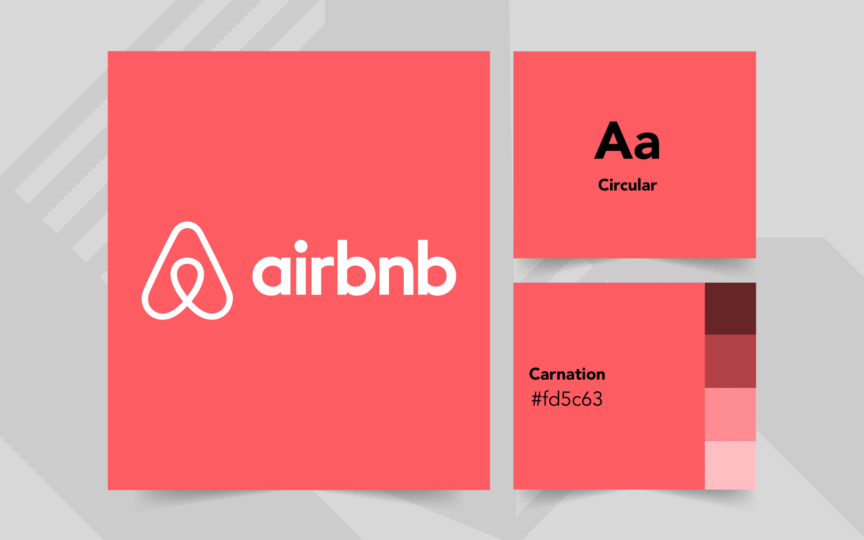
Airbnb’s brand book beautifully articulates their “Belong Anywhere” philosophy with compelling storytelling and clear brand principles. Their style guide then provides meticulous guidance on implementing their visual identity across countless touchpoints.

Similarly, Spotify’s brand documentation seamlessly weaves together brand story and practical application guidelines. This makes it both inspirational and immediately actionable.
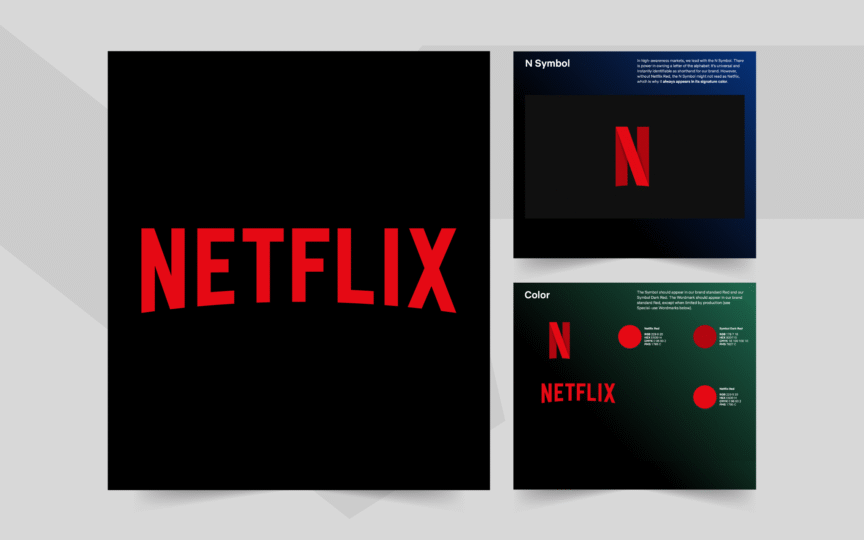
Netflix offers another excellent example of integrated brand thinking. Their brand documentation doesn’t just tell you what their brand stands for—it shows you how that translates into everything from interface design to content curation principles.
The connection between brand strategy and tactical execution is crystal clear.
However, we’ve also seen brands fall into predictable traps during our years of experience at Fabrik.
The most frequent misstep is creating documents that overlap confusingly—brand books that get bogged down in tactical details like specific hex codes, or style guides that try to tackle high-level strategic positioning questions.
Another common pitfall is treating these as static, set-and-forget documents rather than living resources that evolve with your brand and market context.
We’ve encountered organisations with beautiful brand books that nobody reads because they’re too theoretical, and style guides so rigid they stifle creativity rather than channelling it effectively.
The most problematic scenario is when these documents contradict each other—when the brand book promises one personality, but the style guide enforces a different tone entirely.
At Fabrik, we’ve learned that the most successful brand documentation shares several crucial characteristics:
- Absolute clarity of purpose: Each document has a distinct, well-defined role.
- Genuine user-centricity: They’re designed specifically for their intended audience and usage context.
- Practical utility: They actually get used regularly, not filed away and forgotten.
- Strategic coherence: They work together as a unified system rather than competing resources.
The format matters far less than the function.
We’ve created effective brand books as sleek presentations, comprehensive manuals, interactive digital experiences, and even video-led narratives. What matters is that they serve their users effectively and influence day-to-day brand decisions.

Why clarity in brand documentation matters
The strategic edge.
Clear brand documentation isn’t just about keeping your marketing materials tidy—it’s a competitive advantage that pays measurable dividends across your entire organisation, from customer perception to internal efficiency.
Consistent brand experiences build trust and recognition exponentially faster than scattered approaches.
When every touchpoint reinforces the same brand promise—from your website header to your customer service emails, from your social media presence to your packaging design—customers develop stronger emotional connections and clearer expectations.
We’ve seen clients achieve measurable improvements in brand recall, customer preference, and even pricing power simply by tightening their brand consistency through better documentation.
Consider the compound effect: every interaction a customer has with your brand either reinforces or undermines their perception.
Without clear documentation, you’re leaving these critical moments to chance. With it, you’re orchestrating a coherent experience that builds cumulative impact.
Well-structured brand documentation also accelerates onboarding and scaling in ways that directly impact your bottom line.
New team members can get up to speed in days rather than weeks, external partners can deliver on-brand work with minimal oversight and fewer revisions, and your internal teams can move faster with clear brand governance frameworks to follow.
We’ve worked with clients who significantly reduced their creative review cycles simply by implementing clearer brand documentation.
Perhaps most importantly, strong brand documentation elevates creative output across the board.
When your team understands not just what to create but why they’re creating it—and how it fits into the bigger brand story—they produce work that’s both more innovative and more strategically sound.
We’ve witnessed this transformation countless times: teams that were previously producing scattered, inconsistent work suddenly delivering cohesive, compelling brand experiences that drive real business results.
The psychological impact shouldn’t be underestimated either. Clear brand documentation creates confidence.
Designers make bolder choices, copywriters take more creative risks, and marketing teams launch campaigns with greater conviction—all because they understand the strategic framework they’re working within.
The consequences of poor documentation are equally clear and costly:
- Confused customers who can’t grasp your value proposition.
- Frustrated teams who waste time on back-and-forth revisions.
- Wasted resources on off-brand materials that need to be redone.
- Missed opportunities to build meaningful brand equity.
- Slower time-to-market for new initiatives as teams debate fundamental brand decisions repeatedly.

A toolkit for today’s brand guardians
The brand books vs style guides question fundamentally misses the bigger picture.
In today’s complex, multi-channel brand landscape, successful organisations need both strategic vision and tactical precision working in harmony. Your brand book provides the vision and inspiration; your style guide ensures the precision and consistency.
Together, they create a comprehensive system for brand excellence.
The most effective approach we’ve seen combines both documents in a strategic hierarchy.
The brand book establishes the foundational principles and emotional territory, whilst the style guide translates these into practical, everyday applications.
Think of it as a pyramid: broad strategic principles at the top, narrowing down to specific tactical guidelines at the base.
Modern brands face unprecedented complexity in their communications ecosystem.
From traditional advertising to social media, from internal presentations to customer onboarding experiences, from email marketing to product packaging—every touchpoint is an opportunity to strengthen or weaken your brand.
Managing this complexity without clear documentation is like conducting an orchestra without a score.
At Fabrik, we help organisations build practical, future-ready brand documentation that gets used rather than gathering digital dust.
Whether you need a comprehensive brand book that captures your unique story and strategic positioning, a detailed style guide that ensures flawless day-to-day execution, or an integrated approach that combines both documents in a coherent system, we can help.
We create brand documentation that serves as a genuine business asset.
Our approach always starts with understanding how your team works. There’s no point creating beautiful documentation that doesn’t fit your organisational culture, workflow, or technical capabilities.
The best brand documentation feels natural to use and genuinely helps people do better work.
The most effective brand guardians we work with understand that great brand documentation is never about the documents themselves—it’s about creating the conditions for consistent, compelling brand experiences that drive real business results.
It’s about empowering every person who touches your brand to make decisions that strengthen rather than dilute your market position.
Ready to bring clarity and strategic power to your brand documentation?
Let’s talk about how we can help you build the strategic and tactical tools your brand needs to thrive in an increasingly competitive marketplace.
Fabrik: A branding agency for our times.

Clarity starts with a conversation.
Thanks—we’ll get back to you shortly.
Whether you're navigating a rebrand, merger, or simply need a clearer identity—we’re here to help. No hard sell, just honest advice from people who know the sector.
Let’s start with a simple question…
Prefer to email? Drop us a line.
Fabrik’s been helping organisations rethink and reshape their brands for over 25 years. We’ve guided companies through mergers, rebrands and new launches. Whatever stage you’re at, we’ll meet you there.
