










Proven university differentiation strategies to stand out in a crowded market

The need for effective university differentiation strategies has never been greater. Studies from UCAS show that while application numbers are increasing gradually in the UK, large groups of students are beginning to explore alternatives to traditional classroom teaching.
With tuition fees rising and more alternative pathways popping up, universities can’t just rely on reputation alone. They have to work harder to attract and keep students.
That’s tougher than it seems – particularly as the needs of students continue to evolve. More learners than ever before are prioritising degrees that lead directly to jobs, flexible learning opportunities, and a unique experience that feels relevant to their priorities.
In the competitive higher education market, the institutions that stand out aren’t necessarily the oldest, or the biggest – they’re the ones that communicate their unique value clearly.
So, how can you cut through the noise, and really stand out in a crowded market?
6 university differentiation strategies that work
Universities and higher education institutions today face a lot of challenges. Financial strains are leading to staff and research cuts. Students are demanding more practical skills and flexible learning options, and digitisation is forcing some facilities to rethink their entire learning environment.
At Fabrik, we’ve helped organisations improve their appeal to different students and stakeholders, introducing new student recruitment tactics, university marketing strategies, and even modernised higher education branding efforts.
Here are the actionable university differentiation strategies we’ve seen drive the biggest impact.

1. Master the key elements of higher education branding
This might sound like obvious advice, but if the core elements of your higher education branding strategy aren’t perfect, you’re always going to struggle to stand out. Creating a strong brand is the ultimate starting point for countless university differential strategies.
It’s not just about making a memorable first impression and attracting prospective students – it’s about forging a long-lasting connection.
Core areas to focus on include:
Identifying your mission and values
Your mission as a higher education institution shouldn’t just be to address the needs of all learners. You should have a clear objective – whether it’s serving a diverse student population, preparing advanced students for specific roles, or introducing learners to new teaching methods.
Identify your mission statement, and the core values that will drive you towards your goals. For instance, are you committed to inclusivity, innovation, or integrity?
Mastering visual branding
Your visual identity is crucial as a higher education institution. It should do more than help you stand out in a competitive higher education market. It should tell your students and stakeholders what you stand for, and inspire them to join your community.
Think carefully about your colour palette (choose bold, inspirational shades), think about your typography choices and how they’ll work across platforms. Ensure your logo embodies your university’s heritage, and forward-thinking approach to innovation.
Crafting a memorable personality
The personality you convey through your university marketing strategies, communication methods, and even your instruction strategies can be an excellent point of differentiation. Try to find the right balance between a warm, approachable, and modern personality – and one that shows credibility.
You’ll want to blend aspects of history, heritage, and authority, with a personality that makes your students and stakeholders feel emotionally connected to your organisation.
Case in point: RCoA
When the team at Fabrik worked with RCoA (the Royal College of Anaesthetists) on their brand, we introduced a number of university differentiation strategies focused on branding.
We created a visual identity centered around bold colours, modern font options, and a stylised “A” in the logo to symbolise ambition and excellence. We also implemented personality guidelines and tone of voice workshops, designed to position RCoA as a modern, forward-thinking authority.
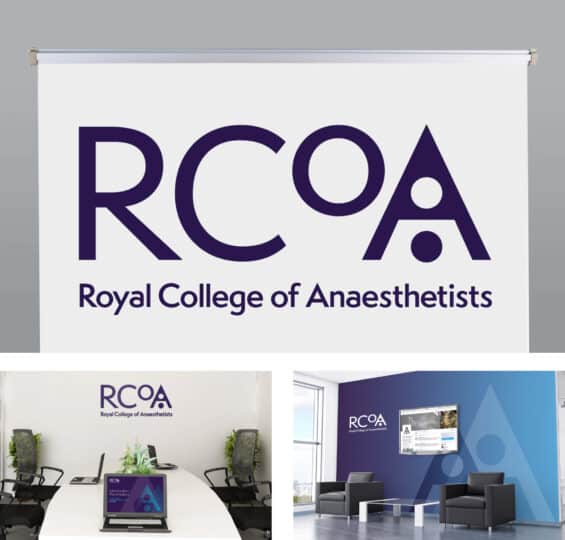
The result was a brand that immediately stands out, combining heritage and history, with contemporary design and messaging.
2. Refining your unique value proposition in education
A UVP (unique value proposition) in education forms the heart of all effective university differentiation strategies. It’s what separates you from the competition on a meaningful level.
But now that higher education institutions can’t just differentiate themselves based exclusively on history or heritage, how do you make sure your UVP carries weight?
Identify your institution’s strengths
Start by looking at what really makes your university special. Go beyond the fact that you’ve been educating students for centuries, and look at things like:
Academic excellence
Assess your programs, faculty, and teaching methods. Do you ensure student success by offering courses in emerging fields? Do your faculty members personalise student learning experiences, adapting to the needs of all students?
Campus culture
How effective is your campus culture at enhancing university appeal? Is your institution well-known for its differentiated classroom environments, or a focus on inclusion? Do you go above and beyond to make your university a great place for all learners, with fantastic accommodations and amenities?
Student outcomes
What do your graduates achieve? Look at how different students throughout your history have excelled thanks to your support. Do students benefit from high employment levels, or access to unique professional development opportunities?
Align with prospective student needs
Understanding what prospective students are looking for is crucial. Higher education institutions can’t just adhere to academic standards. They need to adapt to student needs as they evolve, introducing new courses, and learning opportunities.
Conduct research into the skills and qualifications that appeal to your target audience. Use surveys and focus groups to learn more about students’ needs and preferences. For instance, do they prefer collaborative learning, or a one-on-one teaching approach?
Communicate your UVP effectively
It’s not enough to just “have” a UVP. You need to constantly explore unique ways of communicating your strengths to the right audience.
Create a communication plan, identifying clear messages you can share with your target audience about your learning opportunities, and the accomplishments you’ve achieved.
Engage emotionally with your audience with stories and case studies that validate the benefits you’re promising learners. Take a look at how Fabrik worked with the City University in London to convey the organisation’s unique value proposition to students.

We created the amazing “Book of Secrets” – a creative direct mail and email marketing campaign that provided undergraduates with insider insights into university life.
This didn’t just draw attention to the University’s unique benefits and culture, it also helped prospective students envision what life was really like on campus.
3. Introduce innovative academic programs
If your university constantly sticks to the same academic programs and courses year after year, you’re going to face a serious problem. New job opportunities, roles, and technologies all require students to adapt new skills over time.
Plus, as new generations of students enter the landscape, you’ll need to adapt to new learning needs and expectations.
Give your university differentiation strategies an edge by:
Developing specialised learning programs
As industries evolve, so too must the educational programs that feed into them. Universities can stay ahead by identifying and integrating emerging fields into their course strategy, ensuring that graduates gain the skills that have the most impact on their future.
Regularly assess industry trends to pinpoint emerging opportunities in things like artificial intelligence, or sustainability. For instance, the University of Sussex is launching the UK’s first special education program on “climate justice” in 2026.
This shows the university is addressing the growing demand for expertise in environmental human rights and sustainability.
Consider adapting the learning process to talented students with specific challenges to overcome – like hectic schedules. Offering micro credentials and short courses that help students to reach their learning goals fast without full degree programs can make your institution more appealing.
You could even offer stackable programs, like the University of Canada, which allows students to take “portions” of a degree, at a time that suits them.
Emphasising research opportunities
One effective way to increase your appeal to a large number of students, is to show a commitment to continued research and development. This demonstrates your commitment to actively enriching the student experience, and shaping future sectors.
Encourage collaboration across departments to tackle complex, real-world problems. The Edinburgh Futures Institute does this by linking arts, humanities, and social sciences with other disciplines to address societal challenges through data-driven solutions.
Involve undergraduates in research projects to foster early engagement and hands-on experience. This practice not only enhances students’ knowledge, but also helps to prepare them for advanced studies or the next step in their research-focused careers.
Regularly showcase faculty and student research through seminars, publications, and media outreach. Celebrating these accomplishments can boost the university’s profile and inspire prospective students.

4. Leverage technology and innovation
These days, digital transformation and technology introduces both challenges and opportunities for organisations investing in university differentiation strategies.
On the one hand, the rise of online learning platforms and technological tools for education are beginning to drive students away from traditional classrooms. On the other hand, if you can embrace these tools, you could attract more gifted students to your institution.
Integrating technology into teaching
Want to introduce a differentiated instruction strategy to your university? Infuse technology into your lesson plans and course strategies.
Experiment with:
Artificial intelligence
AI is revolutionising higher education by providing students with increased access to expert knowledge, digital literacy skills, and personalised experiences. AI mentors are great at accelerating ongoing assessments, and adapting courses to individual needs.
They can help learners develop critical thinking skills, and ensure they feel confident with digital tools by the time they enter the workforce.
Online learning platforms
Online learning opportunities are becoming increasingly popular, giving students a variety of ways to enhance their skills without having to worry about campus costs, or travel issues. With online courses, you could even start attracting prospective students from different countries.
Embrace technological tools to build courses that students can take in the comfort of their own home, at a time that suits them. Use collaboration tools like Zoom and Microsoft Teams to ensure students can still access human support when they need it.
Remember, employers are increasingly embracing digital credentials too – so you could even offer them to professionals looking to upskill. Around 73% of employers prefer to hire candidates that have digital certifications.
Promoting innovative campus facilities
Another way to embrace technology in your university differentiation strategies, is to provide access to innovative campus facilities. Equip your classrooms with advanced audiovisual systems, interactive whiteboards, or even extended reality tools.
Create flexible learning spaces that can adapt to the needs of small groups of different learners as they work on various projects. You could even develop your own innovation center, equipped with cutting-edge technology.
For instance, James Cook University has inaugurated a $100 million facility named Engineering and Innovation Place at its Douglas campus in Townsville, aiming to inspire students in STEM disciplines. Spanning 9,400 square meters across four storeys, the building hosts 23 labs, a lecture hall, conference rooms, an industry garage, and a workshop.

5. Building university-industry partnerships
At Fabrik, we’re strong believers in the power of partnerships. We’ve worked with countless brands on merger-acquisition projects, co-branding campaigns, and sponsorship efforts that have helped them turbocharge their growth.
University-industry partnerships are an excellent way to enhance university differentiation strategies. They can give you access to new personnel or resources, as well as ensuring you can deliver stronger benefits to students – like work placements or internships.
Collaborate with businesses on student opportunities
Establishing partnerships with businesses is a great way to boost the readiness levels of your students – making sure they’re prepared to leap into the world of work. You could reach out to companies relevant to the students you serve, asking for them to consider internships and work placements.
Northeastern University in Boston has integrated co-op programs that alternate academic courses with up to 18 months of full-time paid work experience. This model ensures students get instant results from their hard work – by making it easier to find employment.
Alternatively, you can explore partnerships with businesses that support research initiatives, helping students to gain skills working on real-world projects.
You might even engage industry experts in curriculum design. Working with specialists in a cooperative agreement will help ensure your academic programs remain aligned with current market needs, driving more positive results for students.
Leverage successful alumni stories
Businesses aren’t the only groups worth partnering with in your university differentiation strategies. Connecting with alumni members who achieved significant success after attending your university is a great way to boost your brand’s reputation and marketing impact.
Seek out individual student stories from successful people, asking them to share what they’ve achieved as a result of their education.
For instance, Howard University takes pride in its alumna, Vice President Kamala Harris, whose achievements exemplify the university’s commitment to empowering its students.
Ask your most loyal alumni to become brand ambassadors. Work with them to create content and marketing campaigns that appeal to prospective students.
Diversify your marketing materials with a range of success stories from numerous industries, to demonstrate the versatility and scale of opportunities available to graduates.

6. Implementing effective marketing strategies
Finally, one of the most important things you can focus on when developing university differentiation strategies, is your approach to marketing. Modern university marketing strategies need to span a range of different mediums and platforms, to reach the widest audience possible.
Based on our experience enhancing university appeal with marketing programs, we recommend:
Multi-channel marketing approaches
Don’t just focus on a single channel. Learn as much as you can about your target audience, and how they search for detailed information about universities and courses.
Make sure your marketing teams have a strategy for reaching students through:
Digital advertising campaigns
Investing in digital channels such as pay-per-click (PPC) campaigns, email marketing, and sponsored content can significantly boost visibility. Go beyond a single strategy. Invest in paid advertising, email marketing, valuable blogs, and even video marketing to expand your reach.
Consider investing in promotional partnerships. You could partner with a non-profit to create a volunteering program that students can join to gain hands-on experience.
Social media engagement
Platforms like Instagram, Snapchat, and Facebook are a goldmine for reaching prospective students. Creating engaging content and utilising targeted advertising on these platforms is a great way to boost brand awareness, and foster community engagement.
Do your research to ensure you’re targeting the social media channels that appeal most to your target audience, and make sure you tailor your content accordingly.
Traditional media
We might be living in a digital world, but offline advertising still works. Print advertisements, literature, television and radio ads are a great way to reach local students.
A case in point is our collaboration with Birkbeck, University of London. Fabrik was commissioned to create a student campaign and produce a set of undergraduate and postgraduate prospectuses that highlighted the university’s ethos and academic excellence.
Our approach combined strong, simple messaging with evocative imagery, resulting in vibrant and informative marketing materials that resonated with a wide range of students.
Personalising communications
Every student is driven by their own personal interests, goals, and values. That’s why it’s so important to ensure that you’re implementing personalisation into a variety of strategies for university promotion and growth.
Segment prospective students based on demographics, interests, and behaviours, to craft targeted messages that address specific needs and aspirations.
Use data-driven insights to customise content to different groups across various channels, aligning information with the individual’s stage in the decision-making process. Consider using dynamic content on websites and digital platforms to personalise experiences in real-time.

University differentiation strategies with impact
Universities today face more competition than ever, but those that embrace the right university differentiation strategies, can still thrive.
Adding the ideas above to your to-do list can help you build a stronger brand, attract more students, and even earn the attention of investors, employees, and other stakeholders.
Don’t make the mistake of thinking your history or heritage alone can do all the work. Start building a proactive plan for attracting prospective students today, with a strong differentiation strategy.
Need a little help? At Fabrik, we’ve worked with universities to sharpen their messaging, refine their visual identities, and build compelling campaigns that drive engagement. If your institution is ready to elevate its brand and differentiate itself in a crowded market, now is the time to act.
Fabrik: A branding agency for our times.

Clarity starts with a conversation.
Thanks—we’ll get back to you shortly.
Whether you're navigating a rebrand, merger, or simply need a clearer identity—we’re here to help. No hard sell, just honest advice from people who know the sector.
Let’s start with a simple question…
Prefer to email? Drop us a line.
Fabrik’s been helping organisations rethink and reshape their brands for over 25 years. We’ve guided companies through mergers, rebrands and new launches. Whatever stage you’re at, we’ll meet you there.
