









House of brands vs branded house: Which structure suits your portfolio?

Brand architecture is the strategic blueprint that defines how your brands relate to each other within your portfolio. It’s the invisible framework that determines whether your customers see you as one unified entity or a collection of distinct offerings.
Brand architecture models provide the structural foundation for how multiple brands, sub-brands and master brands work together. Think of it as your brand hierarchy, defining relationships and connections between different offerings.
Understanding these brand architecture frameworks becomes crucial as markets evolve and customer expectations shift. The right corporate brand structure can accelerate growth, while the wrong approach can fragment your market presence and confuse potential customers.
Why brand structure matters for growing companies
For fast-growing companies and acquisitive organisations, getting this right isn’t just about tidiness. It’s about maximising brand equity, streamlining marketing spend, and creating clarity for both internal teams and external audiences.
Effective brand architecture models prevent companies from finding themselves with fragmented identities, confused messaging, and missed opportunities for growth.
At Fabrik, we’ve seen too many organisations struggle with the complexity of unclear brand structures. This is why understanding these foundational brand architecture models is essential for any senior marketing professional engaged in portfolio decision-making.
The cost of getting it wrong
As organisations scale or acquire new businesses, the temptation is often to let each brand operate independently. While this might seem simpler short-term, it creates long-term complications.
Resource allocation becomes unclear, market positioning gets muddled, and customer understanding suffers. Clear brand structure becomes your competitive advantage.
The most effective approach considers both immediate operational needs and long-term strategic objectives. Smart organisations build frameworks that support sustainable growth rather than hinder it through unnecessary complexity or rigid constraints.

House of brands: The multi-brand approach
The house of brands model represents a decentralised approach where each brand operates as an independent entity with its own identity, positioning, and market presence.
This multi-brand strategy prioritises autonomy over unity, allowing individual brands to target specific audiences without the constraints of an overarching master brand identity.
This approach exemplifies sophisticated portfolio decision-making, where parent companies maintain strategic oversight while allowing individual brands to develop their own market relationships.
The corporate brand structure remains largely invisible to consumers, with each brand building its own equity and market position.
What is a house of brands?
In a house of brands architecture, the parent company acts more like a holding entity. There’s minimal visible connection between its various offerings.
Each brand has its own distinct personality, visual identity, and market positioning. This creates a diverse brand hierarchy where sub-brands and master brands operate independently.
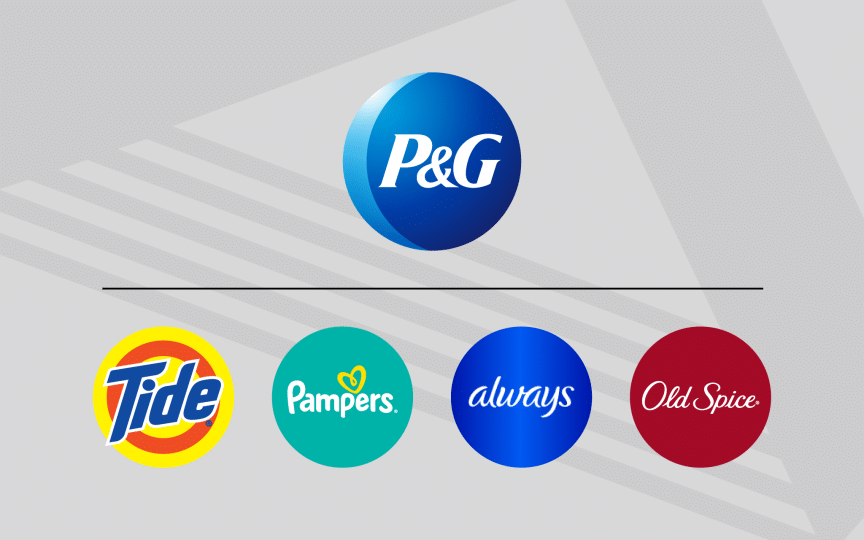
Procter & Gamble exemplifies this perfectly—a prime brand architecture example. Few consumers connect Tide, Gillette, and Pampers as part of the same corporate family.
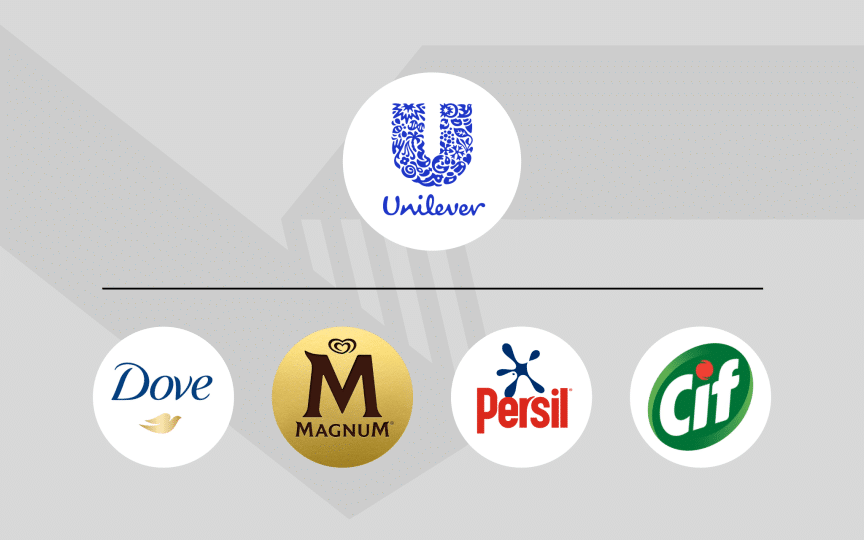
Similarly, Unilever operates brands like Ben & Jerry’s, Dove, and Hellmann’s as completely separate entities. Each targets different demographics and market segments.
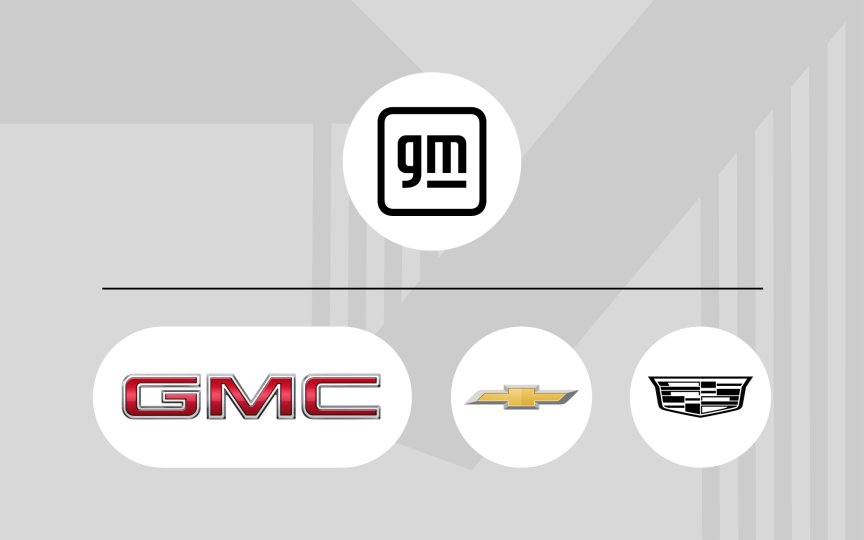
General Motors provides another excellent example. Chevrolet, Cadillac, and GMC each maintain distinct brand personalities despite shared ownership.
This separation allows each brand to own specific market positions without diluting their individual appeal.
Advantages and drawbacks
The house of brands approach offers significant autonomy for individual brands. Each can develop targeted positioning and messaging.
Each brand can respond to specific market conditions, pursue distinct customer segments, and build independent equity. They’re not constrained by corporate guidelines.
This model also provides excellent risk isolation. If one brand faces challenges, it doesn’t necessarily impact the others.
However, this independence comes at a cost. Marketing spend becomes exponentially higher as each brand requires its own campaigns, creative development, and market presence. Brand synergies remain largely untapped.
This misses opportunities for cross-selling or shared customer acquisition. The corporate brand often becomes invisible to consumers. This limits the ability to leverage overall company reputation or scale.
When to consider this model
House of brands works particularly well for organisations with diverse portfolios serving distinctly different audiences. Multinational companies often adopt this approach when local market preferences vary significantly.
It’s also ideal for organisations that have grown through acquisition. Here, maintaining the equity of established brands makes more commercial sense than integration.
FMCG companies, automotive manufacturers, and investment holding companies frequently utilise this model. If your brands operate in completely different sectors, this structure might be your best option.
The same applies if they serve opposing demographics or have conflicting value propositions.

Branded house: The unified approach
The branded house model takes the opposite approach, creating a unified identity that extends across all products, services, and market offerings. Here, the master brand takes centre stage, with all sub-brands and master brands clearly connected to and endorsed by the primary brand identity.
This approach represents a different philosophy in brand portfolio strategy, where consistency and unified messaging take precedence over individual brand autonomy. The corporate brand structure becomes highly visible and actively leveraged across all touchpoints.
What is a branded house?
In a branded house architecture, everything flows from the master brand. Virgin demonstrates this brilliantly. Whether you’re booking Virgin Atlantic flights, banking with Virgin Money, or working out at Virgin Active, the connection is immediately clear.
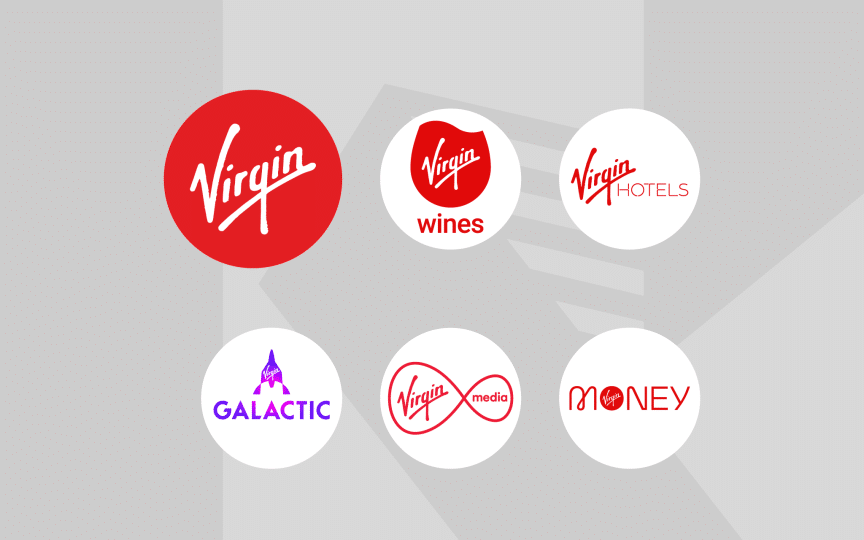
The link to Richard Branson’s disruptive, customer-focused brand comes through every touchpoint.
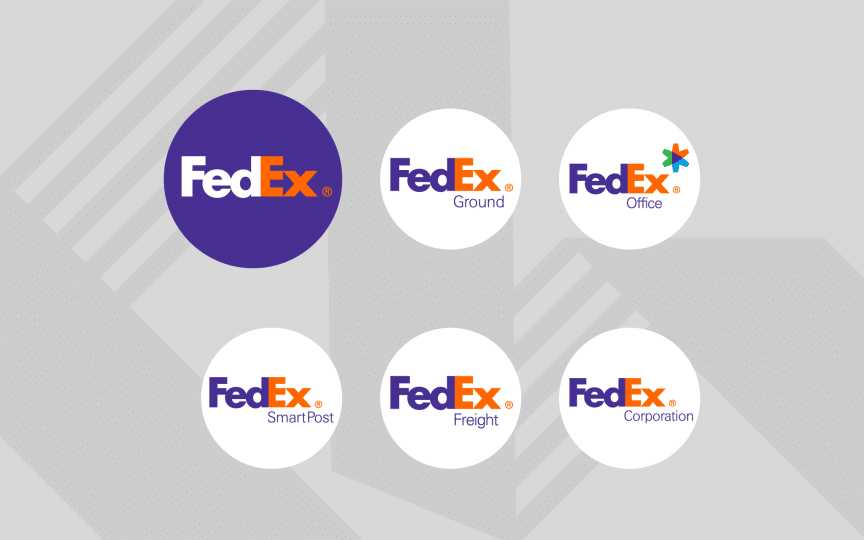
FedEx operates similarly. FedEx Express, FedEx Ground, and FedEx Office are all clearly part of the same trusted logistics ecosystem.
Monzo provides a more contemporary example. All financial products and services maintain the distinctive coral branding and challenger bank positioning that customers recognise and trust.
Advantages and drawbacks
The branded house approach delivers exceptional marketing efficiency. Every touchpoint reinforces the master brand, creating compounding brand awareness and recognition.
Customer trust transfers seamlessly between different offerings. This reduces acquisition costs and accelerates market entry for new products. Brand equity becomes concentrated and powerful rather than dispersed across multiple identities.
The drawbacks centre around risk concentration and reduced flexibility. If the master brand faces reputational challenges, every offering suffers. There’s also limited ability to target vastly different audiences.
You can’t position contradictory value propositions under the same umbrella. Some markets or demographics might be completely inaccessible if they conflict with the master brand’s established positioning.
When to consider this model
Branded house works exceptionally well for organisations with complementary offerings serving similar customer bases. It’s particularly effective for startups and scale-ups that need to maximise limited marketing budgets while building brand recognition quickly.
Professional services firms often benefit from this approach, as trust and expertise transfer naturally between different service areas. SaaS companies, EdTech providers, FinTech startups, and HealthTech organisations frequently adopt branded house structures.
If your offerings share common values, serve overlapping audiences, or benefit from shared trust and expertise, this model probably suits your portfolio.
Hybrid and endorsement models
Not every organisation fits neatly into pure house of brands or branded house categories. Many successful companies operate hybrid approaches that blend elements of both strategies, creating flexible architectures that adapt to specific market needs and business objectives.
Sometimes, it’s not either/or
Alphabet demonstrates a sophisticated hybrid approach with Google as the dominant consumer-facing brand while maintaining separate identities for enterprise solutions like Google Cloud and emerging technologies.
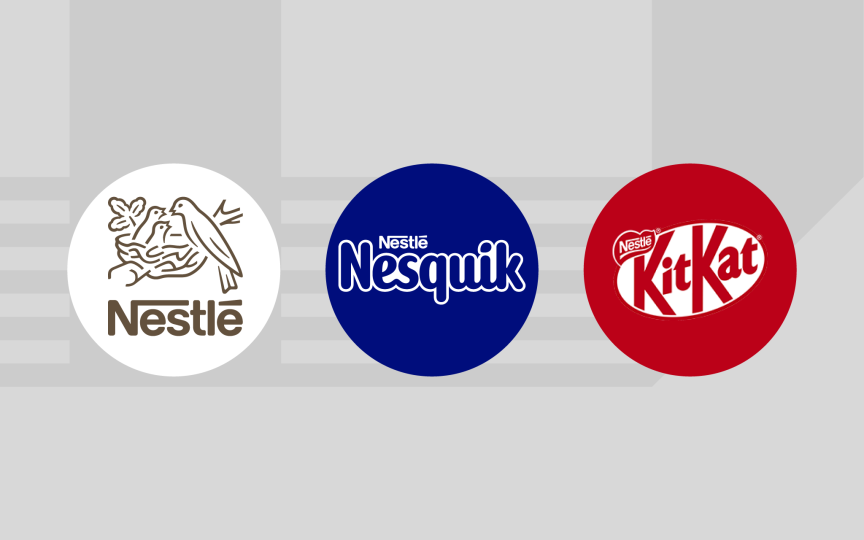
Nestlé operates another variation, with strong individual brands like Nespresso that carry clear Nestlé endorsement without being overwhelmed by the corporate identity.
Marriott has evolved its brand architecture over time, creating the unified Bonvoy loyalty programme while maintaining distinct hotel brands like Ritz-Carlton and Courtyard that serve different market segments.
Benefits and pitfalls
Hybrid models offer exceptional flexibility, allowing organisations to target diverse audiences while maintaining strategic connections between offerings. They enable nuanced communication strategies that can be both specific and unified depending on context and audience needs.
Some companies employ an endorsement model, where individual brands carry the parent company’s endorsement without full integration.
However, this complexity can create confusion if not managed carefully. Mixed perceptions arise when the relationship between brands isn’t clear to customers or internal teams.
The risk lies in achieving neither the efficiency of a branded house nor the clarity of house of brands, resulting in muddled positioning and wasted resources.

Choosing the right structure: A strategic decision
Selecting the appropriate brand architecture model represents one of the most critical strategic decisions leadership teams face. It impacts everything from marketing budgets and customer acquisition strategies to internal operations and future growth potential.
Questions to ask
Before committing to any brand structure, consider these fundamental questions:
What does our future growth look like? Are you planning to expand through acquisition, organic development, or geographic expansion? Each growth strategy favours different architectural approaches.
Do our audiences overlap or differ significantly? If your customer bases share common characteristics, values, and needs, unified branding makes sense. If they’re fundamentally different, separate brand identities might be more effective.
How unified are our values and positioning? Organisations with consistent culture, purpose, and market positioning can leverage branded house approaches. Companies with diverse or conflicting propositions need more separation.
What’s our tolerance for complexity and marketing investment? House of brands requires significantly higher ongoing investment but offers greater flexibility. Branded house delivers efficiency but demands consistency.
A note on change
Brand architecture models often evolve as organisations mature and market conditions shift. What works for a startup might not suit a multinational corporation.
We recently worked with Causeway to rationalise a fragmented portfolio of acquired engineering consultancy brands, creating a clearer structure that maintained local market relevance while building overall brand equity.
The key is building brand architecture models that can adapt and scale rather than rigid systems that constrain future growth. Successful organisations regularly review their portfolio decision-making processes to ensure their brand structure continues to serve their strategic objectives.

How Fabrik helps organisations make the right call
Our approach to brand architecture combines strategic rigour with practical flexibility, ensuring the frameworks we develop support immediate needs while accommodating future ambitions. We understand that these decisions impact every aspect of how organisations operate and communicate with their markets.
We bring deep experience in brand architecture planning, product naming architecture, and messaging hierarchy development.
Our methodology involves thorough analysis of market positioning, customer research, competitive landscape assessment, and internal stakeholder alignment to ensure the chosen structure serves both strategic objectives and operational realities.
The result is clarity over chaos—brand portfolio strategy that works in practice, not just theory.

Choosing a structure that supports strategy
Choosing between brand architecture models isn’t about following industry conventions or copying successful competitors. They’re about creating the structural foundation that enables your specific organisation to thrive in your market context.
Whether you choose house of brands, branded house, or a hybrid approach, the critical factor is alignment between your structure and your strategic ambitions.
The most successful brand architecture models feel inevitable—they make perfect sense for the organisation, its customers, and its market position. They create clarity for internal teams, reduce complexity for customers, and establish platforms for sustainable growth.
Effective brand portfolio strategy becomes the invisible backbone that supports everything else your organisation does.
Whatever your brand looks like today, it’s the underlying structure that holds everything together—or lets it drift apart.

Clarity starts with a conversation.
Thanks—we’ll get back to you shortly.
Whether you're navigating a rebrand, merger, or simply need a clearer identity—we’re here to help. No hard sell, just honest advice from people who know the sector.
Let’s start with a simple question…
Prefer to email? Drop us a line.
Fabrik’s been helping organisations rethink and reshape their brands for over 25 years. We’ve guided companies through mergers, rebrands and new launches. Whatever stage you’re at, we’ll meet you there.
