
How to create a powerful brand messaging architecture

You probably already know that if you want to differentiate your brand, forge emotional connections with customers, and build “brand equity”, you need a powerful message. So, why do so many companies overlook the importance of brand messaging architecture?
Simply knowing what you want to say to your audience isn’t enough. You need a clear strategy for how you’re going to preserve consistency in your messaging framework, reach your target audience, and make crucial points stand out (like your mission statement).
Brand messaging architecture is essentially the north star for the content creators in your team, used to ensure you’re always sending the right message to potential customers.
So, how do you create the right messaging architecture, constantly highlight your unique value proposition, and elevate your marketing campaigns?
Read on to find out.
What is brand messaging architecture?
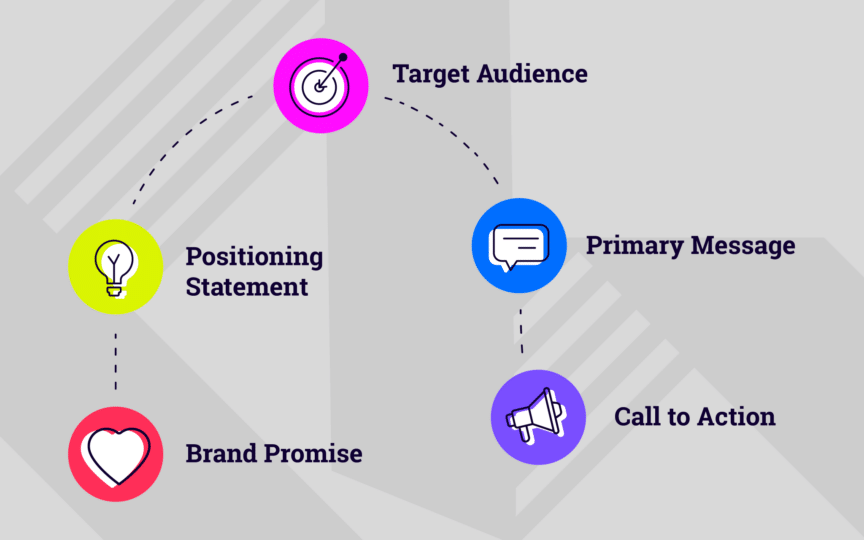
A brand messaging architecture is a framework or set of prioritized communication objectives that helps you communicate your brand’s value, promise, and personality to your target audience. It guides your marketing campaigns, sales team, and sometimes even internal communications.
When we help companies build a brand message architecture here at Fabrik, we define it as a fundamental framework to ensuring the unique selling points of their companies constantly stand out in their marketing materials, aligning brand values, their brand promise, and brand story.
Usually, the creation of a “messaging architecture” starts at the corporate level. Business leaders define which core values they want their marketing teams to showcase, and how they’re going to connect with different audiences in a meaningful way.
Notably, though, brand messaging architecture isn’t just a powerful tool for content creation. It can guide team decisions about everything from the right tone for your brand, to the way you design product packaging, and even how you review marketing materials.
As a quick example, when we worked with Causeway on their rebranding strategy, we defined a messaging architecture that identified everything from names for sub-brands, to tone of voice guidance, and editorial guidelines for different communication strategies.
What a messaging architecture should do
On a broad level, a brand messaging architecture helps clarify your communication goals, ensuring you can identify the best way to interact with your audience.
It should:
- Define your target audience (or buyer personas), their pain points, language preferences, and goals (related to your products or services).
- Identify a clear brand personality, and tone of voice for creating each piece of content for marketing or branding purposes.
- Ensure each brand communication strategy contains insights into physical and emotional benefits, and value propositions for your audience.
- Highlight the core values of your brand, the competitive advantage you have over other companies, and how you serve your customer base.
- Guarantee all your brand messaging aligns with your brand positioning framework and sends remains consistent among various channels.
The benefits of brand messaging architecture
So, why do you need a brand messaging architecture? You may already have tone of voice, editorial, and even brand guidelines you use to enhance your marketing efforts. These tools are great, but messaging architecture takes your strategy to the next level.
Tone of voice guidelines will show you how to speak to your target audience, messaging architecture gives you more insight into what you’re going to say. In other words, it defines what you’re constantly saying about what your brand stands for and what it does.
Messaging architecture works alongside your other brand guidelines to help you send consistent messages to your audience, aligned with your company’s vision and mission statement.
It guides team members, helps them to build brand awareness, and ensures your overall brand is constantly building the right emotional connection with customers.
To put it simply, messaging architecture:
Lays the foundation for a consistent brand identity
Your brand messaging architecture identifies exactly what kind of identity you want to convey to your audience, allowing you to send a uniform brand message across every touch point. Without it, you risk diluting your brand’s image every time you launch a new product or marketing campaign.
When all your teams are aligned around the same core messaging architecture, your content strategy evolves. You ensure you’re sending the right key messages whether you’re interacting with customers on social media, or through blog posts.
Differentiates your brand
Strong brand messaging draws attention to the heart behind your brand. It’s your values, personality, mission, and purpose that differentiates you from other companies and creates brand loyalty. Your unique brand voice forges emotional connections with customers.
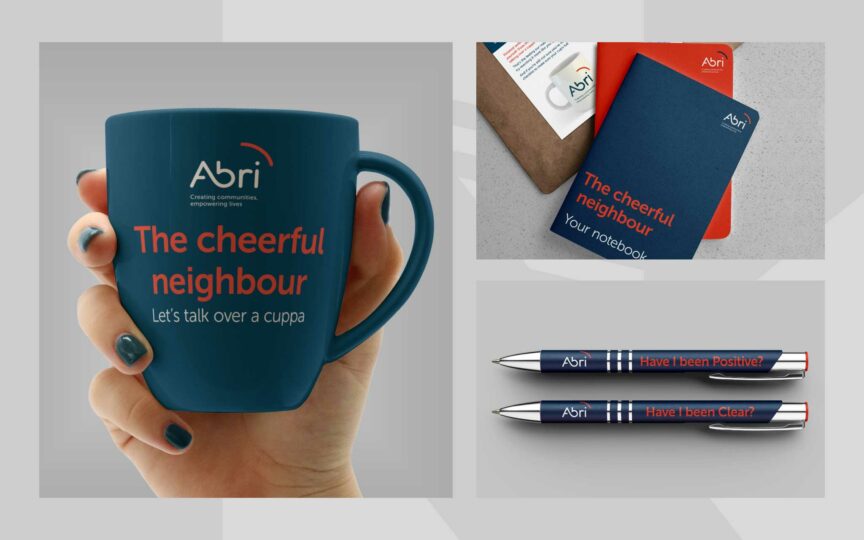
Look at our client Abri, for instance, their brand messaging revolves around presenting the company as a friendly, cheerful source of support for their target audience.
Improves your marketing ROI
A robust message architecture makes it easy for your target market to understand your value proposition, and what you offer. If you’re sending the same consistent message about what your company does across every platform, customers won’t struggle to understand your value.
This means your content marketing strategy, social media posts, and other communication channels are more likely to drive relevant customers back to your business and increase conversions.
Like what you’re reading?
We write about branding when we have something worth saying. No schedule. Just substance.
How to create your brand messaging architecture template
So, how do you design a strong brand messaging architecture? The easiest option is to work with a brand consultant. They can help you identify your target audience, giving you a starting point for constructing your brand’s core message.
Plus, a brand expert can help you to create specific assets that will enhance your messaging architecture, such as a brand positioning statement.
Whether you’re going it alone, or working with a specialist, the process of creating a brand messaging architecture template usually involves the following steps.
Step 1: Initial research
Research is an important step in developing messaging architecture, but it’s often overlooked.
Before you can start defining a messaging strategy, you’ll need to evaluate:
- Your business goals: What do you want to accomplish in your company? What’s your brand promise? What kind of product lines will you introduce, and what kind of target audience are you trying to reach?
- Value propositions: What are the core components at the heart of your brand? Where do you position yourself in comparison to your competitors? What unique benefits do your product or service offerings provide?
- Target audience: Who are you trying to reach with your brand’s core message? Do you have different segments in your target audience to consider? How do they communicate, and which channels or language do they use?
Step 2: Brainstorming for your messaging architecture template
After you’ve done some initial research, and identified communication goals, the next step usually involves a lot of brainstorming.
There are two strategies companies frequently use here:
The mini-card or card sorting approach
Mini-cards, or the card sorting approach are part of a strategy introduced by Margot Bloomstein, the author of a book called Content Strategy at Work. With this strategy, companies create a stack of cards featuring different adjectives that represent the brand’s identity, values, or customers.
Sales, marketing, and business leadership teams then come together in a meeting to discuss communication objectives and “sort through” the cards.
Usually, you’ll sort the cards into three different piles, identifying:
- What the company is (Who are we?)
- What the company wants to be (Who will we become?)
- What the company isn’t (Who are we not?)
Once you finish sorting the cards, you begin to narrow them down and prioritize everything. You might group words based on characteristics that describe your brand, how different audiences perceive you, and who you want to become.
Bloomstein suggests using a Venn diagram, to identify overlapping words and phrases that resonate with your target audience, who your company aims to become, and what it is today.
The brand personality prism strategy
Another option is to create something called a “brand personality prism” to visualize and verbalize your messaging priorities. If you already have a good idea of your brand essence, who you are, and what you aspire to be, this could be a good option.
With the prism strategy, you create an image (usually a triangle), and bring stakeholders together, for a meeting. Team members get two different colored sticky notes or fonts to symbolize different things, like friendliness, or professionalism.
They then place a color on the row within the prism based on where they believe the brand’s priority is currently, then another where they think priorities should lie in the future.
At the end of the group session, stakeholders rate how important each row is on a scale of one to six.
Step 3: Documentation and communication
Whichever strategy you use to design your brand messaging architecture, comprehensive documentation is crucial. You need to ensure you can share your messaging goals and objectives effectively with your entire organization, as well as external parties (like content creators).
A well-documented brand messaging architecture might look like this:
Messaging architecture
Our company is:
- Innovative: We’re eager to shape the future of the industry.
- Approachable: Our team is proactive and friendly.
- Trustworthy: We’re honest and transparent in our messaging.
Impact on visual identity
We always use modern images and typefaces (sans-serif). Our photography includes pictures of real, authentic people, and we prioritize minimalistic color palettes.
Impact on content strategy
Our content should be professional and demonstrate thought leadership, but the language should be easy to understand, with no unnecessary jargon. We’ll employ various content marketing strategies, such as social media, video, and podcasts, to reach a wider audience.
Step 4: Implementation and evolution
Once you have your messaging architecture, ensure you embed it into your brand guidelines, business documents, and any resources your teams use for content creation. Share your content guidelines with every creative member of your team.
As your business and service offerings evolve, plan to come back to your messaging architecture and update your strategy to reflect the needs of new key personas, and resonate with evolving brand values.
Messaging architecture examples: Amazing inspiration
Are you still confused about brand messaging architecture? Sometimes it helps to derive insights from companies that are already achieving great results.
Let’s look at some excellent examples…
1. Airbnb
Airbnb says its mission is to create a world where anyone can belong, anywhere. The company is committed to empowering adventure, transforming the hospitality industry, and fostering a sense of community with a deep focus on inclusion.
You don’t need to look far for evidence of Airbnb’s inclusive messaging approach.
Their blog page is packed with content that uses friendly, youthful, and straightforward language:
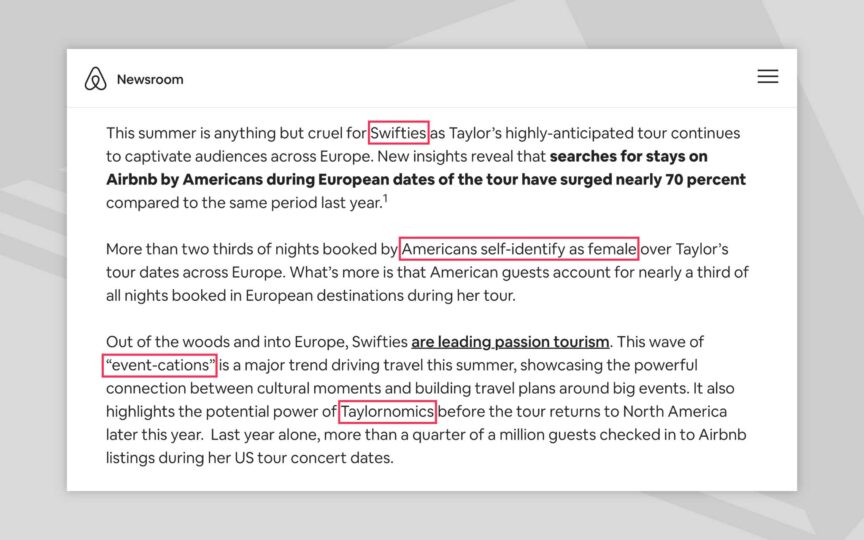
Airbnb uses youthful language, creative terms, and even new slang terms to showcases its spirited and friendly nature. This approach is evident across every content creation channel the company uses, from its website to its social media channels.
2. Sight Scotland
Another excellent example of a company with an inclusive messaging architecture, Sight Scotland, a client of Fabrik, is bold, friendly, and warm with its messaging strategy. Its language conveys hope, and compassion.
Just look at the language on Sight Scotland’s website home page. It’s ambitious, personal, and intimate. It even references specific service users directly.
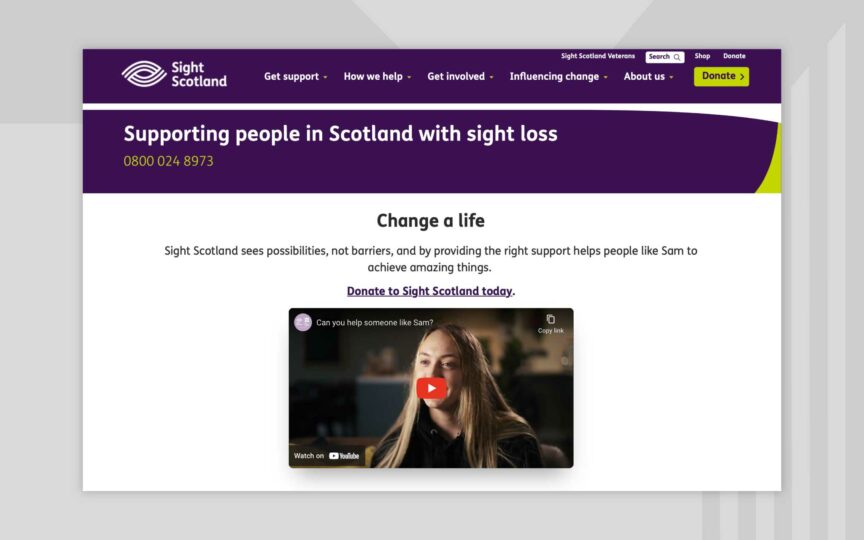
This messaging architecture positions Sight Scotland as a supportive partner for anyone with vision loss issues, regardless of their background.
3. Etsy
Etsy is one of the few companies around today that actively shares its messaging strategy with the public. You can find the organization’s brand guidelines listed online, complete with insights into the core components of its messaging architecture.
Etsy wants to be perceived as human, magical, supportive, and forward-thinking. That’s why they use passionate, imaginative and engaging language in all their marketing materials.
Just look at the bio on Etsy’s Instagram page for instance:
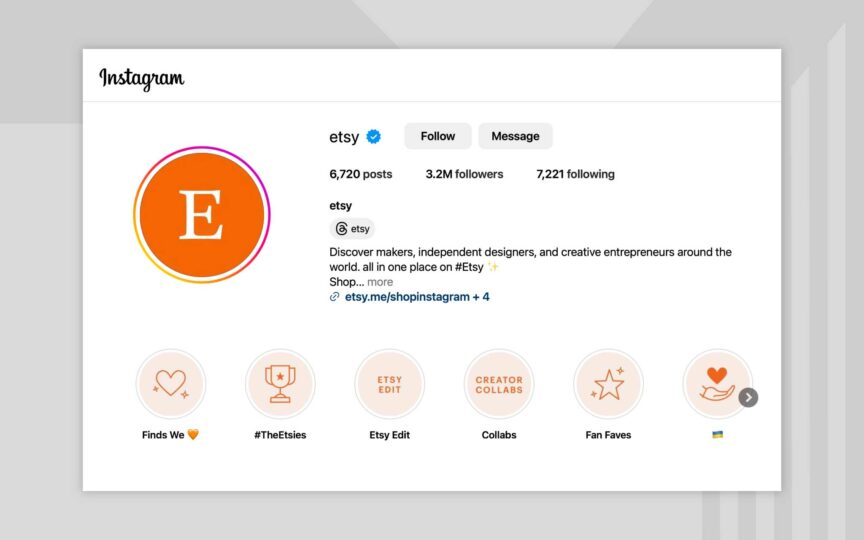
Etsy’s tone of voice and messaging strategy effectively position the company as an imaginative retailer, transforming how creators sell and connect with people online.
Build the perfect brand messaging architecture
Used correctly, the right brand messaging architecture gives you more than just direction for your content marketing strategy. It can help you enhance your brand’s presence, showcase your personality, and build deeper relationships with customers.
The only problem? Identifying the perfect messaging strategy isn’t easy.
There’s a lot to consider, from the key points you want to convey in your messaging, to the language you’re going to use. If you need help sharing your company’s values with an effective brand messaging architecture, contact Fabrik.
We’ll give you all the guidance you need, from tone guidelines to concise message strategies, to elevate and amplify your brand’s voice.
Fabrik: A branding agency for our times.
Now read these:
—Brand messaging: What it is and how it works
—The essential guide to brand messaging hierarchy
—The 5-step guide to brand messaging strategy

The agency behind the thinking
Fabrik is a branding consultancy. We help businesses navigate change, build clarity, and create brands that work. Got a challenge? Let’s talk.
Related insights
Connected thinking. Different angles.
The same productive uncertainty.

Poor messaging can be toxic to even the most popular brand. If you’re not conveying the right key messages to your target audience, in the right ways, with the correct tone of voice, then your brand loyalty and conversion rates will suffer. That’s where brand messaging hierarchy comes in. Not to be confused with your […]

If you don’t have a strong brand messaging strategy, you have virtually no chance of building a strong relationship with your target audience or boosting sales. After all, your logo and products can only tell your customers so much about your brand. If you want to forge an emotional connection with potential customers, differentiate yourself […]

What is brand messaging, and why is it so important to your brand? Every business owner knows engaging communication is key to captivating their target audience. You need to share key messages with your customers to build brand awareness, generate sales, and stand out from the competition. But telling customers about your business is just […]