
What is brand messaging? Why you need a powerful brand message

What is brand messaging, and why is it so important to your brand? Every business owner knows engaging communication is key to captivating their target audience. You need to share key messages with your customers to build brand awareness, generate sales, and stand out from the competition.
But telling customers about your business is just the first step. What about when you need to communicate with customers as your business?
That’s where brand messaging comes in, defining your tone of voice, the language you use, and how you position each piece of content you create to make a lasting impression on customers.
Brand messaging forms a critical part of your brand identity. It governs how you share your brand story, enhances your marketing campaigns, and boosts brand recognition. Just look at how famous Wendy’s has become for its humorous and unique brand voice.
Today, I’ll share everything you need to know about the power of an effective brand message, and how you can use strong brand messaging to facilitate growth.
What is brand messaging? Brand messaging definition
So, what is brand messaging? Simply put, brand messaging is a combination of how your brand speaks, what it says, and the strategies you use to convey your message. It’s a comprehensive communication strategy, informed by your brand image, values, and goals.
A strong brand message conveys your brand’s personality, helping you connect with your target market, and strengthening your position in the industry. For instance, take a look at how we developed a messaging strategy for Abri, defining the company as a friendly, trustworthy company.
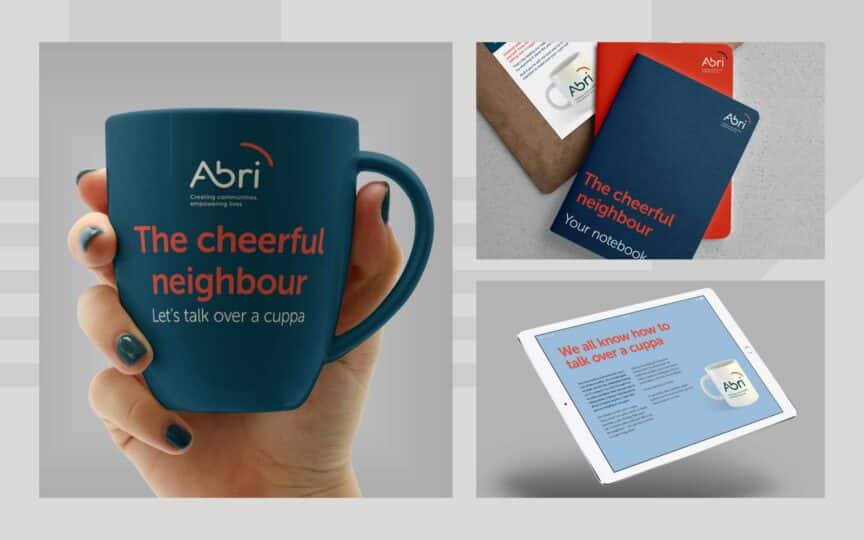
Brand messaging helps highlight your core values for customers, employees, and stakeholders, and draws attention to your unique value propositions, such as your focus on customer care, innovation, or authenticity.
Without a successful brand messaging strategy, it’s much harder to connect with people on a human level. Your marketing materials seem dull and generic, your company’s values aren’t easy to define, and you end up blending into the background.
Brand messaging refines the essence of your brand into something people can genuinely connect with, making your company more memorable, engaging, and profitable.
Internal vs external brand messaging
Most brand messaging strategies are segmented into two closely connected types: internal and external brand messaging. External brand messaging is probably the idea you’re most familiar with. It dictates how you communicate with customers and the general public.
Your external brand messaging strategy will outline the language you use in press releases, content creation for your website and social media accounts, and so on.
Here’s an example of how Brewdog uses fun, lighthearted messaging to connect with its audience:
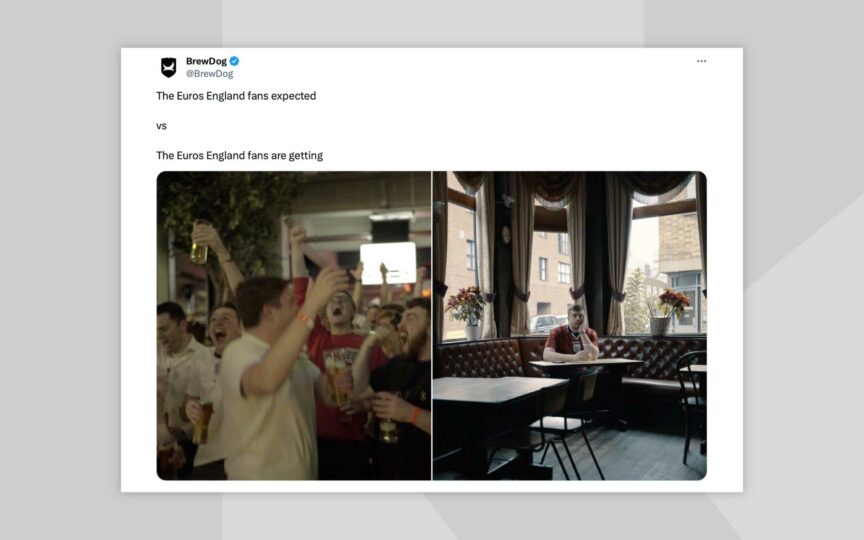
Your internal brand messaging dictates how you communicate with team members. Usually, the key points of your messaging strategy will remain the same. It can be confusing to use an entirely different voice when you connect with employees, and your customer base.
However, you might find your internal messaging uses more industry jargon, and professional terms, and a little less humor.
Like what you’re reading?
We write about branding when we have something worth saying. No schedule. Just substance.
The benefits of a strong brand message
Potential customers judge companies on more than just their visual identity. 81% of customers say they need to trust a brand before they can consider buying their products or services. Your brand message helps you to cultivate that trust.
It focuses your advertising campaigns, and the main messages you use to interact with customers around your unique value proposition, core values, and brand promise.
Effective brand messaging captures customer attention on multiple channels, and helps different audiences to understand what your business stands for. That’s crucial to building a solid emotional connection that convinces customers to choose you over the competition.
The right brand messaging framework can drive:
- Natural word of mouth marketing: How often have you told a friend or colleague about a great Tweet you’ve seen from a well-known brand. How frequently do you share informative blog posts with your network? Brand messaging encourages word of mouth marketing.
- Consistency: With a brand messaging framework, you create guidelines that ensure you send a consistent brand message across all communication channels. This ensures your marketing messages all draw attention to the key factors that make your business unique.
- Differentiation: Great brand messaging is a fantastic way to draw attention to your brand’s key differentiators. It helps to highlight your mission and vision statement, your brand values, and your personality, separating you from the competition.
Plus, amazing brand messaging is great at boosting sales. If your messaging is tailored to your audience’s needs and expectations, you’re far more likely to convince them to buy something, and remain loyal to your brand.
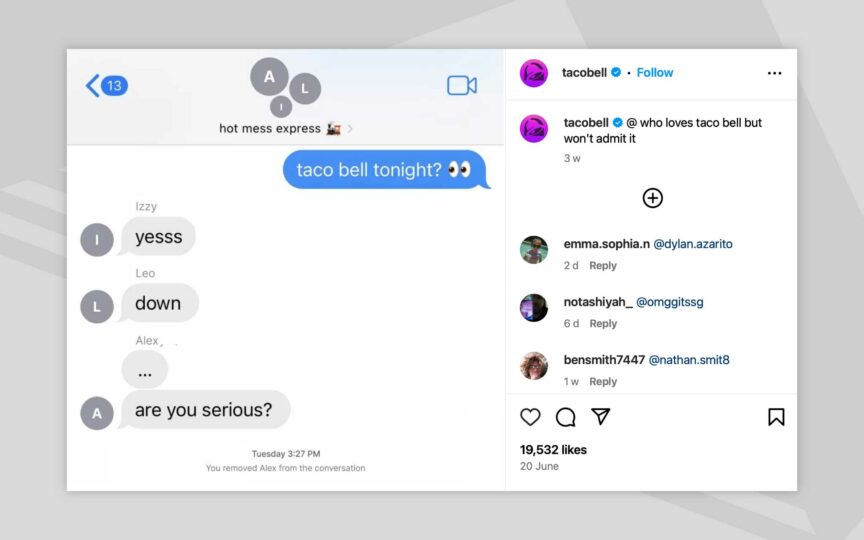
Just look at how many people love Taco Bell. It’s not just the company’s products that drive attention, it’s the way they communicate with customers using fun, relatable language.
How to craft your core brand messaging framework
Great brand messaging seems effortless, but creating a fantastic message and delivering it consistently is tough. Companies like Nike haven’t created their inspirational messaging strategy by chance. They invest significant time and effort into fine-tuning their brand’s identity.
Here are some of the steps you’ll need to take to create your own brand message framework…
Step 1: Get to know your audience
I’m often surprised at how low on the to-do list this specific task is for companies creating brand messaging strategies. Whether you’re investing in internal or external brand messaging, you need to know who you’re speaking for, before you start building your framework.
If you don’t understand your buyer personas, their pain points, goals, and how they communicate with each other, how can you ensure you’re speaking their language? How will your sales teams be able to connect with them on a deeper level, and how will marketing teams create great content?
Similarly, for internal messaging, if you don’t know what kind of language your employees use, you’re going to end up with a lot of confusion and inconsistency.
Apple knows it’s speaking to tech enthusiasts, and people searching for simple, but convenient experiences, so it uses straightforward, modern language, along with creative terms.
Learn as much as you can about your target audience. Use social listening, market research, and even focus groups for insights into their education level, location, age range, habits, and behaviors.
Use these insights as the north star for your brand communication framework.
Step 2: Conduct a competitor analysis
While you’re researching your customers, and learning as much as you can about their communication style, take a closer look at your competitors. A competitor analysis accomplishes a few things for your brand messaging strategy.
First it gives you an insight into how customers expect to be spoken to by similar brands. You can either choose to follow in the footsteps of another market leader, or create a new messaging strategy that helps to differentiate your company.
If your main competition uses a highly professional, authoritative voice, you might find you build a strong bond with customers using a more playful tone of voice.
A competitor analysis will also help you define your unique selling points, so you know what you should be drawing attention to in your messaging.
Maybe your competitors offer cheaper products than you, but you invest in more luxurious materials, or have a greater commitment to research and development. If the products you offer are very similar, you might differentiate your own brand with a focus on customer experience and service.
Step 3: Create your brand positioning statement
A crucial step in developing a strong brand messaging strategy is identifying exactly where you stand in the market, and what makes your company unique. In other words, you need a positioning statement. A positioning statement combines multiple crucial brand attributes.
It should draw attention to your “mission statement”, or the purpose behind your company, and your vision statement (where you want to go and what you want to accomplish). It also needs to identify your target customers (and their pain points), and the products or services you offer.
Most importantly, a strong position statement should make your values as a company easy to understand. Ensure customers can identify what your company stands for, beyond making money.
Here’s an example of a great positioning statement from MailChimp.
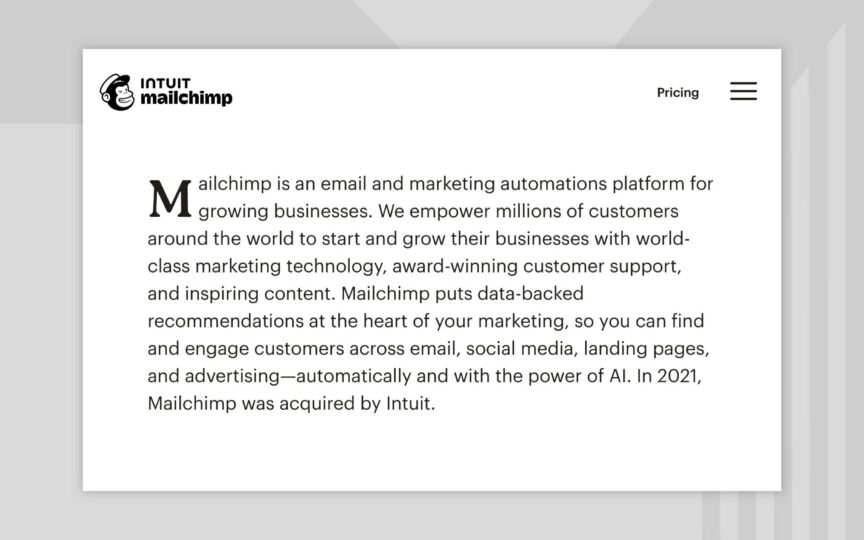
A strong positioning statement will help you to identify the key messages you want to send to your target audience. For example, during our work with the Causeway brand, we established a need to establish the company as an innovative leader in the built environment landscape.
We built a messaging strategy that highlighted the simplicity of the company’s products, conveyed their values of innovation and development, and even differentiated the brand with a new tagline.
Step 4: Develop your brand voice
Your brand voice is one of the central messaging pillars of your branding strategy, identifying exactly how you’re going to communicate with customers, and the language you use. It should be informed by your brand positioning, core values, and buyer personas.
If you want your customers to identify you as a fun, customer-focused business, then you might use a playful voice that highlights your core message in a youthful, engaging way. If you want to seem like an industry authority, your content creators might use more stats and complex terms for advertising.
As a starting point, get together with your team and ask them how they’d identify your brand as a person. What terms or adjectives would they use to describe you?
Then look at the language your customers use. Are your customers tech-savvy professionals with a deep knowledge of industry terms? If so, you might be able to use more unique language in your content, while still ensuring everything you create is accessible.
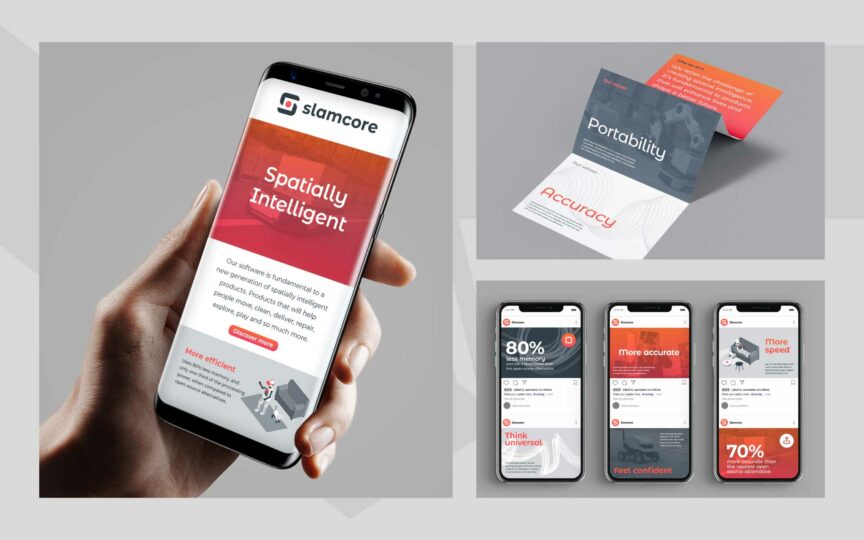
For example, our client Slamcore is a B2B company that creates intelligence software to transform the performance of consumer and robotics solutions. We created a messaging strategy for the company that highlights its leadership position in the industry with an authoritative tone.
However, we also ensured that the company’s messaging is easy to understand for all kinds of consumers and potential audience members:
Step 5: Create some core messaging pillars
Your brand messaging strategy will usually transform and evolve over time, as you learn more about your customers, and expand into new marketing strategies. When you’re first getting started, however, creating a few messaging pillars can help to guide you in the right direction.
Usually, when we’re working with a company to develop their brand’s core message framework, we help them to create:
Key messages
A selection of key messages intended to draw attention to the company’s unique selling points, mission statement, vision statement, and what they do. These messages will evolve as you add more products and services to your portfolio.
An elevator pitch
An elevator pitch distills the essence of everything you do, your brand story, positioning statement, and value proposition into just a few sentences. This is often an extremely useful tool for your marketing and sales teams.
Slogans and taglines
Though not applicable to every company, a slogan or tagline can help to quickly convey your brand ethos to your target audience. It can help to boost brand loyalty and recognition, and make your business stand out. Think of how effective Nike’s “Just Do It” slogan is.
Step 6: Define your style guide
Now you have all the details you need for a strong brand messaging strategy, it’s time to create guidelines for your employees to follow. A style guide can help public relations partners, sales teams, marketing groups and more draw attention to your brand personality in a consistent way.
Outline exactly which language to use (and what people should be avoiding), with a list of best practices. Include examples of how your team might share your core messages with customers and other stakeholders.
Remember, while your brand voice should be consistent across various channels, the exact messaging strategies you use can differ. You might need to give your content marketing team a set of different style guides to help them with creating content for your website, social media, and email campaigns.
You might use different strategies to communicate with customers through face-to-face interactions, SMS, or video marketing campaigns.
Remember, some channels also have their own rules to follow about what you can share, and how long your messages can be. For a great example of how to create a comprehensive style guide, check out Microsoft’s writing guide here.
Step 7: Be ready to evolve
Consistency is key to a great brand messaging strategy, but that doesn’t mean you should never evolve. Your brand pillars, vision, mission, and target audience might change over time. Even the marketing channels you use are likely to transform over the years.
With that in mind, it’s a good idea to review your brand style guide and messaging strategy regularly. Pay attention to what customers say about your company, and the impact you’re having on their loyalty to your brand with various messaging campaigns.
Track which of your messaging efforts drive the best results, and learn from each campaign. Don’t be afraid to create different brand messaging guidelines for different segments of your audience too.
You might find that you need to use slightly different language when you’re interacting with B2B freelancers and small businesses than you would when communicating with enterprise-level customers.
Optimizing messaging and branding
Ultimately, your goal as a brand is to show your customers why you have the perfect solution to their needs. Your brand messaging strategy is how you do that.
The language you use, across multiple channels and resources, influences the perception customers build of your company. It helps to pave the way for brand loyalty, boosts brand recognition, and ensures you can differentiate yourself from the competition.
But developing a strong brand messaging strategy isn’t without its challenges. There are a lot of factors to consider, plenty of research to do, and tricky hurdles to overcome.
If you need help building the ultimate brand messaging framework for your company, work with the experts. Reach out to Fabrik to discover how we can help you design brand messaging guidelines that amplify your voice.
Fabrik: A branding agency for our times.
Now read these:
—How to create a brand messaging architecture
—The essential guide to brand messaging hierarchy
—The 5-step guide to brand messaging strategy

The agency behind the thinking
Fabrik is a branding consultancy. We help businesses navigate change, build clarity, and create brands that work. Got a challenge? Let’s talk.
Related insights
Connected thinking. Different angles.
The same productive uncertainty.

If you don’t have a strong brand messaging strategy, you have virtually no chance of building a strong relationship with your target audience or boosting sales. After all, your logo and products can only tell your customers so much about your brand. If you want to forge an emotional connection with potential customers, differentiate yourself […]

You probably already know that if you want to differentiate your brand, forge emotional connections with customers, and build “brand equity”, you need a powerful message. So, why do so many companies overlook the importance of brand messaging architecture? Simply knowing what you want to say to your audience isn’t enough. You need a clear […]

Poor messaging can be toxic to even the most popular brand. If you’re not conveying the right key messages to your target audience, in the right ways, with the correct tone of voice, then your brand loyalty and conversion rates will suffer. That’s where brand messaging hierarchy comes in. Not to be confused with your […]