










Why digital branding is about more than web design

Most businesses still think digital branding means picking the right colours for their website. They’re wrong. While a polished homepage might catch attention, true digital branding runs much deeper—it’s about creating coherent brand experiences that work across every digital touchpoint.
The misconception that branding equals web design is costing companies clarity, consistency, and ultimately, competitive advantage.
This narrow view of digital branding has real consequences. Companies invest thousands in beautiful websites that fail to connect with their audience. Meanwhile, competitors with clearer brand strategies capture market share, even with less polished designs.
The difference isn’t in the pixels—it’s in the strategic thinking that shapes every digital interaction.
Web design vs branding (the misconception)
The confusion is understandable. When businesses think about their digital presence, they naturally gravitate towards the most visible element: their website.
But equating branding with web design is like saying a book is just its cover—it misses the entire narrative structure that makes the story work.
The visual trap
Too many brands get caught in what we call the visual trap. They reduce their digital brand identity to surface-level decisions: hero banners, colour palettes, and logo placement.
Marketing teams spend weeks debating whether the call-to-action button should be blue or green, while ignoring fundamental questions about positioning and messaging.
This approach treats symptoms, not causes. Furthermore, a beautiful website built on shaky brand foundations will always feel hollow. Visitors might admire the aesthetic, but they won’t understand what makes your brand different, valuable, or worth remembering.
Consider the countless “modern” websites that look identical. Clean typography, minimalist layouts, and vibrant colour schemes create visual appeal but no memorable brand distinction.
Without strategic differentiation, even the most polished design becomes forgettable background noise.
A website is not a brand
Here’s the crucial distinction: your website reflects your brand—it doesn’t create it. Your homepage is an expression of your brand identity, not the identity itself.
When companies mistake their site for their brand, they end up with digital experiences that look polished but feel fragmented.
The danger multiplies when brands scale. Without a solid brand foundation, every new digital touchpoint becomes a creative free-for-all. Your website says one thing, your social media another, and your email campaigns something else entirely.
The result? Confusion, not connection.
Smart brands understand that websites are just one channel in a broader digital ecosystem. They require the same strategic thinking that guides traditional brand building—clear positioning, consistent messaging, and authentic personality.
However, they also demand new considerations: user experience, content strategy, and technical performance all influence brand perception.

So, what is digital branding really about?
A strategic digital branding strategy is a discipline that transforms how your brand shows up online. It’s not about making things look pretty—it’s about making your brand work harder, smarter, and more consistently across every digital interaction.
The goal isn’t visual polish; it’s strategic clarity that translates into user understanding.
Storytelling and structure
Great brand storytelling starts with narrative:
- What story are you telling?
- How does that story unfold across different digital touchpoints?
This isn’t just about static copy—it’s about movement, flow, and the subtle interactions that guide users through your brand experience.
Consider micro copy: those small bits of text that appear in buttons, forms, and error messages. In brand-led digital design, even these tiny elements carry your brand voice.
They’re not afterthoughts; they’re opportunities to reinforce your brand personality when users need guidance most.
The structure of your digital experience should mirror your brand narrative. If your brand is about simplifying complexity, your navigation should be intuitive. If you’re about premium quality, every interaction should feel considered and refined.
Effective brand storytelling online also considers pacing and emotional journey. Users don’t consume digital content linearly—they scan, skip, and return. Therefore, your brand story must work at multiple levels: the quick scan, the detailed read, and everything in between.
Each level should reinforce your core message while serving different user needs.
Joined-up brand systems, not just stylesheets
Brand systems create coherence, not just styles. While web design focuses on individual pages, strategic thinking considers templates, tone of voice, and navigation logic. It’s about building a cohesive framework that makes your brand usable at scale.
This system thinking extends beyond visual elements:
- How does your brand voice adapt across different content types?
- What’s your approach to user onboarding?
- How do you handle error states?
These decisions shape user perception just as much as your colour scheme.
A robust digital brand system ensures consistency without stifling creativity. It provides clear guidelines for content creators, designers, and developers—making your brand easier to implement and harder to misinterpret.

Strategy before screens
Strong brands begin long before anyone opens a design tool. This is where Fabrik’s brand-first approach differs from traditional web design agencies. We start with strategy, not aesthetics—because clarity drives creativity, not the other way around.
Start with positioning and messaging
Before considering any visual elements, we need to answer fundamental questions:
- Who are we?
- Who are we speaking to?
- Why do we exist?
- What makes us different?
These aren’t marketing questions—they’re strategic ones that inform every subsequent decision.
Your digital branding strategy should articulate your unique value proposition with precision. Vague positioning leads to vague digital brand experiences. When you’re clear about what you stand for, every digital touchpoint becomes an opportunity to reinforce that message.
This strategic foundation also helps prioritise user experience decisions. Should your homepage lead with product features or brand story? The answer depends on your positioning and audience needs, not design trends.
Moreover, strong positioning creates natural content boundaries. It helps teams decide what to say, how to say it, and when to stop talking.
Without this framework, digital content becomes cluttered and confusing. Users leave because they can’t quickly understand what you offer or why it matters to them.
Content-first, not template-led
In brand-led digital design, content drives form, not the other way around. We don’t start with templates and fill them with copy—we start with your brand story and build the structure around it.
This content-first approach ensures that aesthetic choices serve strategic clarity. Every design decision should make your brand message clearer, not just prettier.
White space isn’t just a trend—it gives your key messages room to breathe. Typography choices shouldn’t just look modern—they should reinforce your brand personality.
This is why strong brands start with verbal identity and UX and branding strategy. You need to know what you’re saying before you can decide how to say it visually.
The content-first methodology also improves long-term scalability. When content structure drives design decisions, new pages and sections feel naturally connected to existing ones. Teams can create new content without starting from scratch each time.
Additionally, this approach makes testing and optimisation more meaningful—you’re testing messages and user flows, not just button colours.

What joined-up digital branding looks like
The best brands feel effortless because they’re built on strong systems. Every touchpoint feels connected, every interaction feels intentional, and every message feels consistent. This doesn’t happen by accident—it’s the result of strategic digital branding.
Slamcore (case in point)
Our work with Slamcore demonstrates how brand systems translate into content-first websites. Rather than starting with visual concepts, we began with their positioning as spatial AI pioneers.
This strategic foundation informed everything from navigation structure to technical content presentation.
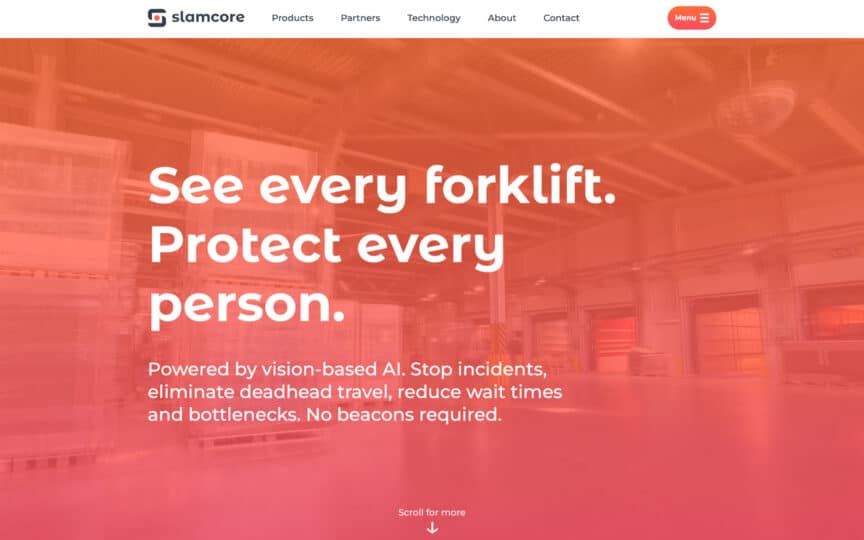
The result wasn’t just a beautiful website—it was a digital experience that made complex technology accessible to diverse audiences.
What made this approach successful was the focus on user understanding over visual impact. Instead of creating impressive animations or complex layouts, we prioritised clarity and progression.
Users could quickly grasp Slamcore’s value proposition and find relevant information without confusion. Consequently, the website became a powerful tool that educated visitors and supported the Slamcore team.
JECT.AI and MinervaX
Our approach to JECT.AI and MinervaX showcases how brands create consistency across multiple digital touchpoints. Both brands needed to communicate complex value propositions to technical audiences while maintaining approachable, human voices.
By establishing clear brand systems first, we ensured that every digital touchpoint—from website to social media to email—reinforced the same core messages. The visual identity supported the verbal identity, and the user experience supported both.
The challenge with technical brands is balancing expertise with accessibility. Users need to trust your technical competence while understanding your human value.
Our brand systems addressed this by creating content frameworks that demonstrated knowledge without overwhelming users. Each touchpoint built confidence progressively, leading users from awareness to understanding to action.

Digital brand, not just digital build
Brands aren’t about building websites—they’re about building understanding. The most successful brands don’t just look good; they communicate clearly, consistently, and compellingly across every touchpoint.
When you approach branding as a strategic discipline rather than a visual exercise, you create experiences that connect with audiences on a deeper level. You build brand equity, not just brand awareness. You create systems that scale, not just sites that shine.
The digital landscape will continue evolving—new platforms, technologies, and user behaviours will emerge. However, the fundamental principles of strategic branding remain constant.
Brands that focus on clarity, consistency, and user understanding will adapt successfully to any platform or technology.
The next time someone suggests your digital branding needs are just about web design, remember: brands aren’t built in code, they’re built on clarity. Don’t confuse output with outcome—clarity starts here.

Clarity starts with a conversation.
Thanks—we’ll get back to you shortly.
Whether you're navigating a rebrand, merger, or simply need a clearer identity—we’re here to help. No hard sell, just honest advice from people who know the sector.
Let’s start with a simple question…
Prefer to email? Drop us a line.
Fabrik’s been helping organisations rethink and reshape their brands for over 25 years. We’ve guided companies through mergers, rebrands and new launches. Whatever stage you’re at, we’ll meet you there.
