










Royal College brand strategy—blending tradition and modernity

A Royal College brand strategy is more important than most people realise. Royal Colleges hold a unique position in the UK’s educational landscape. They might make up a tiny fraction of all the various higher education institutions, public, and private schools students have to choose from, but their reputation is unmatched.
Steeped in history, built on prestige, and trusted for their expertise, Royal Colleges might seem to have an immediate competitive advantage – particularly when it comes to attracting investors, and prospective students. But with deep legacies come significant challenges.
How do you maintain tradition and demonstrate historical prowess, while staying relevant in a world that’s constantly changing? The simple answer is to build a strong brand.
A cautious approach to modern branding for Royal Colleges is how these educational institutions infuse timeless values, and heritage with brand values, assets, and even marketing strategies that resonate with new generations of international students and supporters.
Strong brand strategies aren’t just about logos or colour palettes. It’s about storytelling, relevance, and making sure Royal Colleges continue to inspire and engage for generations to come.
Royal College brand strategy—the historical context
Royal Colleges have been shaping professions for centuries. From medicine to engineering, these institutions were built on expertise, trust, and a commitment to the highest standards.
The history of a Royal College carries weight, adding to its brand value, mission statement, and ability to resonate with a huge target audience. After all, stakeholders, prospective, and current students know Royal Colleges have influence.
Just look at the Royal College of Physicians, founded in 1518. It set the benchmark for medical regulation in the UK, ensuring doctors got the training they deserved. The Royal College of Surgeons, established in 1800, similarly played a crucial role in advancing surgical standards and education.
It championed the idea that knowledge should be tested and verified rather than taken at face value. This kind of history isn’t just a point of pride; it’s a core part of a Royal College’s brand.
In a world where audiences are bombarded with messaging, the brand trust created by history is a valuable asset. That’s particularly true now, as research shows that 80% of consumers believe “trust” is critical to determining which brand they should support.
But history alone isn’t enough. The best Royal Colleges brand strategy should be able to take heritage and make it meaningful today. That means communicating tradition and value propositions in a way that feels relevant and timeless.

The value of modern branding for Royal Colleges
As valuable as history and heritage are to a university’s brand, higher education institutions like Royal Colleges can’t rely on these factors alone. No brand can afford to stay firmly rooted in the past.
Every private college, Royal institution, and university needs to commit to constantly staying relevant. They need to regularly update their positioning statement, image, and brand assets, to adapt to the priorities of new learners and stakeholders.
Investing in future-proof, modern branding for Royal Colleges, is how institutions adapt to a changing landscape. Today, the adult learners and academic minds colleges want to attract don’t just care about what institutes have accomplished in the past.
They want to see evidence that institutions are evolving, with a stronger focus on innovation and research, or a commitment to enhancing student life. Royal College’s can’t just show students that they’re willing to explore new courses, or learning styles.
They need to take a strategic approach to aligning their past, with a focus on the future. That means updating brand communication with new language and messaging strategies, making visual identities feel more contemporary and dynamic, and embracing digital media.
That last point is particularly crucial, as modern students are becoming increasingly digital. They’re not just taking more courses online, they’re using online platforms to help them choose the right college degree, or identify an institution that shares their values.
Ignoring digitisation and brand modernisation means Royal Colleges miss out on opportunities to increase their brand equity in the long run, by reaching new students, attracting employees and investors, and even maintaining life-long connections with alumni.

Developing a contemporary brand identity
Developing a contemporary brand identity for a Royal College can be challenging for traditional institutions. Modern branding is about more than just updating your brand assets with new images, or a new colour palette, or making sure you have a social media presence.
Brand owners in the higher education space need to take a holistic approach to forward-thinking university branding, investing in brand research, defining core values, and exploring new ways to bring as much value as possible to their target audience.
The most significant steps to focus on include:
1. Defining core values with growth potential
Values are the heart of a Royal College’s brand strategy. They’ll shape your marketing strategy, brand positioning, visual identity, and even strategic decisions made about courses and growth.
To move in the right direction, Royal Colleges need values that blend time-honoured traditions with the contemporary priorities of their audience. For instance, the Royal College of Radiology aims to consistently improve the standard of medical practice in its field.
It holds onto traditional values, such as a focus on patient care, but also prioritises innovation, experimenting with new technologies (like AI), and collaborating with partners to accelerate research and improve patient outcomes.
If you’re struggling to identify your core values:
- Engage stakeholders: Conduct workshops and interviews with members, alumni, staff, and students to gather diverse perspectives and find out what matters to your audience.
- Reflect on history: Examine your institution’s founding principles and significant milestones. The previously mentioned Royal College of Physicians, established in 1518, has consistently championed medical excellence and ethical practice.
- Align with modern aspirations: Consider current societal needs and the evolving landscape of the profession. Balancing tradition with innovation can position a college as both a guardian of legacy and a leader in contemporary practice.
Identify values that are flexible, and dynamic. For example, a Royal College that focuses on transforming the healthcare sector will never become “outdated”.
2. Creating modern visual identity guidelines
One of the biggest challenges in building a modern identity for historical institutions, like Royal Colleges, is designing a future-proof visual identity. There’s a reason why so many higher education institutions still use crests and historical elements in their visual branding.
Sometimes, holding onto historical images makes sense. Harvard University is recognised worldwide for its crest. However, the key to success is knowing when to upgrade visual elements, and when to blend heritage with modern components.
You may decide to maintain a crest, but create an alternative version of your logo for online platforms. Alternatively, you might choose to refresh your colour palette with contemporary colours that complement traditional hues. You may even fine-tune smaller elements, like typography.
The Royal College of Psychiatrists still uses a shield in its official logo. However, it also uses modern, sans-serif fonts on its website, alongside bright colours and high-quality photos.
3. Defining tone of voice and messaging
Once you’ve identified a strong visual identity, the next step is finding your tone of voice. For professional organisations like Royal Colleges, there’s a bit of a balancing act to navigate. You want to sound trustworthy, authoritative and professional – but not boring or stuffy.
It’s important to ensure your communications teams can convey your message in a way that connects with stakeholders on an emotional level, and differentiates you in a competitive landscape.
Our advice is to create messaging guidelines that balance credibility, with warmth. Show your knowledge and expertise with references to your history and accomplishments, but avoid technical jargon and complex terminology where possible.
Think about the user experience you’re delivering when people read your email newsletters, articles, and website content. Your voice should inspire, invigorate and enlighten – not confuse.
Develop your marketing strategy with clear guidelines on the kind of language to use and avoid, and maintain consistency across channels. Remember, your brand voice needs to make you seem approachable – to all kinds of students and audience members.
4. Digital integration and embracing digital media
We mentioned this above, but the importance of digital transformation in academic branding is impossible to ignore. If you’re investing in an institutional brand evolution, to bring your Royal College up to date with today’s standards, you need to embrace digital media.
As you build your brand strategy for royal colleges, think about your:
- Online presence: Develop a user-friendly, informative website that reflects the college’s brand and values. Regularly update your content, and make sure you share in-depth, valuable stories, and information regularly.
- Social media profiles: Use platforms like LinkedIn, Twitter, and Facebook to share updates, celebrate member achievements, and engage with your community. Keep the conversation going across channels.
- Digital marketing strategy: Employ email newsletters, webinars, and online courses to reach both current and prospective members. This will help you foster a sense of community, while increasing brand awareness, and loyalty.
Remember to be open to evolution too. Marketing and communication channels are constantly evolving, and you need to be ready to roll with the times. Pay attention to what your competitors are doing and explore new methods of communication as they emerge.

Creating a modern identity for historical institutions
Case study
If the process of creating a modern Royal Colleges brand strategy seems complicated, you’re not alone. Many institutional organisations struggle to maintain their heritage, and stay adaptable. Fortunately, the right support can make all the difference.
Take a look at the Royal College of Royal College of Anaesthetists (RCoA). This educational institution was established to represent the largest hospital specialty within the NHS: anaesthesia.
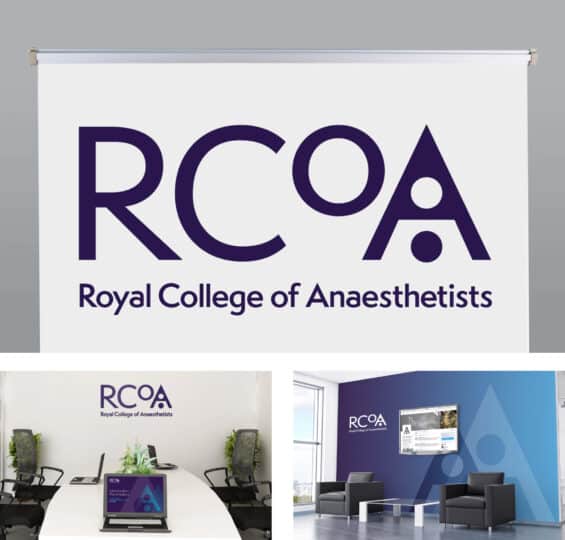
Over time, the RCoA recognised the need to refresh its brand to better reflect its modern, forward-thinking ethos and to engage both current and prospective members. To achieve this, they partnered with our team at Fabrik, on a multi-stage strategy.
Leveraging our knowledge of strategic branding in education, we began with an in-depth research process, to understand the core values and missions behind the RCoA.
Key takeaways
Our work with RCoA draws attention to some of the most important lessons you can take with you into your own Royal Colleges brand strategy.
When you’re developing a future-proof brand, always focus on:
- Authentic engagement: Involving stakeholders throughout the rebranding process ensures your updated or new brand genuinely reflects the community’s values and aspirations.
- Balanced modernisation: Updating visual elements can honour tradition while appealing to contemporary audiences, striking a balance between heritage and innovation. You don’t have to replace everything, but you do need to be future-ready.
- Consistent messaging: A unified tone of voice across all communications fosters trust and reinforces the institution’s identity. Define your values and make them central to your messaging.

Actionable steps for a successful Royal Colleges brand strategy
Effective branding for higher education institutions like Royal Colleges can be complicated to implement. It’s not easy to build a brand strategy for professional bodies that respects the past, while adapting to the future.
Here are some of the key steps we recommend taking:
Step 1: Conduct a brand audit
Before you start updating or changing any aspect of your Royal Colleges brand strategy, take stock of where you currently stand. Review your existing mission statement and values. Gather insights from members, alumni and stakeholders, and figure out what’s working and what isn’t.
Examine your existing brand materials, from your logo and website, to your tone of voice, and define what you need to update first to stay relevant.
Step 2: Define or refine core values
A brand is only as strong as its foundation, and that foundation is set in your values. Make sure you have clear values that honour tradition, while embracing the modern aspirations of your students, stakeholders, and anyone else you want to reach.
Conduct research to ensure that the values you’re going to be sharing actually resonate with all of your audiences, from long-standing alumni, to the wider professional community.
Step 3: Update your visual identity
Sometimes, you won’t need a complete logo redesign to modernise your brand image. However, you should be open to fine-tuning and refining your visual assets, to appeal to a modern audience. Look for ways to retain recognisable elements, while making your image more appealing to new audiences.
Make sure your colour palette, typography, logo, and other visual assets will work well across all platforms, from digital channels, to offline environments.
Step 4: Develop a unified tone of voice
Update your tone of voice and brand guidelines. Try to maintain authority, credibility, and expertise, while also introducing warmth and accessibility. Examine how your competitors speak to their target audiences, and be ready to adapt accordingly.
Once you’ve established your tone of voice, apply it consistently across all your messaging, from your course materials to your website content, and social media posts.
Step 5: Implement and monitor consistently
Finally, roll out your brand updates with a careful approach. Train staff and stakeholders on how to use new brand assets throughout specific situations. Pay attention to how people respond to your new tone of voice and visual assets, and be ready to make changes when necessary.
Remember, a Royal College’s brand should feel timeless yet current – rooted in history but built for the future. Stay agile and adaptable as you move into the next step of your branding journey.

Honouring the past, embracing the future
Creating a Royal Colleges brand strategy that combines heritage and history with modern concepts can be complicated, but it’s crucial to stay relevant in an ever-evolving world.
Your institution might have spent centuries building trust and authority. But now, you need to make sure that legacy resonates with today’s audiences.
By carefully blending tradition with modernity – through refined values, an evolved visual identity, a fresh tone of voice, and a strong digital presence – Royal Colleges can future-proof their brands without losing sight of what makes them special.
Change doesn’t mean starting from scratch. It means taking what already exists and shaping it into something meaningful for the next generation.
If you’re not sure where to get started, Fabrik is here to help. Our team specialises in helping organisations find the perfect balance between history, and dynamic adaptability.
Contact us today to discover how we can help your Royal College unlock new opportunities, expand your brand’s impact, and remain resilient in the evolving education sector.
We can help you build a brand that’s both timeless, and future ready.
Step into the future today!
Fabrik: A branding agency for our times.

Clarity starts with a conversation.
Thanks—we’ll get back to you shortly.
Whether you're navigating a rebrand, merger, or simply need a clearer identity—we’re here to help. No hard sell, just honest advice from people who know the sector.
Let’s start with a simple question…
Prefer to email? Drop us a line.
Fabrik’s been helping organisations rethink and reshape their brands for over 25 years. We’ve guided companies through mergers, rebrands and new launches. Whatever stage you’re at, we’ll meet you there.
