














How to build your master brand strategy: The basics and benefits

There are many ways to grow a brand, and a business, but the master brand strategyis one of the most popular of all. Countless companies, from Coca-Cola to Hershey’s, rely on the master brand framework to increase brand equity, revenue, and customer loyalty.
But what actually is a master brand strategy? How do you know whether it’s right for your organization, and how to you manage a master brand framework?
Excelling in master branding is about more than just creating a compelling parent brand, and constantly expanding your business with new sub-brands and extensions.
Here, I’ll walk you through everything you need to know about master branding, from the benefits of this type of brand architecture, to the tips you can use to boost your chances of success.
What is a master brand?
Master brand definition
A master brand is an overarching “main brand” or “parent brand” in brand architecture, that acts as an anchoring point for all other products and sub-brands managed by that company. In master brand strategies, each sub-brand may have its own name, unique identity, and brand positioning.
However, the master brand in this ecosystem plays a pivotal role in improving the reputation of the sub-brands, helping products reach different markets, and increasing profitability.
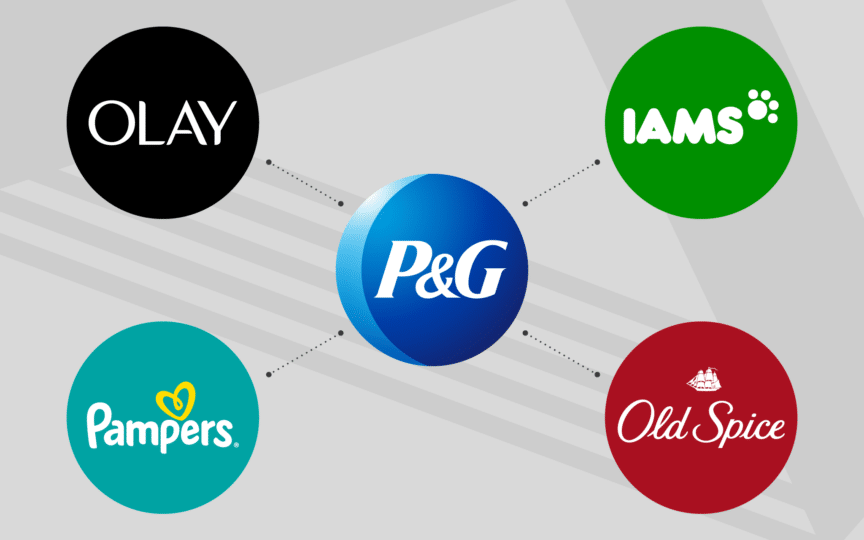
Procter & Gamble is an excellent example of a master brand. The parent brand (P&G) is responsible for a wide selection of other products and sub-brands targeting different markets, from Olay in the beauty sector, to Iams in the pet niche.
Understanding how master brands work
The master brand strategy might be one of the most common ways for companies to expand their reach in any landscape, but it can be difficult to understand. A master brand is basically an individual brand that creates a single corporate trademark for a wide selection of products.
The idea is for the company to act as an “umbrella brand”, where a parent company guides the production of new products, and drives attention towards smaller brands and products. However, each sub-brand may operate independently, and have its own unique target market.
There are different ways to approach a master branding architecture.
One option is the “branded house” approach, otherwise known as portfolio branding, where the parent company shares a lot in common with its sub-brands. Apple sells a lot of different products and collections with their own identities.
However, most of these products share the same brand name, from the Apple iPhones to Apple Mac devices. Another option is the endorsed brand, or sub-branding approach, where the sub-brands share very little in common with the master brand.
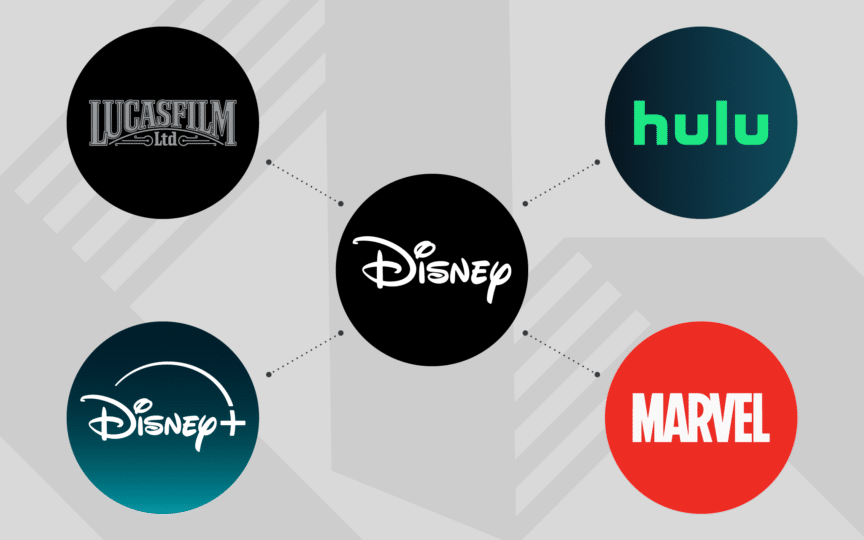
As an example, the Walt Disney Company has the Disney brand, connected mostly with child-friendly entertainment, as well as other products, like Touchstone Pictures and ESPN, which target adults. Each brand in this portfolio is kept distinct and separate.
Some companies even leverage a hybrid brand architecture, where some sub-brands are more closely connected with the parent brand than others. Google has Gmail and Google Drive, which are strongly linked to the Google brand.
However, Google is also responsible for companies like Android, Waze, and Looker.
Master brand benefits: Why invest in master branding?
An effective master brand strategy has several benefits. It can help increase awareness of a brand portfolio, reduce advertising costs, and assist businesses in expanding into new markets and segments. The right strategy can significantly increase your revenue too.
With a master brand, there’s nothing stopping your company from creating various products with their own value proposition and target audience.
A strong master brand also means that the existing equity of your parent company can be transferred to new companies, reducing the expense and effort involved in earning the trust of customers every time you introduce a new brand into your portfolio.
Fundamentally, this brand architecture strategy:
Makes advertising more efficient and cost effective
One of the biggest benefits of using a master brand strategy is that it can make marketing more efficient and cost effective. Marketing products in a wide portfolio separately means investing a lot of time and effort in creating new campaigns.
With a master brand strategy, you can advertise and promote various products at once, with a single campaign. If Apple invests in comprehensive marketing efforts that draw attention to its value as an innovator, this also draws attention to the benefits of all the products in Apple’s portfolio.
If FedEx advertises its main company name with a strong campaign, it doesn’t have to spend as much time advertising other separate products too, like FedEx Express.
Fosters brand loyalty and growth
Few things are more important than customer loyalty, particularly in a competitive market. With a master brand strategy, your main focus will be on building the reputation of your parent brand, earning the trust and loyalty of customers in a broad market.
Master branding involves creating a solid foundation for your business name, showing your customers they can trust you to always deliver exceptional products, customer service, and unique benefits.
Once your parent brand convinces customers that they can trust you, it’s easier for the family of brands you represent to earn the same trust. If you consistently deliver the same amazing experience with all of your separate brands, that trust and relationship with your customer grows.
Another key perk is that master branding can encourage customers to stick with your business, even as their needs change. A customer that falls in love with the Coca-Cola brand might choose to cut soda out of their diet.
However, because they know they get a good experience from Coca-Cola, they might choose one of their sub-brands for a low-calorie, healthier option, like Dasani water.
Improves brand differentiation
Competition in any industry is steeper than ever today. It’s important for businesses to constantly look for ways to outperform the competition. Simply upgrading your company’s products to address customer needs might not be enough.
Master branding is a good way to set yourself apart. By focusing on building your parent brand’s reputation, rather than concentrating on earning “product loyalty”, you boost your chances of differentiating yourself from the competition.
Instead of competing with other companies based on the features of your products, or pricing, you connect with customers based on your unique history, innovative approach, and personality.
At the same time, master branding gives you a chance to constantly build on your product collection and expand into new areas. A technology company with a master brand strategy like Sony, for instance, isn’t restricted to selling one type of electronic products.
It can explore new areas as market dynamics change, creating a brand portfolio full of unique offerings, from entertainment products to gaming consoles like the PlayStation.
Increases stakeholder appeal and brand equity
Great brands need to do more than just impress stakeholders to grow. However, keeping your stakeholders, such as distributors, suppliers, and investors happy, is crucial to your company’s future success. A master brand strategy can help with this.
Stakeholders check for evidence of brand equity by examining how well a company has already made a name for itself in the industry, its reputation, and its profits.
If you’ve built a name for yourself as a leader in your industry, stakeholders are more likely to want to work with you as you introduce new products and different services. They’ll want to be part of your continued growth, because they can see opportunities to make a profit.
The efforts you implement into your master brand strategy can make a difference too. If you establish yourself as a sustainable and eco-friendly parent brand, eco-conscious partners and investors will want to get involved with your extension brands too.
The risks and challenges of master brand management
In many different industries, a master brand strategy can be powerful, whether you opt for an endorsed brand strategy, a house of brands architecture, or something hybrid.
However, there are risks to master brand management too. In a master brand strategy, your parent company plays a pivotal role in accelerating your company’s growth.
Whether you use an endorsed brand strategy, a branded house strategy, or a house of brands strategy, there’s always a connection between your sub brands, and the master brand. No matter how small this connection is, it can limit your ability to differentiate your portfolio.
A company that builds a reputation for its master brand as an innovator in the computing space, like PC Specialist, would probably struggle to branch into the beauty industry.
Trying to span out and create too many new entities in different niches can cause confusion among your customers, and harm your brand’s reputation.
Additionally, because the master brand strategy links all of your products and sub-brands, there can be both a positive and negative domino effect.
While success for your sub-brands and parent brand can improve your reputation, problems with any of your products or various brands can affect the rest too.
As an example, if Disney worked with a sub-brand to release a highly offensive movie, this could impact the parent brand’s reputation as a family-friendly organization.
How to approach your master brand strategy
Creating and managing a master brand requires a lot of strategic planning and care. Even large corporations have struggled with the process in the past. That’s why it’s usually a good idea to get the support of a company with experience in master branding.
Here are some best practices for success, based on our experience at Fabrik, helping organizations develop different brands.
1. Create a powerful core identity
The first thing you need for a strong master brand strategy is a powerful and engaging identity for your master brand. This doesn’t just mean designing a great logo or visual identity (although that is important). A strong brand is defined by a range of factors.
Perhaps the most important thing you’ll need is a clear vision, mission statement, and set of values. Even if you create different brands to attract new audiences, all of your entities should be connected by the same core values and overall purpose.
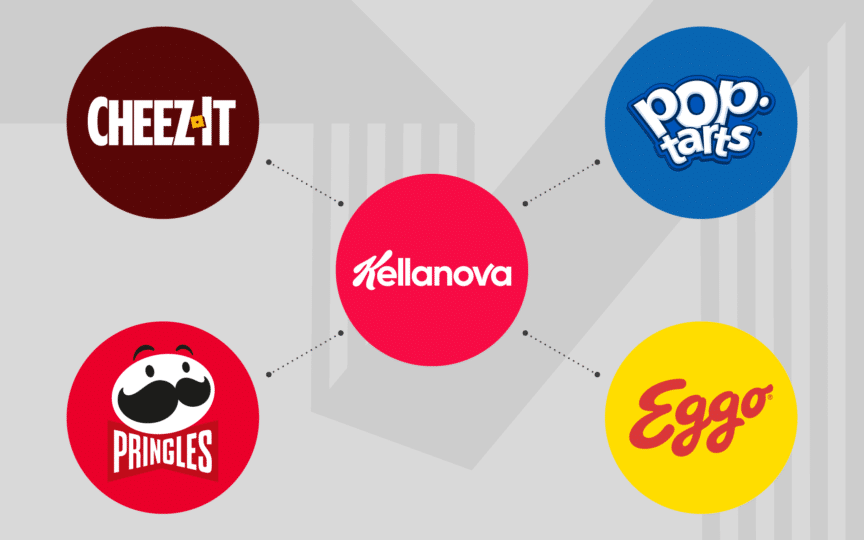
Identify what your master brand wants to accomplish. As an example, Kellogg’s mission is to deliver nutritional food to time-pressed customers. It creates a wide range of products targeted at different tastes and preferences, but always focuses on quality and convenience.
2. Develop a strong messaging strategy
Once you’ve identified the values and vision of your parent brand, you need to communicate them to your target audience. This means defining a comprehensive messaging strategy that outline’s your parent brand’s personality and tone of voice, and the marketing channels you’re going to use.
You’ll also need to identify how different brands in your portfolio will share certain elements of your messaging strategy. Some of your brands might use slightly more playful language, or sophisticated terms, but they should convey similar values, and ideas.
All of Google’s brands share similar messages about innovation, simplicity, and convenience, even if they interact with customers in slightly different ways.
Ideally, your main focus with a master brand strategy will be on drawing attention to the story, values, and unique market position of your parent brand. However, the messaging strategy of your sub-brands should complement your overall strategy.
3. Personalize your marketing strategies
The key to success with a master brand strategy is building an emotional connection with your target audience. You should be constantly looking for ways to reach and engage your audience through different channels, from social media, to email campaigns, and more.
Enlist reputable figures to become part of your branding campaign. Many large corporations work with influencers, partners, and thought leaders to expand their brand reach.
Activating your customers, and turning them into ambassadors for your company can also help you to boost your brand’s reputation. All of Nike’s brands, from Umbro to Converse, leverage brand ambassadors and customer stories to strengthen emotional connections with the Nike parent brand.
When you’re building your advertising campaigns, creating blog posts, and producing case studies, search for ways to make your customers the champion of your story.
4. Remain consistent, but know when to pivot
Consistency is crucial in a master brand strategy. You need to constantly showcase the same values, visual and verbal identity, and mission to your audience. However, this doesn’t mean that you shouldn’t be looking for ways to evolve and improve.
The best examples of master brands, like Coca-Cola and Google, know they need to ensure they’re constantly delivering the value and experience their customers expect. They need to guarantee their parent brands, and sub-brands stay true to a clear mission and vision.
However, they also regularly research their target market, adapt to changing market dynamics, and analyze the effectiveness of their strategy.
Monitoring your brand’s reputation as it evolves, paying attention to changes in customer behavior and preferences, and staying up to date with the market is crucial to ensure you can resonate with your target audience in the long term.
Examples of master brands with successful strategies
We’ve already mentioned some of the best examples of master brands throughout this guide, from the Walt Disney Company to Google. But here are a couple of extra examples of master brands you can use for insights and inspiration as you grow your organization.
1. Hershey’s
Historically, Hershey’s has advertised its individual products separately, highlighting the unique features of items like its chocolate bars and syrups. The company offers a wide range of confectionery products, including popular treats like Reese’s Peanut Butter Cups.
In the United States, Hershey also produces and distributes well-known brands such as KitKat bars and Cadbury Crème Eggs under licensing agreements, though these brands are owned by other companies globally.
In 2016, the company decided to unify its brands with a single campaign: “Hello Happy, Hello Hershey’s”. This strategy launched a more unified experience for Hershey’s customers.
The directors of the brand said that their customers had told them that they’re more likely to see Hershey’s as an individual brand than a selection of sub-products.
Introducing a new campaign allowed Hershey’s to bring all of its products together, and create a more cohesive identity for customers to fall in love with.
2. Virgin
Virgin is a true master of master branding. Launched in 1970 by Richard Branson and Nik Powell, the Virgin Group consists of more than 40 companies and 200 brands distributed across five continents. All of these brands feature a direct connection to the parent brand.
They also all commit to the same values, mission, and goals. The overall purpose of the Virgin company is to change the business world for good, and act as a market disruptor, focusing on innovation, and customer centricity.
Today, Virgin has expanded into countless sectors, from book publishing and gaming, to air travel, and the parent brand is stronger than ever. Virgin proves that master branding can enable exceptional expansion for a company, if individual brands in a collection share the same focus.
3. Coca-Cola
Coca-Cola is one of the most famous companies known for its master brand strategy. Although the name Coca-Cola is most commonly connected with red soda cans, and the “original” soda drink, the company is responsible for everything from Costa Coffee, to Sprite.
Like Hershey’s, Coca-Cola decided to unify all of its brands under a single image in 2016, with the “Taste the Feeling” campaign.
According to the company, the “one brand strategy” is designed to show customers that everyone, no matter their tastes or preferences, can expect an amazing experience from Coca-Cola.
With this master brand strategy, Coca-Cola positioned itself not as a vendor of a single sugary drink, but as a champion of joy, refreshment, and flavor for a global audience.
Master brand strategy: Key takeaways
- Master branding is a term used to describe a type of brand architecture where a parent brand serves as the central anchoring point for all associated sub-brands, products and extensions.
- Though individual products in a master brand’s collection might carry their own names (like Coca-Cola and Sprite), the master brand is essential to the company’s growth.
- Sub-brands in a master branding strategy may not have much in common with the parent brand. They can target different audiences, product lines, and geographies.
- The master brand business strategy can help to reduce advertising costs, boost brand awareness for new companies, and increase brand equity.
- Master branding strategies can also have downsides, such as risks to diversification, and the potential for sub-brand performance to be affected by the main brand.
Build your master branding strategy
A master brand strategy can be a valuable way for any business to expand, grow, and unlock new revenue. Master brand marketing can give you a unique way to connect with your audience, develop loyalty, and discover new streams of profit.
However, just like any brand strategy, master branding needs to be implemented correctly. If you’re going to embrace the master brand method yourself, it pays to have the help of the right experts.
At Fabrik, we can help you develop the ideal parent brand to fuel your master brand strategy’s growth. We help companies with everything from strategic planning, to visual design, marketing campaigns, and more.
Contact Fabrik today for insights into how we can bring your master brand strategy to life.
Fabrik: A branding agency for our times.
Now read these:
— Global branding: Building brands without borders
— What the gig economy means for your business

Clarity starts with a conversation.
Thanks—we’ll get back to you shortly.
Whether you're navigating a rebrand, merger, or simply need a clearer identity—we’re here to help. No hard sell, just honest advice from people who know the sector.
Let’s start with a simple question…
Prefer to email? Drop us a line.
Fabrik’s been helping organisations rethink and reshape their brands for over 25 years. We’ve guided companies through mergers, rebrands and new launches. Whatever stage you’re at, we’ll meet you there.
