









Beyond the pitch deck: how branding wins investor confidence

Investors don’t just buy data—they buy belief. While pitch decks present compelling numbers and market opportunities, the decision to invest often hinges on something more intangible: confidence. This confidence doesn’t materialise from slides alone. It emerges from every interaction, every touchpoint, and every signal your brand sends before, during, and after that crucial pitch.
Strong branding for investors transcends the traditional boundaries of marketing. It’s a strategic tool that builds trust, reduces perceived risk, and creates emotional reassurance alongside rational evaluation. Research by McKinsey highlights how investor perception increasingly depends on brand strength rather than pure financial metrics.
The reality is that branding for investor confidence operates at both conscious and subconscious levels. While investors analyse your financials and market strategy, they’re simultaneously forming gut feelings about your brand’s maturity, consistency, and authenticity.
These impressions compound over time, creating either mounting confidence or lingering doubts that no amount of spreadsheet wizardry can overcome.
Why branding matters to investors
Branding serves as a credibility multiplier in the investment landscape, transforming abstract business potential into tangible investor confidence. While financial metrics provide the rational foundation for investment decisions, branding for investors addresses the emotional and psychological dimensions that ultimately tip the scales.
Sophisticated investors understand that strong brands correlate with better market performance, higher customer retention, and more resilient business models. They’ve seen how companies with clear brand identities navigate market turbulence more effectively than those without.
This understanding makes how branding attracts investors not just a marketing consideration but a fundamental evaluation criterion.
According to the Edelman Trust Barometer, trust remains one of the top three drivers of investment decisions — reinforcing that branding is more than a marketing exercise; it’s a credibility signal.
From data to emotion
Even the most analytical investors make emotional judgments—branding bridges both worlds by creating resonance beyond spreadsheets.
Numbers tell what’s possible, but brands communicate what’s believable. When investors review dozens of opportunities monthly, emotional resonance becomes a differentiator. Strong brands create memorable impressions that persist long after pitch meetings end.
The intersection of data and emotion is where investment decisions happen. Branding that acknowledges this duality—presenting rock-solid metrics within compelling narratives—captures both investor attention and imagination.
This emotional reassurance doesn’t replace rigorous analysis; it complements it by providing confidence that numbers alone cannot deliver.
Consider how investors describe their best investments: rarely do they cite IRR figures first. Instead, they speak about believing in the vision, trusting the team, or sensing something special.
These intangibles emerge from effective investor confidence branding that operates beyond pure logic.
A shortcut to trust
Strong brands reduce perceived risk, signalling competence and reliability before due diligence even begins.
Trust typically takes time to build, but investors often make initial decisions within days or weeks. Brand trust and credibility accelerate this process by providing immediate signals of professionalism and capability.
When your brand consistently delivers quality across every touchpoint, investors extrapolate that consistency to your business operations. This trust shortcut becomes particularly valuable in competitive funding rounds.
While competitors scramble to prove their worth through endless documentation, companies with strong brands enter conversations with presumed competence.
Investors spend less time questioning fundamentals and more time exploring growth potential.
The compound effect of brand trust extends beyond initial meetings. When investors discuss opportunities with partners or advisors, strong brands travel well in conversation. “Have you seen what they’re building?” carries more weight when backed by memorable, credible branding that others can easily reference and recall.
The confidence effect
A confident, coherent brand gives investors the assurance that the business can deliver on ambitious projections.
Confidence is contagious, especially in investment contexts. When brands project clarity and conviction, investors unconsciously mirror that confidence. This isn’t about arrogance or overselling—it’s about demonstrating deep market understanding and unwavering focus through every brand expression.
Branding for investors that exudes quiet confidence suggests teams that won’t crumble under pressure or pivot frantically at first adversity. This stability matters immensely to investors who’ve watched promising ventures fail due to leadership uncertainty or strategic confusion.
The most compelling brands maintain confidence without sacrificing authenticity. They acknowledge challenges while demonstrating capability to overcome them. This balanced confidence, expressed through consistent messaging and visual identity, creates the investor reassurance that transforms interest into commitment.

What investors look for in a brand
Investors scan for specific cues that signal investment readiness, often processing these signals subconsciously before conscious evaluation begins. Understanding these cues allows companies to craft branding and investor confidence strategies that resonate with investor psychology.
As Harvard Business Review notes, investor confidence often hinges on emotional trust as much as rational performance data.
The evaluation happens rapidly—investors often form initial impressions within seconds of encountering your brand. These snap judgments influence every subsequent interaction, making first impressions disproportionately important.
Successful brands recognise that investor brand perception isn’t just about looking professional; it’s about demonstrating strategic thinking through design choices, messaging hierarchies, and content priorities.
Every element should reinforce your investment thesis while addressing common investor concerns about team capability, market understanding, and execution potential.
Clarity of story
Investors need to quickly grasp what you stand for and where you’re going—confusion kills confidence.
Brand storytelling for investors requires surgical precision. Within moments, investors should understand your market position, value proposition, and growth trajectory. This clarity doesn’t mean oversimplification; it means distilling complexity into memorable, meaningful narratives.
The best investment stories follow familiar patterns that investors recognise: problem, solution, traction, vision. When your brand story aligns with these patterns while maintaining uniqueness, investors can quickly categorise and evaluate your opportunity.
Clear stories also travel well through investor networks. When partners need to explain your opportunity to investment committees, clarity becomes crucial. Strong visual identity and investor perception work together here—memorable brands with clear stories get recommended more frequently and funded more quickly.
Consistency of presentation
Logos, decks, websites, and founder messaging should all tell the same story without contradiction or confusion.
Investor communications succeed through repetition and reinforcement. When every touchpoint delivers consistent messages, investors develop confidence in your strategic focus.
This consistency signals operational discipline—if you can’t maintain brand consistency, how will you maintain product quality or customer service standards?
Visual identity and investor perception interlink powerfully here. Professional, consistent design suggests attention to detail that extends beyond marketing. When pitch decks match websites which match product interfaces, investors see evidence of systematic thinking and coordinated execution.
Credibility of leadership
A credible brand mirrors a credible team—confidence flows from the top and permeates every touchpoint.
Leadership credibility manifests through brand expression. How founders present themselves, communicate vision, and maintain consistency across channels directly impacts branding for investors. Investors bet on people as much as products, making leadership branding crucial for funding success.
Credible leaders demonstrate expertise without arrogance, vision without delusion, and confidence without hubris. These qualities should permeate your brand voice, visual choices, and content strategy. When leadership credibility aligns with brand expression, investors sense authenticity that data alone cannot convey.

Beyond the pitch deck—proving your brand’s credibility
The investment journey extends far beyond formal presentations, encompassing every interaction from initial outreach through due diligence and beyond. Smart companies recognise that branding and investor confidence building continues long after slides conclude.
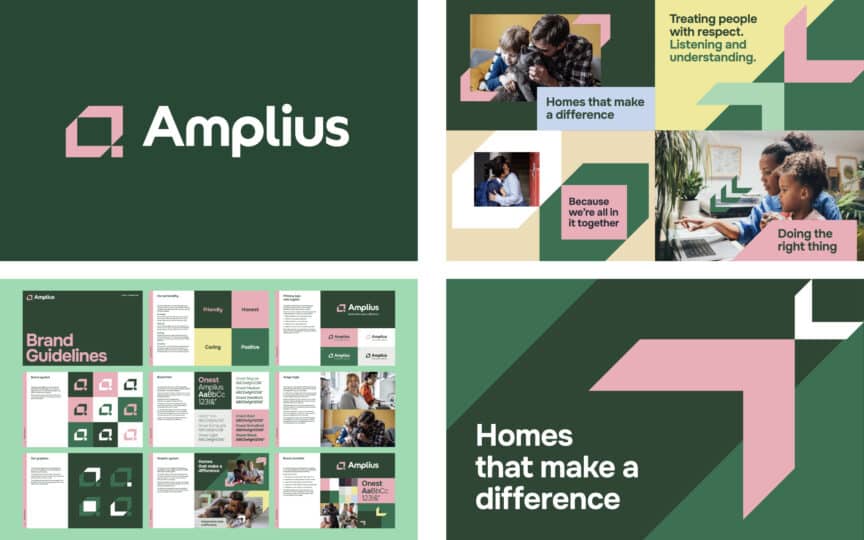
See how we applied this in practice through our Amplius merger branding project — creating cohesion and credibility during a major transition.
Post-pitch interactions often determine investment outcomes—investors frequently cite follow-up quality, response speed, and continued engagement as decision factors. This extended journey requires sustained brand consistency that reinforces initial positive impressions.
Companies that maintain momentum through consistent, professional brand expression throughout the investment process close rounds faster and secure better terms.
The role of brand strategy
Structured brand strategy builds confidence through focus and foresight, showing investors you think beyond quarterly metrics.
When companies articulate clear brand visions, defined target audiences, and differentiated positioning, investors see evidence of strategic maturity. This strategic clarity suggests teams capable of navigating market complexity and competitive pressure.
Effective brand strategy also reveals market understanding. How you position against competitors, identify customer segments, and articulate value propositions shows investors your grasp of market dynamics.
The documentation of brand strategy itself becomes a credibility tool. Brand guidelines, messaging frameworks, and visual standards demonstrate systematic thinking and scalable processes.
The role of visual identity
Visual identity and investor perception connect at primal levels. Professional design signals professional operations.
When investors encounter polished visual identities, they unconsciously assume similar quality in product development, customer service, and financial management.
The sophistication of visual identity should match your market position and growth stage. Over-designing can seem premature; under-designing suggests lack of ambition.
Consistent visual systems also facilitate investor evaluation. When materials share consistent design languages, investors can focus on content rather than decoding varying presentations.
The role of tone and storytelling
Words shape belief—your tone should project ambition and competence without overreaching.
Effective brand storytelling for investors requires carefully calibrated tone that balances confidence with credibility. The language you choose, narratives you craft, and voice you maintain across channels collectively shape investor perception.
Storytelling consistency across founders, materials, and channels reinforces credibility. When everyone tells compatible stories using consistent language, investors sense alignment and focus. This emotional reassurance often tips investment decisions when rational metrics are comparable across opportunities.

Building investor confidence through branding
The cumulative effect of consistent, credible branding compounds over time, creating mounting investor confidence that accelerates funding success. This compounding occurs because every positive brand interaction reinforces previous impressions, building psychological momentum toward investment decisions.
Building investor confidence through branding isn’t about single impressive moments, but sustained excellence across every touchpoint.
Companies that understand this long-game approach to branding for investors find that late-stage negotiations proceed more smoothly because trust has been systematically built throughout the process.
Brand coherence and alignment
When story, visuals, and leadership align perfectly, investors sense professionalism that extends beyond marketing into operations. Brand coherence and investor brand perception create powerful feedback loops.
When every element reinforces the same core narrative, investors develop confidence that transcends individual touchpoints.
Alignment between brand promise and business delivery proves particularly powerful.
When marketing messages match product experiences, and leadership embodies brand values, investors see authentic businesses built on solid foundations.
Momentum and reputation
Investor confidence compounds when your brand builds consistent visibility and demonstrates sustained market traction.
When investors repeatedly encounter your brand across channels—industry publications, partner announcements, or social media—they perceive market acceptance and growing influence.
Reputation building through strategic investor communications accelerates funding processes. Regular updates, thought leadership content, and strategic PR create ambient awareness that primes investors before formal introductions.
The compound effect of momentum is substantial. Brands that maintain consistent visibility while delivering on promises create reputational capital that survives market downturns.

Takeaways for brand leaders
For brand leaders preparing for investment rounds, success requires systematic attention to three fundamental principles that underpin all effective branding for investors.
These principles—clarity, consistency, and credibility—work synergistically to create comprehensive investor confidence that withstands scrutiny and accelerates funding success.
Clarity conquers complexity. Distil your value proposition into memorable, meaningful messages that investors can quickly grasp and easily share.
Consistency creates confidence. Maintain unwavering brand standards across every touchpoint, from email signatures to executive presentations.
Credibility closes deals. Back every brand claim with evidence, align promises with delivery, and ensure leadership embodies brand values.

Turning belief into investment
Investor confidence isn’t won in a single pitch—it’s earned through every brand signal that precedes, accompanies, and follows formal presentations. While pitch decks provide rational frameworks for investment decisions, branding and investor confidence operate at deeper levels where trust, belief, and emotional reassurance determine outcomes.
Companies that recognise branding as strategic investment infrastructure rather than marketing expense position themselves for funding success.
Looking to build investor confidence that goes beyond the pitch deck? Contact Fabrik and discover how our brand strategy and visual identity services can help you create the credibility that accelerates funding success.

Clarity starts with a conversation.
Thanks—we’ll get back to you shortly.
Whether you're navigating a rebrand, merger, or simply need a clearer identity—we’re here to help. No hard sell, just honest advice from people who know the sector.
Let’s start with a simple question…
Prefer to email? Drop us a line.
Fabrik’s been helping organisations rethink and reshape their brands for over 25 years. We’ve guided companies through mergers, rebrands and new launches. Whatever stage you’re at, we’ll meet you there.
