




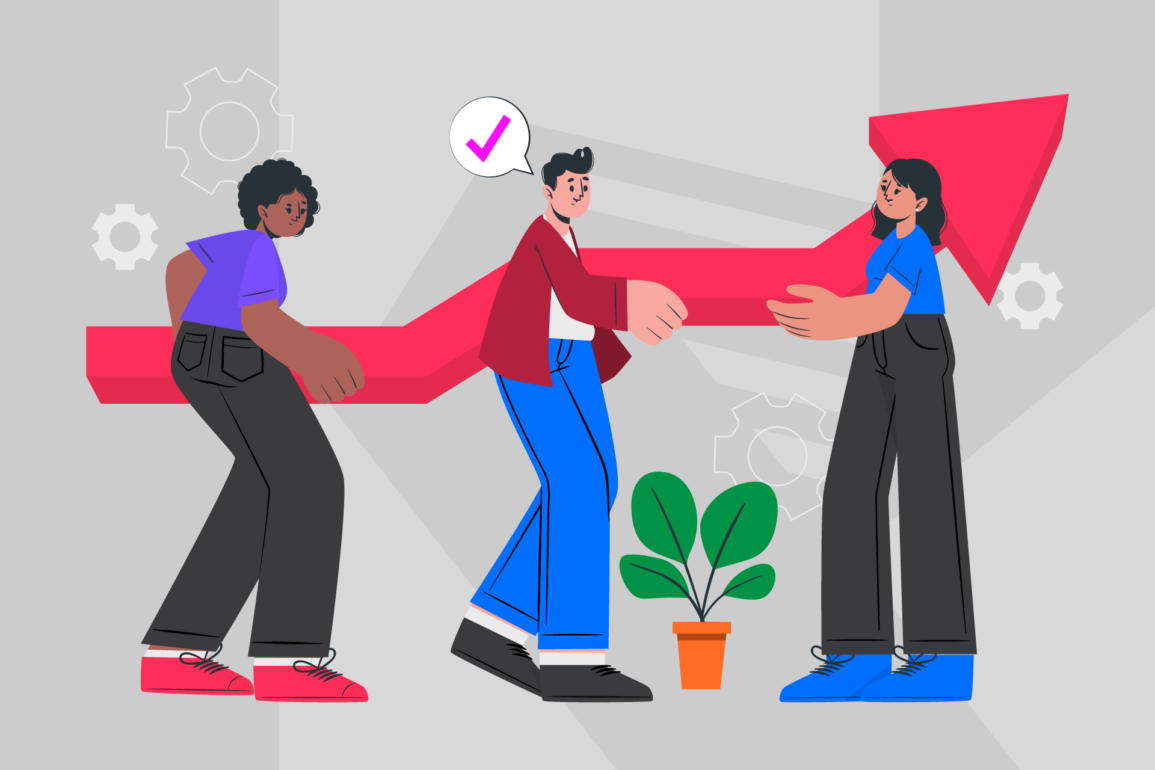

Making brand adoption effortless for hybrid teams

Hybrid work has fundamentally reshaped how teams experience brand culture. When your people are spread across HQ, home offices and frontline sites, the informal cues that once reinforced your brand: the conversations at the coffee machine, the visual consistency of a shared workspace, the collective energy of an all-hands don’t happen by accident anymore.
Without deliberate design, brand behaviours fragment. Your messaging loses cohesion. Your culture becomes postcode-dependent.
This isn’t about policing tone or micromanaging templates. It’s about creating the conditions for brand adoption to happen naturally, even when your teams never share the same room.
Whether you’re managing a newly hybrid workforce or refining how remote collaboration works, the challenge is the same: how do you sustain a consistent brand experience when your people rarely occupy the same physical space?
This playbook shows you how to embed consistent brand behaviours into the rhythms of hybrid work in a way that is clear, confident and free of added bureaucracy.
It’s a practical guide for brand, marketing and internal comms leaders who want to turn strategic intent into everyday habits that scale across distributed teams and strengthen your hybrid culture.
Why hybrid work challenges brand adoption
Hybrid work doesn’t just change where people work, it changes how they absorb, interpret and express your brand. The challenge isn’t technology or geography alone. It’s the loss of shared context.
When teams are distributed, the small, repeated interactions that build fluency disappear. You’re left with tool sprawl, uneven visibility and fragmented rituals.
What used to be reinforced through proximity now needs to be architectured through intention. Remote team brand engagement becomes harder to sustain when people can’t see or hear the brand in action daily.
The result?
- Hybrid work brand consistency becomes elusive.
- Different teams interpret your brand differently.
- Messaging drifts. Visual standards erode.
Research into hybrid-work culture, structure and consistency shows that without visible leadership and regular touchpoints, even the most carefully crafted strategy struggles to take root.
The solution isn’t more guidelines, it’s smarter systems that make consistent behaviours the default, not the exception.
Fragmented culture, inconsistent brand habits
Remote silos are where brand cues go to die.
When your hybrid culture lacks connective tissue, each team develops its own interpretation of what the brand sounds and looks like.
One team uses formal, corporate language. Another adopts startup-casual. A third defaults to whatever the loudest voice in the room prefers. This isn’t malice, it’s drift.
Without shared rituals and regular reinforcement, employee brand behaviours fragment across locations and functions. The fix is repetition with purpose.
Short stand-ups that open with a brand value. Weekly asynchronous updates that model your tone.
Team rituals that spotlight colleagues who’ve embodied your principles. Small, recurring moments that rebuild shared meaning across distance and create cultural consistency despite physical separation.
Distance dilutes visibility
If your people can’t see the brand, they won’t remember to use it.
In a traditional office, brand adoption happens partly through osmosis: posters, meeting decks, even the way senior leaders talk in the corridor. In hybrid teams, those cues vanish.
Remote workers miss the visual and verbal signals that reinforce identity daily. The solution is brand enablement that travels with your people.
Create templates that live where the work happens. Embed tone prompts in Slack channels. Use digital brand portals that teams can access from anywhere, anytime.
Make your brand as visible on a laptop in Leeds as it is in your London HQ, so geography never dilutes clarity.

Building brand adoption across hybrid teams
Building brand adoption in a hybrid context requires a framework that blends structure with autonomy.
Data exploring distributed work patterns and brand alignment confirms you need clarity on what’s non-negotiable—your core pillars, your messaging architecture, your visual identity—but also flexibility in how teams apply those principles day-to-day.
Successful hybrid team brand adoption happens when three conditions align:
- The brand is embedded in daily rituals, not relegated to quarterly initiatives.
- Digital tools sustain consistency across locations and time zones.
- Managers are empowered to coach behaviours at ground level.
It’s not about control. It’s about creating the conditions where doing the right thing becomes the easiest thing.
Remote team brand engagement strengthens when the approach feels supportive rather than policing. The best hybrid organisations don’t mandate behaviours top-down.
They design systems where the right behaviours are easier than the wrong ones. They make brand tools frictionless.
They model the brand in leadership communications. When people feel supported rather than audited, they lean in.
Make brand adoption part of daily rituals
Small, frequent cues beat big, infrequent campaigns.
Hybrid work brand consistency doesn’t come from quarterly town halls or annual refreshes. It comes from embedding your brand into the rhythms your teams already follow.
Start meetings by spotlighting employee brand behaviours, highlighting someone who lived a brand value that week. Use asynchronous check-ins to reinforce tone and messaging across time zones.
Create Slack prompts or intranet nudges that remind teams how to talk about your work in client conversations, proposals and presentations. The goal is to make consistent behaviours habitual, not aspirational.
Rituals create muscle memory. And muscle memory scales across distributed workforces without constant oversight.
Use digital tools to reinforce consistency
Your brand tools should meet people where they already work.
Digital brand activation isn’t about creating more platforms, it’s about integrating prompts into the tools your teams already use. Host living guidelines on your intranet. Drop message templates into Slack or Microsoft Teams channels.
Drawing from practical models for async collaboration in hybrid teams, use shared whiteboard or co-creation spaces for collaborative feedback sessions where teams can co-create campaign assets within brand rails.
Build brand adoption into workflows rather than asking teams to remember separate resources. The more seamlessly your brand lives inside daily platforms, the more naturally consistency happens. And when tools make the right choice easier than the wrong one, compliance becomes effortless.
For organisations refining these systems, our digital branding work often begins with clarifying the platforms that sustain hybrid engagement and ensuring every tool reinforces—not dilutes—your brand identity across touchpoints.
Empower managers as brand coaches
Your middle managers are your brand adoption engine. Strategy comes from the top, but implementation happens on the ground.
Managers translate your brand into everyday decisions:
- How to brief a project.
- How to give feedback.
- How to present to clients.
- How to onboard new starters.
Insights into leadership, communication and equity in hybrid brand culture emphasise the importance of equipping managers with practical coaching tools.
Give them talk tracks: short, practical scripts they can use in one-to-ones and team meetings to reinforce what matters. Provide micro-coaching prompts like “Does this message sound like us?” or “How does this project reflect our values?”
The more confident your managers feel as coaches, the stronger your hybrid culture becomes. Managers who understand the “why” behind the brand can adapt the “how” for their context.
This makes the brand feel locally relevant whilst remaining globally consistent, which is the holy grail of hybrid team brand adoption.
Once adoption becomes part of your team’s rhythm, sustaining it is the next challenge.

Keeping adoption alive
Brand adoption isn’t a launch, it’s a discipline. The initial rollout gets attention, but sustaining momentum requires deliberate, ongoing effort.
Hybrid teams need feedback loops that show them what’s working. They need visible wins that prove consistency isn’t theatre, it’s impact. And they need resources that evolve with the business rather than gathering digital dust.
This section focuses on three pillars that keep distributed workforce brand consistency from fading after the first quarter:
- Measurement that tracks adoption signals, not just vanity metrics.
- Recognition that celebrates teams who live the brand under pressure.
- Renewal that keeps enablement materials fresh and co-created.
Get these right, and your teams will sustain momentum long after the initial excitement wears off. The organisations that win treat consistency like continuous improvement, not a checkbox.
When the approach feels dynamic and responsive, teams stay engaged. When it feels static and top-down, they tune out.
Measure adoption and celebrate wins
If you’re not measuring it, you’re not managing it.
Track the visible markers of brand adoption: template usage rates, message consistency audits, sentiment scores from pulse surveys, qualitative feedback from team retrospectives. But don’t stop at data, turn insights into recognition.
Celebrate teams who embody your brand in hybrid contexts: the remote squad that maintained tone consistency across three time zones, the frontline team that adapted your toolkit for client-facing work, the new starter who intuitively applied brand principles without prompting.
Public recognition reinforces what matters and creates positive peer pressure. When people see their efforts acknowledged, hybrid work brand consistency becomes part of the culture, not just a KPI on a dashboard.
Refresh brand enablement resources
Static guidelines become shelf-ware. Living resources stay relevant. Your materials should evolve as your business does.
Simplify outdated content that no longer serves. Visualise complex ideas so teams can grasp principles at a glance. Co-create new tools with cross-functional teams—sales, product, customer success, operations—so your brand guidelines reflect the reality of how people actually work, not how you wish they worked.
Keep your brand portal updated, visible and easy to navigate across devices and connection speeds. If teams have to hunt for the latest deck template or tone guide, they’ll default to old habits or make it up as they go.
When brand enablement resources are fresh, accessible and designed specifically for hybrid use, consistency becomes frictionless and adoption accelerates.
As outlined in our internal brand alignment guide, the brands that sustain consistency across distributed teams treat enablement as an ongoing conversation, not a one-off document drop.
They invest in systems that adapt, tools that scale and cultures that reward fluency.
They understand that great enablement isn’t about saying everything once, it’s about saying the important things repeatedly, in multiple formats, through multiple channels, until they become second nature.

Turning hybrid complexity into brand consistency
Hybrid work doesn’t have to mean brand dilution. With the right rituals, empowered managers and digital tools that meet people where they work, any organisation can build distributed workforce brand consistency, no matter how scattered the team.
Brand adoption at scale isn’t about control or compliance. It’s about clarity, ease and making the right choice the obvious choice.
Hybrid work brand consistency stops being an aspiration when your brand lives inside daily workflows rather than sitting in a separate initiative that competes for attention. When your brand becomes part of how teams naturally work, it stops being a project and starts being a habit.
The playbook is simple: design for repetition, enable at ground level and measure what matters. Embed the brand in rituals. Equip managers with coaching tools. Track signals, not vanity metrics. Refresh resources before they go stale.
Do that consistently, and your hybrid teams won’t just understand your brand—they’ll live it. And they’ll make it look effortless.
Ready to turn hybrid complexity into brand consistency? Explore Fabrik’s brand strategy to build a brand culture that scales across HQ, remote teams and frontline operations.

Clarity starts with a conversation.
Thanks—we’ll get back to you shortly.
Whether you're navigating a rebrand, merger, or simply need a clearer identity—we’re here to help. No hard sell, just honest advice from people who know the sector.
Let’s start with a simple question…
Prefer to email? Drop us a line.
Fabrik’s been helping organisations rethink and reshape their brands for over 25 years. We’ve guided companies through mergers, rebrands and new launches. Whatever stage you’re at, we’ll meet you there.
