









How to develop campaign messaging for colleges that works for 16-19s and adult learners alike

Developing effective campaign messaging for colleges is perhaps one of the most challenging aspects of further education marketing. Colleges face the unique challenge of speaking to multiple audiences simultaneously – primarily 16 to 19-year-olds and adult learners – each with distinct needs, motivations and communication preferences.
Yet with limited marketing resources, creating separate campaigns for each segment isn’t always feasible, and the stakes are particularly high in today’s competitive educational landscape.
UCAS data shows declining demographics in some key age groups, increasing competition between educational providers, and more discerning student ‘consumers’ who carefully evaluate the return on their educational investment.
Combined with budget constraints facing many colleges, the pressure to create efficient, yet highly effective marketing communications has never been greater.
This article explores how colleges can craft campaign messaging for colleges that resonates across diverse audiences while still delivering personalised, relevant communications that drive recruitment results.
We’ll examine research-backed approaches to understanding audience differences, strategies for building flexible messaging frameworks, and practical techniques for implementation across traditional and digital channels.
Understanding your audiences
Before constructing any messaging strategy for further education, it’s essential to deeply understand the fundamental differences between your key audience segments.
What 16-19s really care about
Today’s school leavers are digital natives with distinct communication preferences.
Research consistently shows this audience prioritises:
- Clear progression pathways and career outcomes.
- Social aspects of college life and belonging.
- Learning environments that differ from school.
- Flexibility and independence.
- Innovative teaching methods and technology.
- Affordability and value for money.
- Reassurance about making the right choice.
Recent research highlights that Generation Z learners (born 1997–2012) place significantly higher importance on institutional values alignment, environmental credentials, and inclusive environments compared to previous generations.
For instance, a 2023 survey by the Higher Education Policy Institute (HEPI) found that approximately 75% of prospective students consider a university’s commitment to sustainability important when choosing where to study.
Additionally, Universities UK’s report “Adapting to the Future: The Changing Expectations of Students” emphasizes that inclusivity and alignment with personal values are increasingly influential factors for Gen Z students selecting educational institutions.
They also consume information differently – preferring video content, peer testimonials, and interactive experiences over traditional prospectuses.
The decision-making process for this demographic has also evolved considerably. Research from Natives Group reveals that the average 16–19-year-old now consults 11 different information sources before making an educational choice, with peer influence and social proof carrying substantial weight.
Digital channels dominate their research journey, with 83% using social media platforms to evaluate potential institutions.
These young learners often respond to messaging that emphasises transformation, opportunity and social identity, with parents and guardians frequently involved in decision-making, particularly regarding financial aspects and career outcomes.
What adult learners really care about
Adult learners approach further education with entirely different priorities:
- Specific career advancement or change opportunities.
- Practical logistics (part-time options, childcare, evening classes).
- Return on investment and tangible outcomes.
- Recognition of their existing experience and skills.
- Support services tailored to their circumstances.
- Accessibility and flexibility around existing commitments.
- Credibility and quality assurance.
The Learning and Work Institute reports that adult learners are significantly more outcome-focused, with 78% citing specific career goals as their primary motivation for returning to education.
Their information-gathering behaviour tends to be more efficiently targeted, with greater emphasis on course specifics, timetabling options, and funding information rather than institutional culture or social aspects.
The decision-making timeframe also differs markedly, with adult learners typically taking 30% less time to move from initial research to application than their younger counterparts. They are, however, more likely to abandon the process if they encounter practical barriers or unclear information.
According to research from The Open University, the perceived risk factors for adult learners continue to evolve, with time poverty now outranking cost concerns for many potential students.
Communications that directly address how learning can be integrated into complex existing lives show measurably higher engagement rates.
Adult learners typically make more independent decisions but require reassurance about re-entering education, often after significant time away from formal learning environments.
They respond particularly well to evidence-based messaging that emphasises specific outcomes, practical support mechanisms, and recognition of their existing experience and skills.

Building a unified messaging strategy
Despite these differences, implementing college marketing campaigns for multiple audiences doesn’t mean creating entirely separate messaging frameworks.
The most successful further education campaign messaging identifies the powerful intersection between what different learners value.
Finding common ground: shared goals and ambitions
Effective messaging strategy for further education focuses on universal aspirations that transcend demographic differences:
- Personal growth and achievement.
- Skill development that leads to tangible opportunities.
- Belonging to a supportive community.
- Making positive life changes.
- Building confidence and independence.
- Accessing quality education that delivers results.
By identifying these shared motivators, colleges can develop campaign messaging for colleges that speaks meaningfully to diverse groups.
Creating flexible core messages
The key to how to target multiple audiences in college marketing lies in developing adaptable messaging frameworks that maintain consistency while allowing for audience-specific elements:
- Core promise: Establish a central value proposition that resonates broadly.
- Supporting pillars: Develop key themes that can flex for different segments.
- Tone spectrum: Define a consistent voice with adjustable formality/language.
- Visual flexibility: Create imagery systems that represent diverse experiences.
- Modular content: Build messages that can be configured for different channels.
Key themes that resonate across both demographics include:
- Transformation and positive change.
- Expert teaching and industry connections.
- Supportive learning environments.
- Clear pathways to success.
- Community and belonging.
- Value and return on investment.
Implementation of flexible messaging requires careful planning of content architecture.
Leading colleges often develop what marketing strategists call a “messaging matrix” – a structured document that maps core promises against audience-specific articulations and proof points.
This approach ensures consistency in the fundamental brand positioning while allowing for highly targeted executions.
Digital platforms have made this flexible approach increasingly viable through dynamic content capabilities.
Colleges like Barking & Dagenham College have implemented sophisticated content management systems that serve different website content based on user behaviour and previous interactions, effectively creating personalised messaging journeys without requiring entirely separate campaigns.
Examples of flexible messaging formats:
- Headline + tailored subheading combinations.
- Core claims with segment-specific proof points.
- Universal stories with audience-relevant protagonists.
- Shared visual identity with demographic-appropriate imagery.
- Consistent call-to-action with targeted landing pages.
- Modular email content with segment-appropriate supporting details.
- Adaptive social content with audience-specific framing.

Techniques for tailoring messages
Creating truly effective college recruitment messaging for 16-19s and adult learners requires strategic adaptation of your core messages for maximum relevance.
Language and tone adjustments
While maintaining a consistent brand voice, subtle language adjustments can significantly improve message resonance:
- Formality spectrum: Adult learners often (but not always) respond better to more professional, outcome-focused language, while younger audiences may engage with more dynamic, conversational approaches.
- Addressing concerns: Frame the same benefit differently to address audience-specific obstacles.
- Reference points: Use cultural touchpoints and examples relevant to each audience’s experiences.
- Decision-maker acknowledgement: Consider whether you’re speaking directly to the learner or including influencers (parents for younger students, employers for adult learners).
Examples of adjusted language:
- For 16-19s: “Find your path and make your mark with cutting-edge creative courses”
- For adults: “Advance your career with industry-recognised creative qualifications”
- For 16-19s: “Join a vibrant community where you’ll make friends for life”
- For adults: “Balance your studies with work and family in our supportive learning environment”
Using personas to personalise messaging
Developing detailed personas helps ensure messaging feels authentic and relevant to different audience segments:
- Create evidence-based, realistic representations of key segments.
- Identify specific pain points, goals and communication preferences.
- Map the unique decision journey for each persona.
- Test messaging with representative focus groups.
- Refine based on engagement metrics across different platforms.
Brief persona examples:
- School leaver Sophie (17): Social media enthusiast seeking to escape traditional classroom environments, influenced heavily by peers and concerned about making the “wrong choice”.
- Career-changer Michael (34): Time-poor professional checking emails between responsibilities, looking for efficient learning options that fit around existing commitments.

Case studies and examples
Examining successful further education student recruitment campaigns provides valuable insights into effective messaging approaches that work across audience segments.
East Kent College
Consistent brand, flexible messaging
East Kent College’s branding project demonstrates how a strong brand architecture and positioning provides the solid foundation necessary for successful audience-specific messaging.
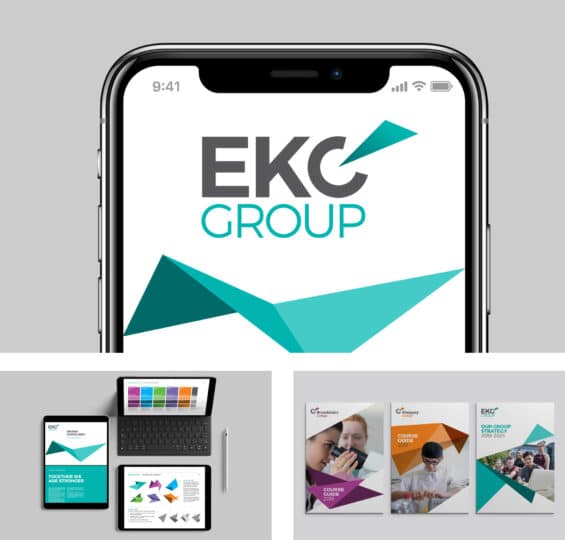
The college developed a distinctive visual identity with a clear positioning strategy that could be consistently applied across different audience segments while remaining instantly recognisable.
Their approach used consistent conceptual design elements but adapted imagery, headlines and supporting content to speak differently to young learners and adults.
This strategic brand architecture enabled campaign messaging that effectively balanced aspirational content with practical information, creating communications that felt personally relevant while maintaining brand cohesion.
City University
Messaging with impact
While not a further education institution, City University’s undergraduate campaign offers valuable lessons in message-driven campaign development.
Their “Book of Secrets” campaign created a compelling messaging platform that connected emotionally while delivering clear and fun information about the university’s offerings.

The campaign used striking visuals combined with focused messaging. This approach created a distinct messaging hierarchy where the core campaign concept remained consistent, but supporting messages were tailored to specific audience interests.
The messaging strategy effectively balanced institutional positioning with the practical information students needed, demonstrating how educational institutions can develop flexible messaging frameworks that speak authentically to different segments.

Best practices for effective messaging
To maximise the impact of your campaign messaging for colleges, consider these proven approaches:
- Start with comprehensive audience research rather than assumptions.
- Develop messaging platforms with deliberate flexibility points.
- Test resonance with representative audience members before full launch.
- Create message hierarchies that allow for consistent primary messages with audience-specific supporting points.
- Focus on benefits and outcomes rather than features across all audiences.
- Ensure imagery authentically represents both audience groups.
- Develop distinctive messages that stand apart from competitor institutions.
- Balance emotional engagement with practical information.
- Create clear calls-to-action appropriate for each stage of the decision journey.
- Measure engagement metrics separately for different audience segments.

Creating messages that drive results
Developing campaign messaging for colleges that effectively speaks to both 16-19s and adult learners is undoubtedly challenging, but entirely achievable with strategic planning and audience insight.
By identifying universal motivations while acknowledging distinct needs, further education institutions can create flexible, powerful communications that drive recruitment across diverse segments.
The most successful messaging strategy for further education balances consistency with personalisation, maintaining strong brand identity while demonstrating genuine understanding of different learner journeys.
By applying the principles outlined in this article, colleges can develop messaging frameworks that resonate meaningfully with potential students at any life stage.
For specialist support with your further education campaign messaging, contact Fabrik to discuss how our expertise can help your institution connect more effectively with prospective learners.
Fabrik: A branding agency for our times.

Clarity starts with a conversation.
Thanks—we’ll get back to you shortly.
Whether you're navigating a rebrand, merger, or simply need a clearer identity—we’re here to help. No hard sell, just honest advice from people who know the sector.
Let’s start with a simple question…
Prefer to email? Drop us a line.
Fabrik’s been helping organisations rethink and reshape their brands for over 25 years. We’ve guided companies through mergers, rebrands and new launches. Whatever stage you’re at, we’ll meet you there.
