








Merger brand architecture: Elevating, merging or starting anew?

When the dust settles on a merger or acquisition, one question looms larger than any other: what happens to our brands? In today’s relentless M&A landscape, merger brand architecture isn’t just a nice-to-have—it’s the foundation that determines whether your deal creates value or destroys it.
The choices are stark but simple. Elevate one brand above the others. Merge multiple brands into something new. Or start completely fresh. Each path demands different levels of courage, investment and strategic thinking.
At Fabrik, we’ve guided leaders through these pivotal moments. We know that getting merger brand architecture right isn’t just about logos and naming strategy in mergers—it’s about creating clarity, cohesion and confidence for everyone involved.
What is merger brand architecture
Merger brand architecture is the strategic framework that determines how brands relate to each other after companies combine. It’s your blueprint for organising, prioritising and positioning every brand in your newly expanded portfolio.
Think of everyday brand architecture as organising a single family’s belongings. This complex process is more like combining two households—complete with conflicting tastes, cherished heirlooms and strong opinions about what stays and what goes.
The emotional stakes run higher when people’s professional identities become intertwined with brand decisions.
The stakes are uniquely high. Multiple brand legacies collide. Different audiences have different expectations. Executive egos often clash over which brand deserves prominence.
Regional preferences add another layer of complexity when global brands meet local favourites. This isn’t just about brand hierarchy—it’s about managing the complex human and commercial realities of post-merger integration.
The framework you choose will ripple through every aspect of your combined business. It shapes customer perception, employee identity and market positioning for years to come. Early decisions become increasingly difficult to reverse as integration momentum builds.

Exploring brand architecture models for mergers
There’s no universal solution when it comes to brand architecture models. The approach you choose reflects your ambition, risk appetite and organisational culture.
Some companies crave the efficiency of consolidation. Others prize the flexibility of independence. Most fall somewhere between these extremes.
Understanding the psychology of merger branding helps leaders navigate the branded house vs house of brands decision that defines their future structure.
Branded house approach
The branded house model puts one master brand front and centre. Everything else becomes a product, service or division under that single umbrella. Think Google’s transformation into Alphabet—one name, one cohesive identity, maximum clarity.
The benefits are compelling. Marketing budgets concentrate their firepower. Customer confusion disappears. Operational efficiency soars when everyone rallies behind the same flag.
But the risks are real too. Forcing disparate brands under one roof can feel heavy-handed. Heritage gets lost. Niche audiences might feel abandoned if their trusted brand disappears into something larger and less personal.
This approach works best when one brand clearly dominates in equity, recognition or market position. Why complicate things when you already have a winner?
House of brands approach
The house of brands strategy keeps individual brands independent while grouping them under one corporate umbrella. Each brand maintains its own identity, audience and market position.
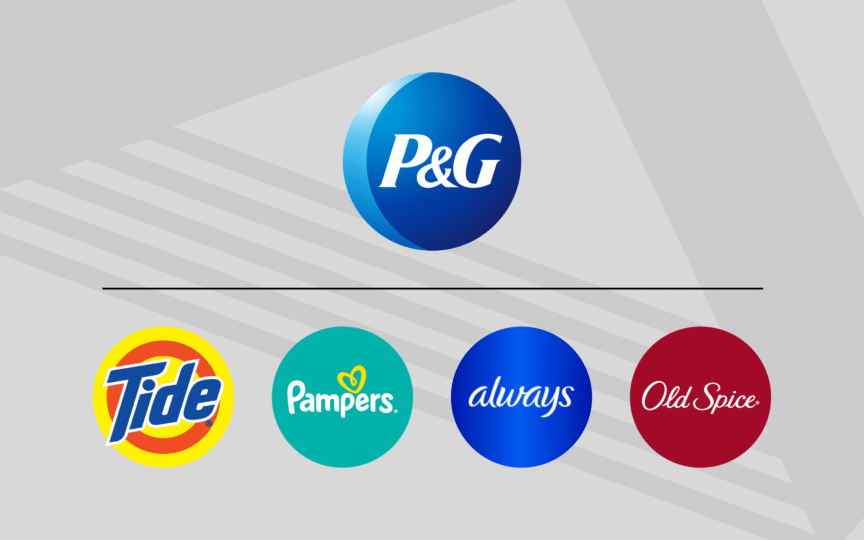
Procter & Gamble perfected this model—Tide, Pampers and Gillette operate as distinct entities despite sharing the same parent company.
The advantages are flexibility and focus. Each brand can optimise for its specific audience without compromise. Acquisition integration becomes simpler when you’re not forcing cultural or operational alignment. Risk spreads across multiple properties. Market research becomes more targeted when brands serve distinct customer segments.
The downsides include complexity and cost. Marketing budgets fragment across multiple brands. Operational synergies become harder to capture. Corporate storytelling lacks the power of unified messaging. Management attention divides across competing priorities.
This model suits companies acquiring complementary brands that serve different markets or customer segments. Independence preserves what made each acquisition valuable in the first place. Portfolio diversification protects against market downturns affecting individual brands.
Hybrid or endorsed approach
The hybrid approach blends both strategies through strategic endorsement. Master brands lend credibility and recognition while sub-brands maintain distinct identities.
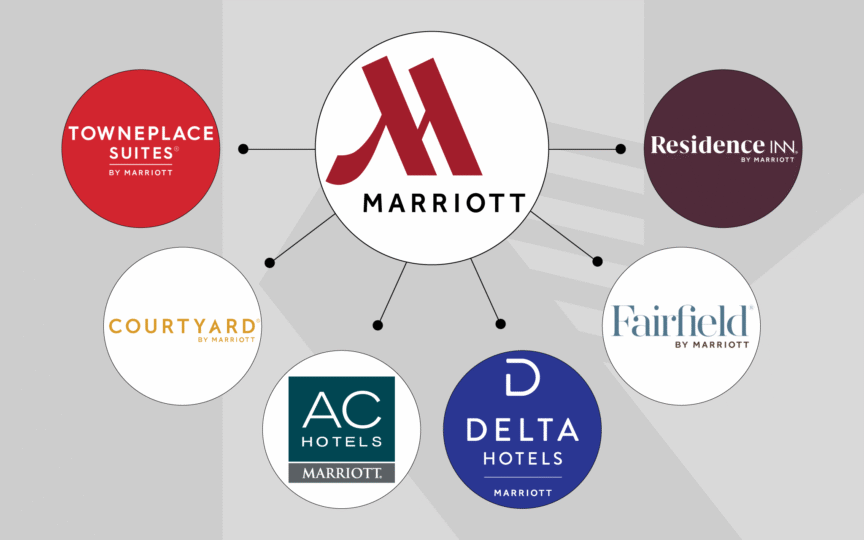
Marriott exemplifies this perfectly—Courtyard by Marriott, Residence Inn by Marriott, and others benefit from the parent brand’s reputation while targeting specific market segments.
This balanced approach works particularly well during transition periods, offering flexibility to evolve your architecture as integration progresses. Companies can test market response before committing to full consolidation or complete independence. The endorsed model provides safety nets that pure strategies often lack.

Elevating one brand above the others
Sometimes the simplest move is choosing a clear winner. When one brand significantly outperforms others in recognition, loyalty or market position, elevating it makes commercial sense.
The benefits are immediate and tangible.
Marketing spend consolidates behind proven brand equity. Customer confusion evaporates when messaging becomes consistent. Operational efficiency improves as teams align behind shared goals and identity.
Employee buy-in often comes easier too.
Pride in working for a recognised leader can energise teams and attract top talent. Investors appreciate the clarity and focus that comes with backing an established winner.
Learning from most successful mergers and acquisitions of all time shows how brand elevation can drive exceptional results.
But elevation isn’t without challenges.
Teams from acquired or merged brands might feel diminished or displaced. Valuable heritage and customer relationships risk being lost if not handled sensitively. Post-merger branding strategy must account for these human dynamics alongside commercial logic.
This approach works best when brand equity analysis reveals a clear hierarchy.
If one name opens more doors, commands premium pricing, or enjoys significantly higher recognition, the path forward becomes obvious. The key lies in respectful transition that honours what came before while embracing what’s ahead.

Merging multiple brands into one
Creating something entirely new from existing parts represents a more ambitious but potentially rewarding path. Brand consolidation through merger offers equal footing for all parties while potentially creating something stronger than the sum of its parts.
The advantages include neutrality and fresh positioning.
Neither party feels subordinated when everyone contributes to something new. Cultural integration becomes easier when no single legacy dominates. Market repositioning opportunities emerge that wouldn’t be possible with existing brands.
New brands can also shed baggage.
Historical pricing constraints disappear. Geographic limitations evaporate. Previous positioning mistakes get left behind in favour of optimised market entry.
However, avoiding a failed merger requires careful attention to M&A brand integration challenges.
The complexity and investment requirements are substantial though.
Finding the right naming strategy becomes critical—discovering something that resonates with all stakeholders while differentiating in the market. Customer education demands significant resources. Brand recognition starts from zero despite inherited goodwill.
This strategy works best when existing brands are roughly equivalent in strength, when neutral positioning serves strategic goals, or when both brands carry limitations that a fresh start could overcome.
The investment pays off when the new brand can capture value that individual legacies couldn’t achieve alone.
Starting anew with a fresh brand
Sometimes a clean break offers the only path forward. When existing brands carry too much baggage, serve outdated markets, or clash irreconcilably, corporate identity after M&A demands complete reinvention.
Fresh brands enable bold repositioning and unified culture.
New stories emerge that inspire employees and excite customers. Historical constraints disappear when you’re not bound by previous positioning or expectations. Everyone starts from the same place, reducing cultural friction during integration.
The investment requirements are significant.
Building brand recognition takes time and substantial marketing spend. Customer education becomes essential when familiar names disappear. Risk increases when you abandon proven equity for untested concepts.
Understanding lessons from some of the largest mergers and acquisitions of all time helps inform this high-stakes decision.
At Fabrik, we’ve guided companies through this transformation successfully.
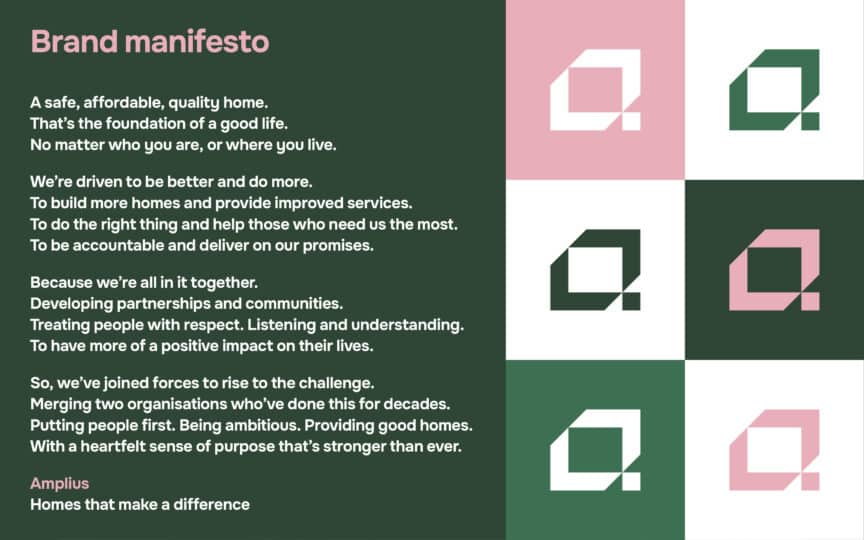
Our work with Amplius demonstrated how strategic rebranding after a merger can unlock new market opportunities while honouring heritage.
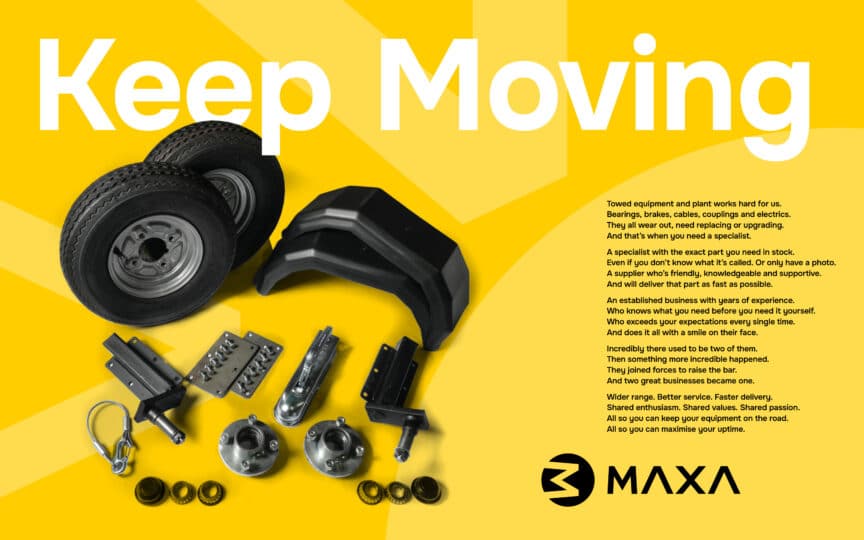
Similarly, the MAXA merger branding programme showed how fresh identity can energise teams and clarify market positioning.
This approach works best when existing brands are weak, outdated, or incompatible with future ambitions. It’s also ideal when dramatic market repositioning is required or when cultural integration demands neutral starting points.

Practical considerations in merger brand architecture
Beyond strategic theory, leaders must navigate real-world complexities that can make or break merger and acquisition branding efforts. Politics matter as much as positioning when executives have emotional attachments to legacy brands.
Cultural alignment often determines success more than market research. Teams need to believe in the chosen direction for implementation to succeed. Change management becomes crucial when brand architecture affects individual identity and pride.
Effective M&A brand strategy addresses these human factors alongside commercial considerations.
Cost considerations extend beyond initial rebranding investment. Legal complexities multiply when intellectual property crosses borders. Trademark conflicts can derail carefully planned strategies. Customer communication campaigns require sustained investment to maintain momentum.
Implementation timelines often stretch longer than anticipated when multiple stakeholders need coordination.
Brand portfolio strategy must account for global versus local needs too. What works in headquarters markets might fail internationally. Local brand equity often proves more resilient than corporate strategists expect.
Research from managing brands in M&As shows how these dynamics play out across different markets.
Timing becomes critical when multiple stakeholders need alignment. Rush the process and you risk employee resistance or customer confusion. Take too long and uncertainty damages performance while competitors gain advantage.
Regulatory requirements can further complicate timelines when approvals span multiple jurisdictions.

How Fabrik helps leaders choose the right path
Choosing between elevating, merging or starting anew isn’t purely strategic—it’s deeply emotional too. Merger brand architecture decisions affect people’s professional identities, customer relationships, and organisational culture in ways that spreadsheets can’t capture.
Our approach brings clarity to complexity. We combine rigorous analysis with creative thinking and commercial sense. Strategy-led branding helps you understand not just what’s possible, but what’s right for your specific situation and ambitions.
Our merger branding expertise spans the full spectrum of architectural challenges.
We’ve guided leaders through successful transformations like Amplius and MAXA, proving that the right approach can unlock value that seemed impossible before.
Our team of strategists and creatives understand that effective brand architecture for mergers and acquisitions extends beyond naming to encompass visual identity services and comprehensive cultural integration.
Expert guidance makes the difference between merger brand architecture that creates lasting value and approaches that leave organisations fragmented and confused.
Choose your path and commit to success
Merger brand architecture offers three fundamental paths:
- Elevate existing strength.
- Merge complementary assets, or
- Start completely fresh.
Each demands different levels of investment, risk tolerance, and strategic ambition.
The choice you make becomes the foundation for everything that follows. Get it right and your merger creates lasting value. Get it wrong and even the best operational integration won’t save you from confusion and missed opportunities.
Success lies not in choosing the perfect model, but in choosing the right model for your unique circumstances—then executing it with clarity, cohesion and confidence. Ready to make the right choice for your merger? Let’s talk.

Clarity starts with a conversation.
Thanks—we’ll get back to you shortly.
Whether you're navigating a rebrand, merger, or simply need a clearer identity—we’re here to help. No hard sell, just honest advice from people who know the sector.
Let’s start with a simple question…
Prefer to email? Drop us a line.
Fabrik’s been helping organisations rethink and reshape their brands for over 25 years. We’ve guided companies through mergers, rebrands and new launches. Whatever stage you’re at, we’ll meet you there.
