
Brand identity process: A step-by-step guide to visual identity design
Every creative professional, agency, or branding team you will with will have their own “brand identity process”. These are the steps these experts follow to bring your brand to life, often starting with your visual identity, such as your logo, color palette, and other visual assets.
At Fabrik, our brand identity design process is always customized to the specific needs of our clients (which they share with us in initial consultations and briefs or proposals). However, like most branding agencies, we still follow specific steps to ensure the right results.
These steps are based on our experiences of working with countless companies to help them create a successful brand, build an emotional connection with their target market, and boost awareness.
Today, I’ll walk you through the common steps involved in visual identity design, and share some top tips on how you can collaborate with your brand designer to get the best outcomes.
Understanding the brand identity process
Developing a strong brand identity is a complex process. Major, well-known brands like Coca-Cola and Nike aren’t built overnight. You can’t just slap together a collection of brand colors, create a logo and expect to achieve amazing results.
You need to approach the process of building your brand image and identity strategically, to build something that leaves a lasting impression on your target audience.
A meticulous approach to your “brand identity process”, is what ensures you’re taking the right steps to differentiate your organization from the competition, and build emotional connections with potential customers.
Notably, a well-defined brand identity will depend on more than just the “visual representation” of your brand, like your logo and color palette. Still, most companies prefer to create their design elements first.
Sometimes, identifying a strong image for your brand is a great way to form the foundations for your company’s growth. If you know what your brand is going to “look like”, it can be easier to decide what it should sound like (brand personality), and determine other factors too.
What is the brand identity process for visual identity?
If you’re focusing on your visual identity first, your brand identity process will include all the steps you need to take to create a compelling “image” for your organization. Notably, this doesn’t just mean designing a logo (though that is an important part).
A full brand identity design process will include a focus on every visual asset used to represent your brand, including:
- Color palettes
- Typography
- Logo design
- Photography
- Illustration
- Iconography
- Data visualization
- Corporate assets (packaging, business cards, etc.)
Some companies choose to walk through the process themselves, creating their color palette first, followed by their logo, then any other assets they need. Others work with a professional brand design team or expert, that can offer guidance on design decisions and create unique assets.
Regardless of the approach you take to building your brand’s visual identity, your focus should be on creating a cohesive identity that aligns with your brand values and resonates with your target audience.
That’s something we help companies accomplish here at Fabrik.
Like what you’re reading?
We write about branding when we have something worth saying. No schedule. Just substance.
The step-by-step guide to the visual identity design process
Your personal brand identity process for visual design will vary depending on your needs. If you’re starting out alone, and plan to hire branding professionals as and when you need them, you can dive straight into the “brand research process” (outlined below).
If you’re working with a branding agency, your first step will often involve assessing available branding companies, checking their portfolios, and reaching out with a proposal.
In either case, once you’ve gathered the professionals you need for your process, the journey to building your visual identity will usually look like this:
Step 1: Brand research: Understanding your company
The visual elements you use in your branding, from your photography to your logo, should reflect your unique brand personality, values, and mission. This means before you can start working on assets, you’ll need to develop a clear brand strategy.
If you’re working with a branding specialist, they can help you with this stage, by offering advice on the kinds of things you’ll need to define, based on your business goals. Most companies will expect you to have a basic knowledge of your core brand essence though.
Start by defining the following things:
- Your brand mission, vision and values: What are the core principals that define your company? What do you want to accomplish in your industry, and for your customers, and what values do you prioritize, such as trust, sustainability, or innovation?
- The brand message: What message are you trying to consistently send to your customers? What do you want people to think and feel when they interact with your company, and its various design elements? What should your brand’s personality convey?
- Existing brand assets: Do you have any existing assets you’ve already developed for your brand strategy, such as an impactful name, a tagline, or value proposition? How will these factors play a role in your creative process?
Step 2: Market and competitor research
Once you’ve gathered as much information as possible about your company, and the brand you’re trying to build, the next step is researching your audience, and competition. Some companies even prefer to do this first.
After all, the more you know about your customers, what appeals to them, and the competitors you need to differentiate yourself against, the easier it is to build a powerful brand. Start your market research by gathering as much information as you can about your target audience.
Think about their demographics (where they live, their age, and gender), and how certain color schemes, shapes, and styles will appeal to them. Working with a professional visual identity design company will be helpful here, as they can provide insights into color psychology and other factors.
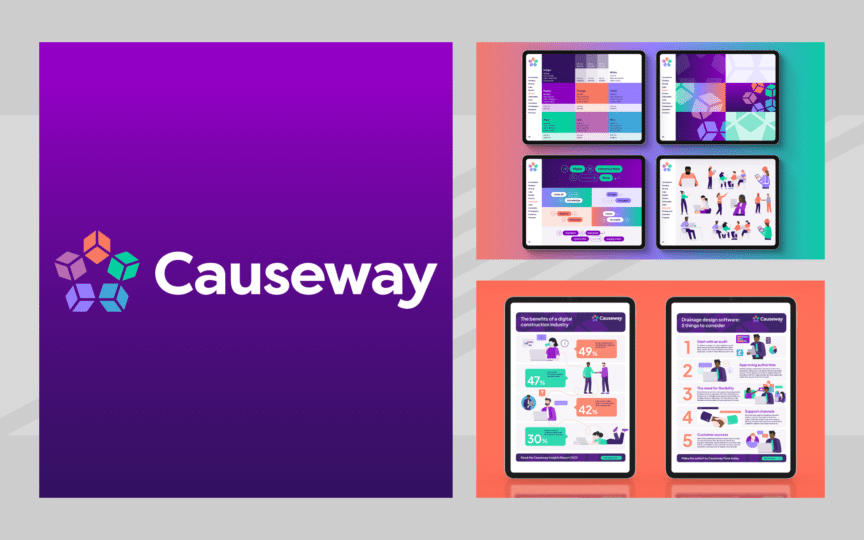
They might even have some existing market research you can use, or be able to conduct surveys and focus groups on your behalf. For instance, we did extensive market research when developing a brand strategy for the Causeway company.
Next, look at your competitors. Identify the companies in your industry targeting a similar audience, with similar products and services. Check out their marketing materials, social media profiles, websites, and logo designs.
Identify which elements of competitor brands you like. You might appreciate their approach to using certain shapes in their logo. At the same time, search for ways to differentiate your identity. A SWOT analysis should help you find “weaknesses” to target.
For instance, maybe you can create a more powerful visual identity by using different colors in your brand strategy, or a wider range of assets, like animations and illustrations.
Step 3: Collaborate on a design direction and brief
Now that you’ve gathered your research, the next step (before the design phase), is creating a comprehensive strategy for what you want to accomplish. The best brand identities are built on the back of holistic planning.
Identify which specific brand assets you want to create for your visual identity. Remember, a full brand identity design process can include a range of assets, such as your logo, brand photography, and even design work for your product packaging.
If you’re going to be working with brand development experts or graphic design studios, before you approach your team, define:
- The scope of work: How much design work are you dealing with in this initial project. Are you just designing a logo, or defining a color palette, and creating marketing assets?
- Your branding goals: What are the key brand traits you want to communicate through your visuals? How do you want people to feel when they see your brand?
- Specific requirements: Do you want your design company to deliver multiple logo concepts for you to choose from? How many edits will you need?
- Valuable insights: What information can you provide to your designer to help them through the process? This might include insights into your tone of voice or target audience.
- Mood boards: Consider creating a mood board as an additional asset for your designer to work with when they’re building your assets.
Step 4: Choose your color palette and typography
A lot of people make the mistake of putting their logo design before their color palette creation strategy in the brand identity process. However, identifying your core colors will help streamline the process. A good design team should be able to help you with this.
They’ll help you understand how different colors resonate with your target audience on an emotional or psychological level. They can also provide examples of color palettes, with multiple shades that work well together. Try to avoid using too many colors at once, as this can be overwhelming.
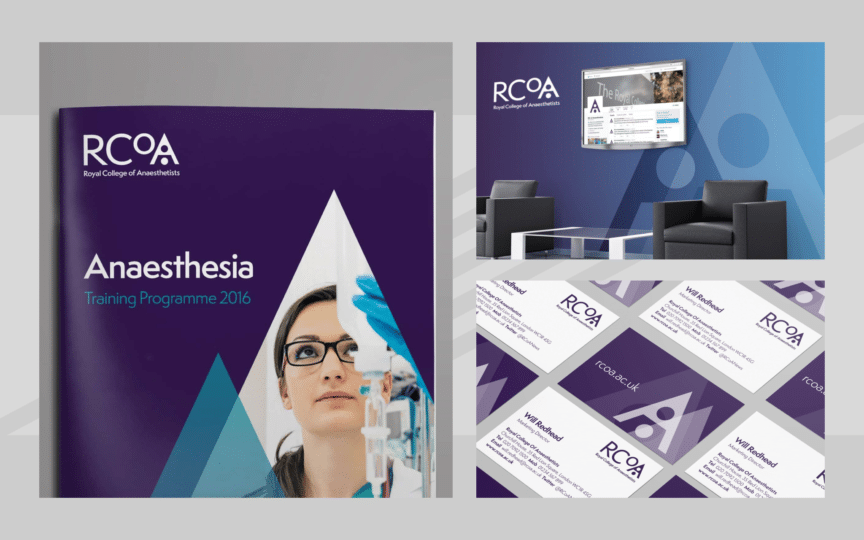
Here’s a great example of how we kept things simple with a blue and purple color palette for the RCoA, highlighting trustworthiness and authority.
While you’re selecting your color palette, it often makes sense to think about typography too, as this will feature in a lot of visual identity design assets.
Remember, you may choose a different typeface for your logo than you’ll use on your website, in your business cards, and on multiple assets. The right choice of typeface, like the right color, will depend on the message you want to send about your brand identity.
Sans-serif fonts are often seen as modern, while serif fonts can be more professional and authoritative. You may even use a combination of fonts that balance with each other.
Step 5: Design your logo
Now you have some of the core elements you’ll need for your visual brand identity, you can create arguably the most important part of your brand image. Whether you’re creating a new logo for an existing company, or starting from scratch, the right image is crucial.
Usually, during the “discovery phase” of your brand identity process, you’ll gather some information that will guide the visual style of your logo.
Your competitor and market analysis will show you what types of logos work well for companies in your niche. Your knowledge of your brand will help you identify key shapes and graphics to include in the image, based on the identity you want to convey.
For example, Nike’s “Swoosh” logo aligns with its name (as its based on the wing of the goddess Nike), and it also highlights the company’s focus on accomplishment and achievement.
If you already have a color palette and typefaces chosen, you should be able to start experimenting with designs straight away. Your design expert will usually be able to provide you with different variations of your logo in various formats to review.
Make sure you review each option carefully, and think about:
- What the logo will say to your target audience.
- Whether it’s timeless and flexible enough to grow with your brand.
- If the logo works well on a range of offline and digital platforms.
- How the logo will look on products and packaging.
- Whether the logo effectively showcases your unique attributes.
Most professional logo design teams (including Fabrik), will work with you on logo design elaboration, allowing you to make granular changes to your image. Don’t be afraid to ask for small changes to the strongest options you identify, when necessary.
Step 6: Create the other elements of your visual identity
Your logo is just one factor identifying the “visual language” of your brand. Once you have that, you’ll usually need to continue the brand identity process by creating additional assets.
The exact assets you create will depend on several factors, including the scope of the project you’ve agreed on with your designer.
However, here are some of the most significant assets to consider during your brand design process:
- Brand photography: Photography plays a huge part in your visual brand identity, particularly if you’re launching a new brand. It can help showcase your personality, draw attention to the unique value proposition of your products and improve marketing results.
- Illustration: Many leading brands use illustrations to showcase their personality, like Dropbox or MailChimp. Ask yourself whether illustrations could contribute effectively to your visual style, and when you should use them (such as on product packaging).
- Iconography: Iconography makes a huge difference to the way you convey the essence of your brand through websites, social media, and other digital assets. It can also appear in printed sales brochures and business cards.
- Marketing content: Think about the assets you’ll need for your marketing content, such as specific images used to promote your products, or unique graphics for your website. You might even want to create “data visualization” graphs for shareholders.
- Additional corporate resources: These assets can include everything from your designs for corporate vehicles, uniforms, billboards, banners, signage in your offices and more. Some design companies will even create templates for email campaigns on your behalf.
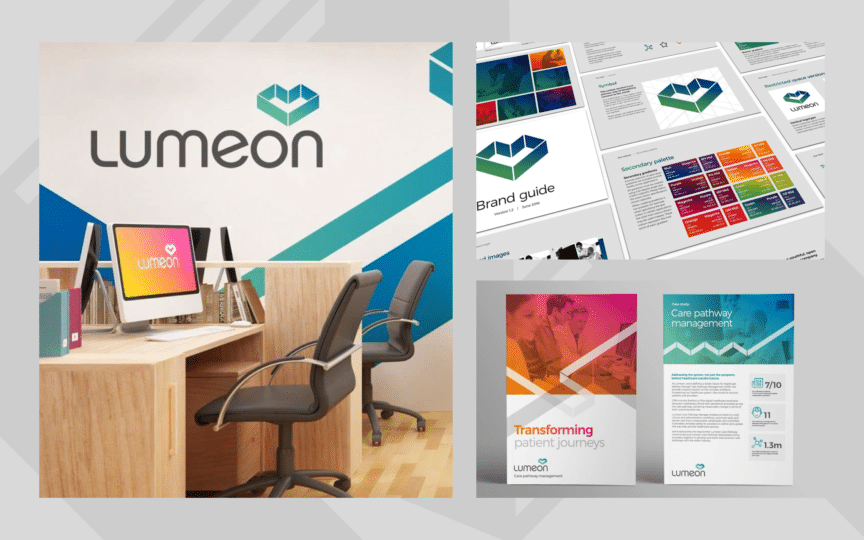
Here’s a great example of all the unique assets we created for Lumeon, when they launched their new name and branding.
Step 7: Clarify your brand identity style guide
Once you’re finished with all of the research and design stages in the brand identity process, the final step is ensuring you can maintain a consistent identity going forward. This means creating a set of brand identity guidelines, a style guide, or a brand book.
This is something most design companies will do for you as standard, to give you a solid foundation for future branding strategies, and help you create a memorable brand identity.
At Fabrik, our project schedule always includes a stage where we develop guidelines and application guidelines our clients can use once they’ve established their brand image.
If you’ve completed most of the brand development process yourself, you’ll need to build these guidelines yourself, making sure you include plenty of information about:
- Color palettes, hex codes, and colors not to use in branding assets.
- Logo files, and how to use logos in different formats and colors.
- Typography guidelines, including font sizes, families, and hierarchies.
You might also create examples of how to use different brand elements correctly, and incorrectly. You can share these with your marketing team, to help boost brand recognition, and share them with PR teams. Make sure you share your brand style guide with all of the relevant parties you work with.
Step 8: Launching and optimizing your brand
Finally, the branding process doesn’t end once you’ve created all of the right assets. Sometimes, you’ll decide to go one step further, and work with your design company on a launch program designed to introduce your customers to your image.
We did this for Salad Money, creating collateral assets, and launch and roll-out assets for them to use during the initial stages of introducing their brand.
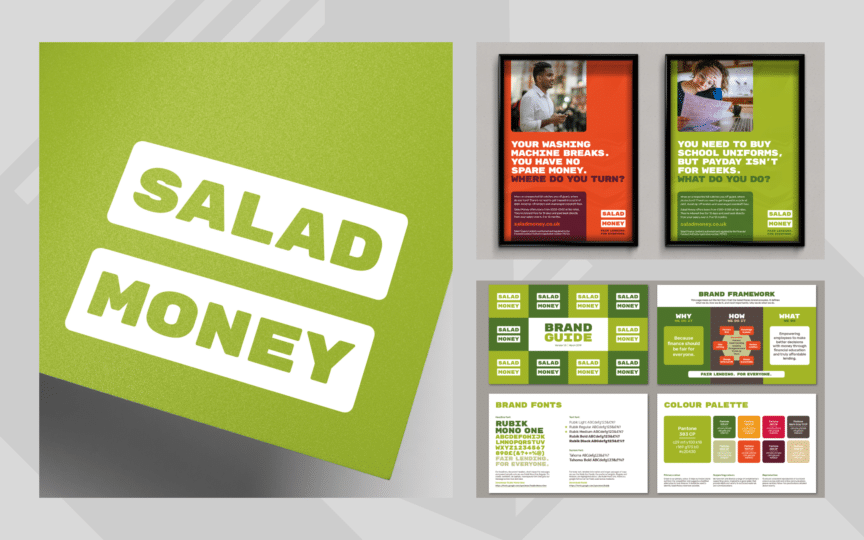
After you launch your assets and share your visual identity with your target audience, you’ll also need to pay attention to their response. Pay attention to how many people engage with your launch assets, what people say about your logo on social media, and how much awareness you generate.
Use social listening tools and feedback from customers for insights into when you might need to update elements of your image. Remember, style preferences and design best practices can evolve over time. You might need to update your identity occasionally to remain relevant.
Additionally, make sure you review your visual identity assets and branding process every time you add something new to your branding toolkit, whether you’re launching a new product, or launching a new marketing campaign.
Start your brand identity design process today
The brand identity process is often more complex than most people realize, particularly when it comes to developing a strong visual identity. There’s more involved in creating a compelling image for your brand than simply choosing colors and designing a logo.
If you want to benefit from exceptional brand recognition, differentiate yourself from the competition, and achieve phenomenal growth, you need a comprehensive strategy.
Fortunately, you don’t have to approach the process alone. A branding expert or agency can help walk you through the visual identity process, helping you master every design stage.
Here at Fabrik, we’ve mastered the art of visual identity design, and brand development. Contact us today to find out how we can help you build the perfect brand.
Fabrik: A branding agency for our times.

The agency behind the thinking
Fabrik is a branding consultancy. We help businesses navigate change, build clarity, and create brands that work. Got a challenge? Let’s talk.
Related insights
Connected thinking. Different angles.
The same productive uncertainty.

Creative direction is more important to your brand development than you’d think. It identifies exactly how your creative team is going to create assets that connect with your target audience, build brand awareness, and differentiate you from the competition. Think of it this way, if Coca-Cola didn’t have a clear creative vision for its brand, […]

What is corporate identity? If you’ve ever worked with a business or considered building one of your own, you might have encountered the term “corporate identity.” This phrase is often used in meetings about branding, marketing, and business development, but what does it mean, and why is corporate identity important? Corporate identity can be a […]

Developing a strong brand identity has never been more important. But designing a brand that captivates your target audience, differentiates you from the competition, and inspires loyalty isn’t easy. That’s where a brand identity questionnaire comes in. A brand identity questionnaire can help you to identify the core elements of your brand, from the color […]
How often do you consider the role of brand photography in visual identity? You know your logo, color palette, and similar factors have a direct impact on potential customers, investors, and even employees, but what about your professional headshots, and social media posts? Too many companies assume that they can fill their marketing materials and […]