
What is social branding? Branding for social media

What is social branding, and why is it so important for modern brands? Simply put, branding for social media involves ensuring your voice, content, and visual identity remain consistent across all channels.
When building your social media marketing strategy, you’ll need to pay close attention to the influence of your brand, and how each channel supports your overall branding efforts.
Afterall, the more consistent you are with your brand, the easier it is to build trust and familiarity with your audience. Unfortunately, the more platforms you leverage for social marketing, the more difficult it becomes to preserve a clear image and message.
This is particularly true when you consider the diversity between different social channels. Each platform comes with its own algorithms and posting considerations.
Today, we’re going to look at the basics of social branding, and how it works.

What is social branding? Social branding definition
To fully answer the question “what is social branding?” let’s define social branding, and its benefits for modern brands. First, it’s important to understand a brand is more than just a set of colors or logos. It defines how you make your customers feel, and how you showcase your missions and values.
Through social branding, companies strive to strengthen their tone of voice, brand identity, visuals, and mission across multiple channels. You’ll leverage everything from storytelling techniques, to powerful visuals to make a lasting impression on your customers.
Social branding or “branding for social media”, has grown increasingly important in recent years. There are now 4.62 billion people active across social channels, as well as countless brands.
People turn to social platforms not only to connect with friends and loved ones, but to better understand the companies they interact with.
With the right social strategy, you not only enhance brand awareness, but you also make your brand more human, relatable, and engaging.
Social media branding can also:
- Drive more traffic to your website and sales funnel.
- Create a sense of trust and affinity with your customers.
- Enhance your chances of finding new leads and prospects.
- Boost brand awareness and accelerate exposure.
- Develop stronger customer relationships.

Tips for effective social media branding
Though the concept of social branding might seem complex at first, it’s much simpler than it appears. Branding social media simply means extending the brand image you already have into additional platforms.
To achieve this, you’ll need a few crucial resources, including:
- A set of buyer personas, so you know who you’re trying to reach with your campaigns.
- Brand guidelines, covering your voice, visuals, and overall brand identity.
- Visual elements like logos, brand colors, and font choices.
Once you have your branding and customer resources in place, the following steps will help you implement social media branding effectively:
1. Cover the visual basics
First, you’ll need to ensure you have a consistent image across every social channel. While the exact branding elements you can use with your social platforms will vary from one channel to the next, you should at least be able to use consistent logos, brand colors, and graphics on every channel.
For instance, Oreo consistently uses the same brand colors across every channel, from Instagram to Facebook. This helps customers to immediately recognize the company.
To ensure your visual image makes the right impression:
- Audit any existing social media channels and ensure their visuals match your identity.
- Ensure banners, bios, and themes or colors are consistent from one page to the next.
- Post according to a consistent schedule which matches your website or blog.
2. Create a consistent voice
A strong visual presence is crucial to your social branding strategy, but it’s only one piece of the puzzle. You’ll also need to ensure you’re making the right impression with your voice. Think about how you connect with your customers, what kind of language and colloquialisms do you use?
Since you’re active in the digital world, you’ll also need to think about things like emojis, memes, and unique ways of connecting with your audience. Everything you post should be a reference back to your business and your underlying values.
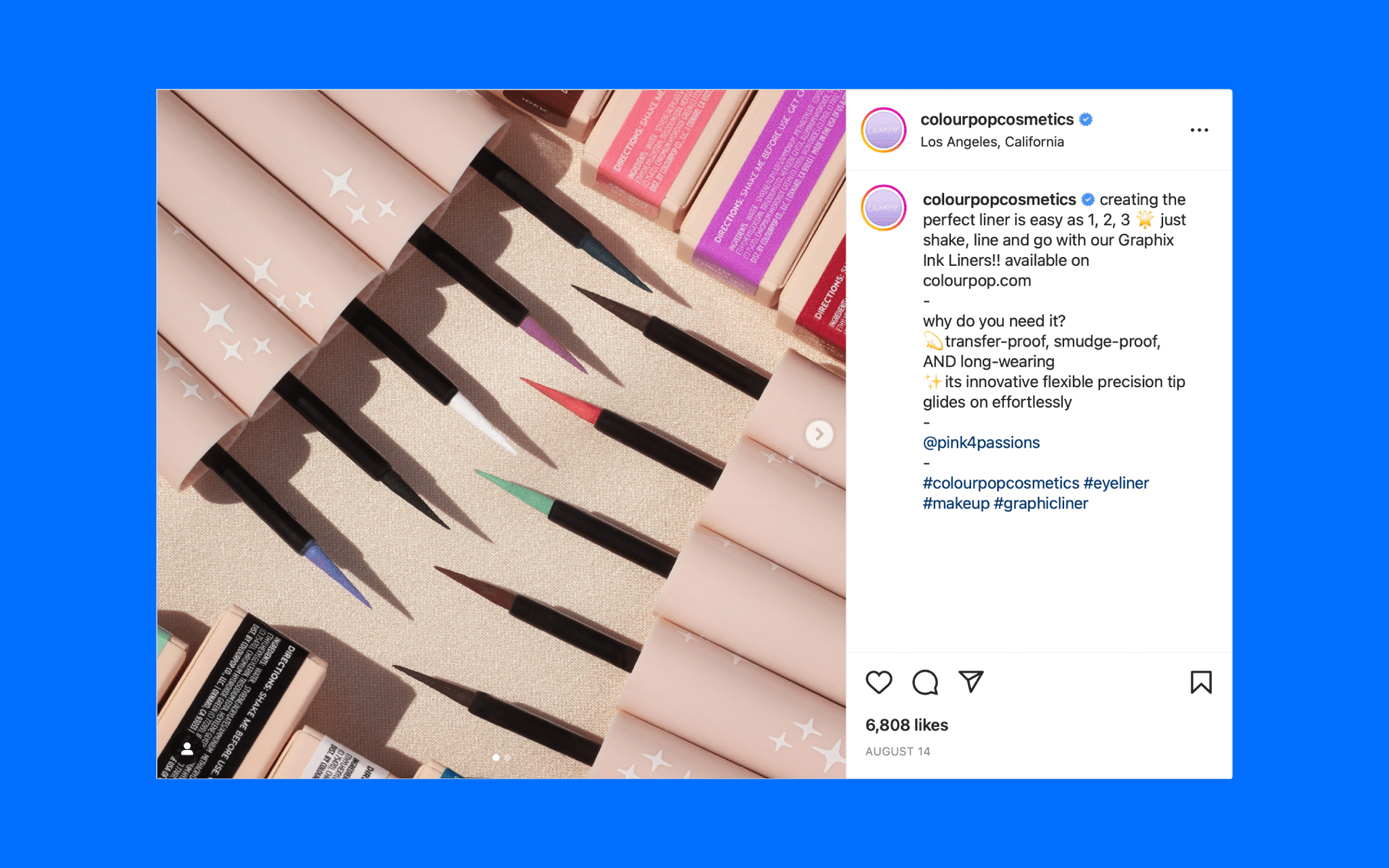
Look at how colourpop cosmetics consistently highlights the key values of the brand in their captions:
Remember to:
- Use language consistently across all channels.
- Match the tone of voice and personality of your target audience.
- Use emojis and other meaningful content when possible.
3. Match your content to the social platform
While it’s important to preserve a consistent image and voice across all channels, it’s also worth remembering different social platforms have their own distinct rules and guidelines. The content you publish on LinkedIn might not be the same as what you produce for Instagram.
Getting to know the social platforms, their algorithms, and how you can translate your unique branding strategy to each environment will be crucial to your long-term success. You might even adjust your content slightly based on the kind of audience segment you’re trying to reach.
For instance, your LinkedIn posts might be focused more on your B2B clients, while your Instagram posts concentrate on a wider audience.
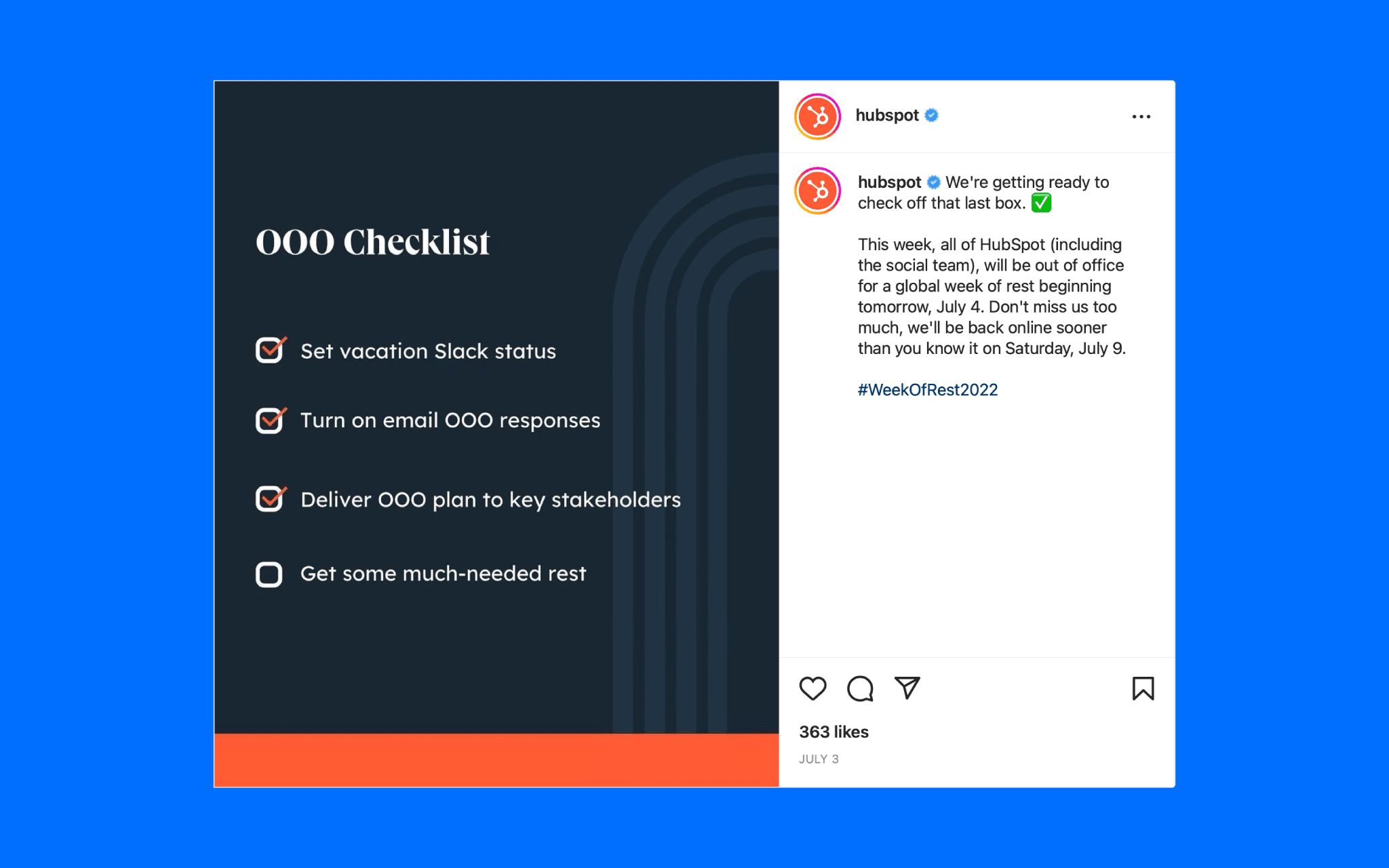
Look at HubSpot’s Instagram channels, for example, the content is much more straightforward and friendly than the posts we see on LinkedIn:
Make sure you:
- Keep on top of the rules and algorithms of each social channel you want to use.
- Keep track of your marketing segments and adjust your content accordingly.
- Consider creating multiple accounts for different segments.
4. Schedule, track and optimize
Just like any great branding strategy, excellent social branding doesn’t happen overnight. You’ll need to commit to consistently posting new content, and tracking the responses of your target audience, to ensure you’re making the right impression.
Since thriving on social platforms requires consistent activity, you’ll need to ensure you’re promoting your brand as frequently as possible. This could mean it’s a good idea to schedule your posts with online social media automation tools.
Just make sure you don’t automate too much, as you’ll still want to preserve a human connection with your audience.
Slack has a “Slack Status” twitter, where it automatically keeps users up to date on outages and issues, as well as a broader “Slack HQ” page for human connections.
When optimizing your social branding:
- Consider the activity times of your audience on each channel carefully.
- Pay attention to when customers are most engaged, and schedule posts for those moments.
- Update and optimize your content based on what you learn about your audience.
Like what you’re reading?
We write about branding when we have something worth saying. No schedule. Just substance.
Examples of social branding in action
If you’re still struggling with the question, “what is social branding?” you might find it helpful to look at some of the social branding examples available on the web today.
Social media branding examples from major brands can offer an excellent insight into how companies can preserve the right identity across multiple channels.
Here are some great companies to learn from:
1. Innocent
Innocent maintains a playful and friendly attitude across all channels, ensuring customers consistently see their youthful and fun brand identity. However, the company is also careful to take advantage of the unique features each social channel can offer.
While on Twitter, the company keeps posts short and sweet, on Instagram, it uses carousels and videos to share useful tips:

2. Dollar Shave Club
Best known for its humorous and direct tone of voice, Dollar Shave Club ensures its content remains consistent on every social channel.
Rather than simply posting the same content across every platform, the brand adapts its posts to suit the needs of different target audiences, and the trends of social platforms.
3. Shopify
Shopify embraces the potential of social media to connect with a wider range of customers across different channels. Rather than just having a single account on each platform where it might reach its audience, Shopify creates different accounts for different needs.
For instance, there’s a Shopify Partner Twitter account, as well as a Shopify Support account for people who need extra help.

Mastering branding for social media
Hopefully, you now have a clearer answer to the question, “what is social branding?” Essentially, it’s simply a method of ensuring your brand remains consistent and streamlined across every channel you use to connect with your target audience.
As social media becomes ever-more crucial to the process of reaching your target audience, it’s important to ensure your social media strategy aligns with your brand. The more consistent your image across every channel, the more likely you are to connect with your customers.
Fabrik: A branding agency for our times.

The agency behind the thinking
Fabrik is a branding consultancy. We help businesses navigate change, build clarity, and create brands that work. Got a challenge? Let’s talk.
Related insights
Connected thinking. Different angles.
The same productive uncertainty.

How much do you know about umbrella branding? While you might have a basic idea of what this term means, the concept of an “umbrella brand” is frequently misunderstood, and even confused with other concepts, like the “house of brands”. So, what is an umbrella brand? An umbrella brand is a kind of brand architecture […]

What is a branding coach, and how do you know if it’s the right role for you? If you have a passion for helping companies grow, and you know what it takes to develop a successful company, then you may have a future as a brand coach. The question is, what does this career involve? […]

Wondering how to start a coffee brand? Brewing up your own business with a delicious coffee line or distribution model could be an excellent way to thrive in today’s competitive world. Around 64% of Americans say they drink coffee daily, and demand for coffee is constantly growing. At present, the coffee market is expected to […]

What is a brand consultant, and is it something your company should be investing in? Successfully branding a company is a complicated and time-consuming process. As many companies quickly discover, there are a lot of factors involved bringing your brand to life. You’ll need to define an eye-catching visual identity for your products and services, […]

If you have creative skills and an entrepreneurial spirit, starting a graphic design business could be an incredible way to transform your future. A graphic design business can be a profitable endeavor with the right planning and strategy. After all, there are countless companies constantly searching for assistance with everything from logo creation to web […]

If you’re wondering how to become a brand consultant, you probably have a passion for helping companies to discover and implement their brand identities. While this career path is still relatively new to the branding world, it’s gaining significant attention as more companies seek help in making their brands as lucrative and effective as possible. […]
Learning how to start your own wine brand could be the perfect way to transform your love of wine into a lucrative earning opportunity. Wine is one of the most popular drinks in the world, with endless varieties to choose from, and a fantastic global audience. According to recent studies, the wine market was valued […]

Learning how to start a liquor brand could be an excellent way for any entrepreneur to take advantage of a thriving market. After all, with so much variety to offer, and a target audience which spans across the world, the opportunity for sales is phenomenal. The liquor market is one of the most versatile, and […]

What services does a branding agency provide? It’s a reasonable question to ask if you’re thinking of getting expert help with the process of bringing your brand to life. After all, branding is rarely as simple as it seems on the surface, requiring significant experience and expertise. Often, when companies think about branding, they consider […]

What is product branding? Today, we’re going to provide you with the complete product branding definition, and help you to discover what it really means to build an identity for a product. You’ve heard of branding for companies, perhaps even personal branding – but what does it mean to create a brand specifically for a […]

What is brand licensing, and is it something you should consider for your company? If you’re looking for a rapid way to increase brand awareness and sales opportunities, brand licensing could be a valuable tool. Perfect for helping companies to scale, a brand licensing strategy extends your products and services to new landscapes through partnerships. […]

Learning how to start a beauty business from scratch can seem like a daunting prospect for beginners. However, it’s also a fantastic way to transform your passions into a new source of income and growth. After all, the beauty industry is one of the most lucrative, and fastest-growing sectors around. By 2025, the value of […]