
Your mission, if you choose to accept it: Brand aims and objectives

No matter how big or small your business might be, successful planning and strategy can pave the way to a more profitable, lucrative brand.
When you first established your organisation, you probably came up with a “vision” for your future, based on what you want to accomplish within your target market. While it might be tempting to simply “go with your gut”, in pursuit of those goals, that’s rarely a conducive long-term plan.
While your vision dictates where you want your brand to be a year, three years, or even a decade from now, your brand aims, and objectives are the roadmap that takes you from point A to B. Learning how to create aims and objectives that work for your company now, could help you to avoid confusion and inconsistency later.
The good news? Defining targets or aspirations for your brand doesn’t have to be complicated. All you need is a little discipline and a good understanding of where you want to go.
Here’s how you can establish your brand aims and objectives:

Aims vs objectives: The differences between aims and objectives
To some, aims and objectives seem like wishful thinking. However, the truth is that well-thought-out intentions can create a compass for your brand. Having clearly defined missions in mind can:
- Help your brand grow.
- Improve brand advocacy.
- Simplify future branding strategies.
Before you start writing up your targets, you need to know the differences between aims and objectives.
In the marketing and business world, the aims vs objectives debate is common. While definitions vary, an “aim” is often defined as the target of any activity. It’s your goal, or what you want to accomplish when everything is said and done. On the other hand, an “objective” is the path that leads you towards your aim.
One of the biggest differences between aims and objectives is the specificity. An objective is as specific as possible because it needs to actively transform into a roadmap for a brand. On the other hand, an aim can be as simple or straightforward as it needs to be.
For instance, your “aim” might be that you want to increase the sales of your company. On the other hand, the objective would be to improve sales by 10% in the next two years by improving your marketing media.
Before you can even begin to distinguish your aims vs objectives, you need to know where your business needs the most work. While you might have an idea of what you need to do already, reviewing your brand can be a helpful first step. For example:
- Perform a SWOT analysis: Evaluate your company’s strengths, weaknesses, opportunities, and threats.
- Do your research: Start your homework and learn as much as you can about the market, the industry, and even the trends your customers are seeing right now.
- Set metrics or KPIs: Make sure you can measure your performance in aims and objectives with metrics. If your aim is to improve brand awareness, and your objective is to accomplish this through social media, you might measure likes and shares on your social pages.

Common aims and objectives for a growing business
Every company is different. That means that the aims and objectives you set for your brand may be a world apart from the ones set by competing companies.
Ultimately, your ambitions don’t need to be set in stone, but they should provide a clearly-defined direction for your business to move in. Some of the most common aims and objectives for brands to consider include:
Aim: Establishing yourself in the industry – Objective: Boost brand awareness
Establishing yourself in this saturated marketplace is incredibly difficult – particularly when there are so many valuable brands already out there. Many new companies find it difficult to be heard above the noise of a crowded marketplace, which is why brand awareness is such a common aim for growing organisations.
There are plenty of ways that you can establish yourself in today’s digital world, from content marketing to social media. However, before you begin, make sure that you have a solid brand identity in place, along with all the resources you might need, like a logo, and an effective website.
Aim: Earn market share – Objective: Improve recognition
While it’s good to know that people are actively seeing your brand, you want to make sure that they feel compelled to remember and interact with you too. Top of mind awareness and recognition will help to ensure that your customers recall your logo whenever they think of a target word. Just think about the connection Starbucks has with “coffee” for example.
A good marketing plan, combined with a strong tone of voice that represents your brand’s identity is a great way to grow recognition.
Aim: Be more memorable – Objective: Improve brand image
Memorable brands have a personality or “image” that makes them easy to recognise in a crowded marketplace. If your aim is to become one of the best-known and loved companies in London, then your objective may be to improve your reputation.
From the moment your company launches, it’s important to focus on developing goodwill in the marketplace. Ensure that you devote plenty of time and effort to demonstrating your values in an authentic, transparent way. This will help to build affinity with your target audience.
Aim: Improve sales – Objective: Establish brand loyalty
If you want to improve your sales not just to new customers, but long-term clients too, then brand loyalty is crucial. Brand loyalty occurs when you convince your customers that your company is the best on the market. You can establish this by using a combination of great advertising tactics, and exceptional loyalty schemes to keep customers on your side.
Remember, great brand loyalty begins with a thorough understanding of your target market. Do your research and create buyer and user personas before you launch your marketing campaigns.
Aim: Enhance engagement with ambassadors – Objective: Build a community
Finally, engagement is an incredible thing for a growing company. The more your business interacts with its intended audience, the more solid your relationships with customers will become. These are the relationships that will convince people to not only keep buying from your brand, but they can also transform into advocacy over time too.
If you want engaged customers to become ambassadors for your company, then you need to create a community around your business. A great way to do this is with social media marketing and campaigns that show off the “human” side of your company. For instance, use Instagram to show your followers how you contributed to a recent charity event. Share links to relevant stories on Twitter. Respond to customer concerns on Facebook. The opportunities are endless.
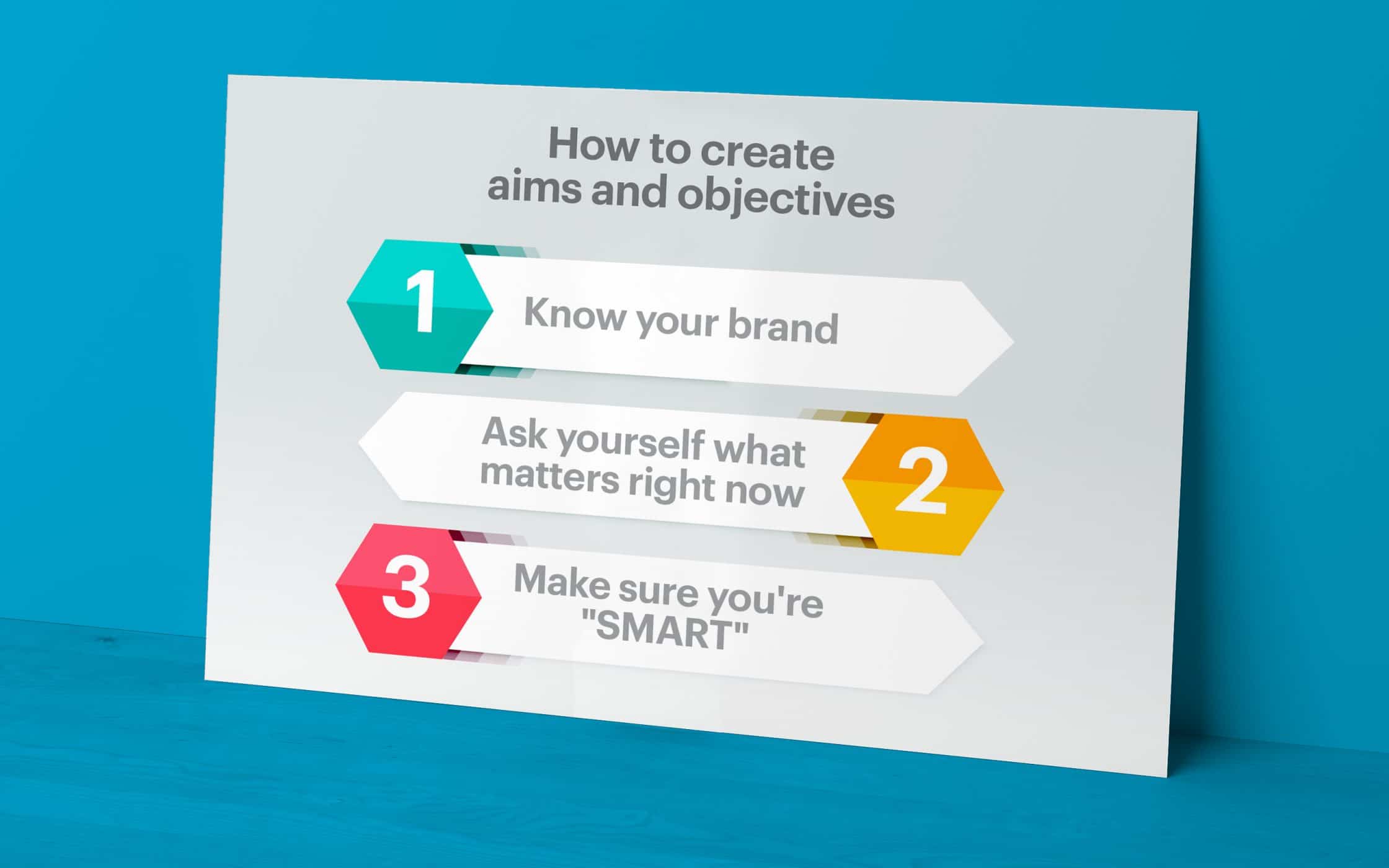
Planning your path: How to create aims and objectives
So, you know that aims and objectives are important, but how do you choose the ones that are right for your business?
Generally, it’s a good idea to focus on one set of aims and objectives at a time, as this can help you to avoid becoming overwhelmed or confused in your quest for success. While some aims go together naturally, like improving your social media presence and enhancing engagement, make sure that you don’t put too much on your plate.
The following tips will help you discover how to create aims and objectives that benefit your brand…
1. Know your brand
You can’t choose aims and objectives for your company without a deep understanding of your brand, and a clear view of the future.
Your brand is the thing that makes your company unique. While a brand includes things like your name, your logo, and even your website – it’s more than that. It’s the reputation that you establish for your company and the ideas that come to mind when people see your products.
Knowing the purpose of your brand, its identity, and even your business core competencies will make it easier to set aims and objectives that you can realistically achieve.
2. Ask yourself what matters right now
The great thing about creating aims and objectives for your company is that they don’t have to last a lifetime. Your goals can evolve and change as your business transforms. What’s more, as you accomplish certain aims, you’ll find that new objectives naturally come to the forefront.
Ask yourself what’s most important for your business at this moment. For instance, if you’re a startup, then you might need to start by looking at ways to build awareness and recognition. On the other hand, if you’ve been in the industry for a while and you need to boost sales, an aim focused on “engagement” and customer satisfaction could be useful for you.
3. Make sure you’re “SMART”
Writing business aims and objectives is a lot like choosing end-goals and visions for your company. With that in mind, it’s important to be “SMART” about your objectives. Remember, while your aims can be a little vaguer, objectives must be:
- Specific: Make sure that your objectives are clear and precise.
- Measurable: Can you track your success with metrics? For example, social media engagement can be tracked by looking at shares and comments.
- Achievable: Are your objectives attainable? If you’re just starting a new business, you might not be able to get 90% of the market share in the next two years.
- Realistic: Do you have the resources and support you need to realise your aims?
- Time-specific: When are you going to accomplish your objectives by?
4. Know your timeline
Objectives are much easier to accomplish when you have a plan of action with a specific timeline. If your ultimate aim is to become the company best known for selling accounting software in London, then your initial objective might be to raise recognition for your brand. You could do this by:
- Writing and marketing a story for your company in the next 6 months.
- Designing a social media plan and measuring engagement for the next 12 months.
- Setting up a content marketing strategy for the next 2 years.
- Planning to review your success at the end of a two-year period.
Top tip: Try using OKRs
A great way to make tracking your objectives and achieving your aims easier is to use the OKR system. Otherwise known as “Objectives and Key Results”, this strategy is a favourite of Google for strategically achieving success.
Essentially, it involves defining your objectives (what you hope to accomplish), then defining what your key results will be when you’re heading towards your aim. Let’s say your objective is to: “Raise awareness for our accounting product”, then your key results might be:
- Improve engagement by 10%.
- Increase traffic by 20% in 2 years.
- Earn at least 100 reviews in the next 3 months.
Like what you’re reading?
We write about branding when we have something worth saying. No schedule. Just substance.
Inspiration for the road: Aims and objectives examples
Aims and objectives can be difficult to understand – particularly when you’re dealing with the stress of starting a new business. Sometimes, the easiest way to get inspiration for your own company is to look at other brands and evaluate the ambitions they use to guide their employees towards success.
Here are just a few aims and objectives examples, from some of the most powerful and well-known organisations in the world.
1. McDonald’s aims and objectives
You don’t have to be a fast food expert to learn from McDonald’s. This burger giant has managed to transform the way we eat, and earn the love of an entire planet, thanks to careful branding, great marketing, and even some subtle changes over the years.

The McDonald’s aims and objectives are centred on delivering “high-quality food” to their customers. This is an aspiration that the company began to focus on more heavily in recent years when questions about the quality of their food began to reduce their market share.
Additionally, McDonald’s also appeals to ethically-focused millennial companies by sharing aims to do with satisfaction for their 91,500 employees.
2. Oxfam aims and objectives
Recent negative publicity aside, Oxfam has always been known for their dedication to the community, and their efforts to make the world a better place. The aims and objectives of Oxfam help to build love and respect for the brand.
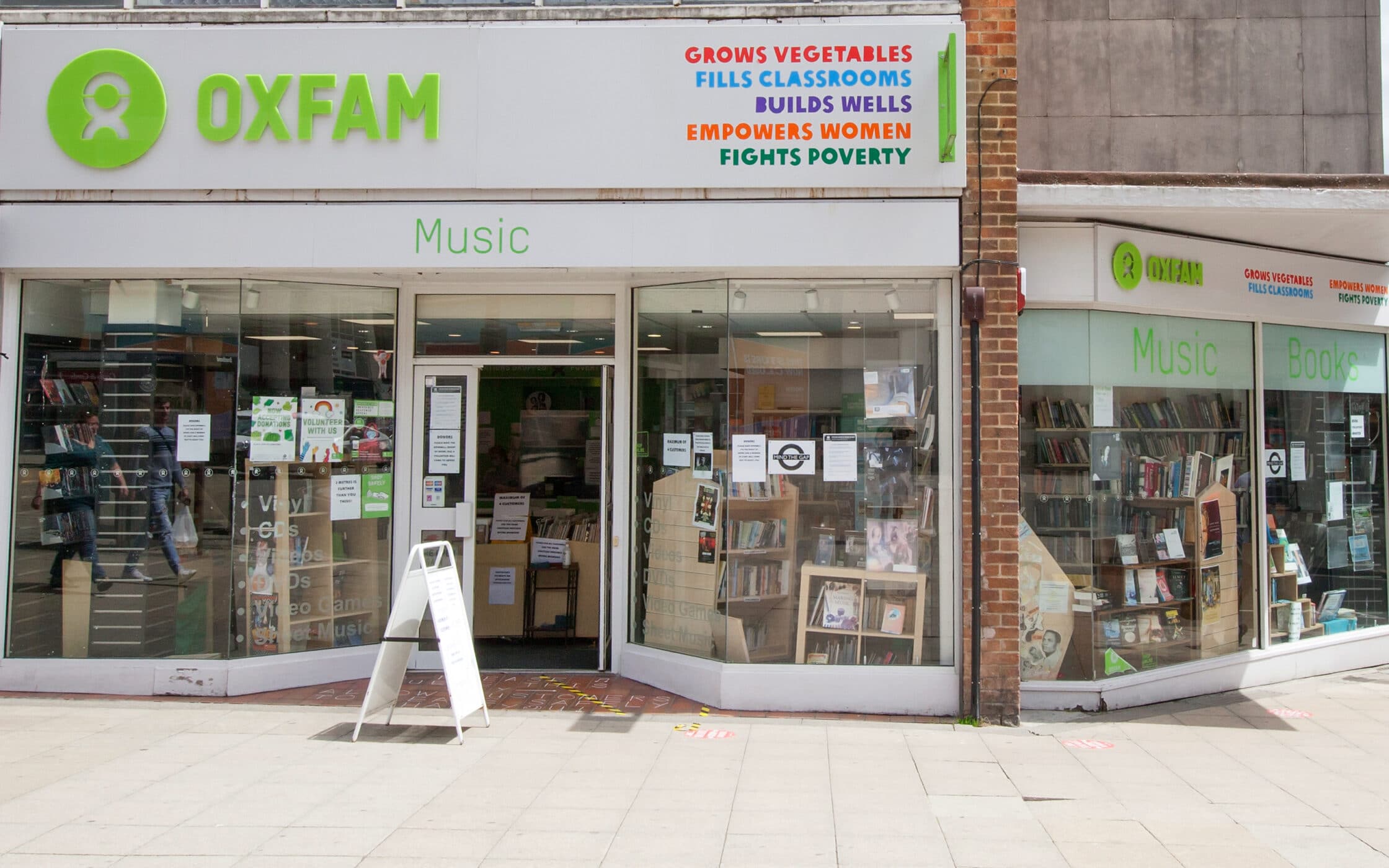
For this non-profit company, the focus is on changing lives and tackling poverty wherever it may strike. Oxfam highlights the fact that they’re working towards an ultimate vision of peace on earth and freedom for all. They’re working towards this ambition with aims and objectives like:
- Empowering people to claim better lifestyle.
- Safeguarding global food supplies.
- Ensuring a more balanced share of natural resources.
3. Sainsbury’s aims and objectives
Sainsbury’s aren’t just well-known for their exceptional Christmas commercials. Since they originally opened their doors in 1869, the company has been working towards a future where customers can enjoy higher-quality goods for lower prices.
The Sainsbury’s business strategy involves many aims and objectives intended to make the world a better place. For instance, they aim to reduce CO2 emissions, eliminate excess waste, and keep their environmental impact to a minimum.
4. Tesco aims and objectives
The Tesco aims and objectives are simple, but effective. One of the UK’s favourite supermarkets, Tesco dreams of a future where people can have an easier shopping experience. Their core purpose is to serve “Britain’s shoppers a little better every day”.
To achieve that lofty goal, Tesco consistently engages in price-matching strategies to help reduce the cost of food and other essential supplies. They also have a loyalty programme which constantly rewards shoppers for staying with them.
5. Apple aims and objectives
When it comes to talking about truly life-changing brands, it seems that Apple is always on the roster of companies to mention. Their aims involve becoming the most innovative and ground-breaking technology company in the world. However, they want to do this while still maintaining competitive price points for their customers.

Apple is pushing forward towards their purpose with aims and objectives like:
- Constantly creating new and ground-breaking products.
- Setting the pace for future technology.
- Making products available in as many retail channels as possible.
Tips for achieving your aims and objectives
Once your aims and objectives are set, you may need a little help achieving your goals. After all, making your business dreams come true might start with deciding which direction you want your company to go in, but you need to follow that vision up with a solid strategy and plenty of dedication too.
While the road to success will differ depending on the unique aspirations your company has, the following tips could help you to build a more powerful brand:
1. Be committed
Aims and objectives require constant commitment and dedication. If you’re struggling to feel motivated about a goal, then you might need to make some changes to your plan. A good way to stay committed is to focus on the outcomes you hope to achieve by following your pre-established path. For instance, remember that running a social media campaign might be hard work, but you’ll end up with happier, more dedicated customers at the end of the day.

2. Track your progress
After you’ve learned the difference between aims and objectives it can be helpful to put them both down on paper. This ensures you can keep your eye on the prize. However, remember that you should be tracking your progress too, by looking at metrics relevant to your aims, and measuring the KPIs of your objectives.
If things aren’t going entirely according to plan, you should be willing to revisit and revise your expectations. It’s okay to make some modifications if you keep the needs of your brand in mind.
3. Break things down
Because aims are often very vague, they can also be large and ambitious too. For instance, your over-arching goal might be that you want to become the best creative agency in London. However, sometimes the biggest goals can also be the most overwhelming. With that in mind, try to make your goals more “achievable” by breaking them down.
Set objectives that are more realistic and time-focused. Improving your sales is impossible if you don’t know how to improve awareness for your brand. Plan to increase your recognition levels by at least 50% over the next three years.
4. Celebrate your successes
Although goals and ambitions are a necessary part of developing a successful business, they’re also a lot of hard work. It’s hard to stay motivated towards your goals if you don’t celebrate the things you achieve along the way.
If your aim is to get more attention on social media, you don’t have to wait until you’re the most influential company in the industry to give yourself a pat on the back. When you achieve your follower goal of 3000 people on Instagram, reward yourself. The next time you grab an influencer’s attention, reward yourself again. The more you celebrate, the more your confidence and commitment will begin to build.

Setting aims and objectives for your business
Launching and maintaining a successful business takes a lot of hard work. In today’s increasingly crowded marketplace, you need a constant plan-of-action to ensure that you don’t stray from the right path.
Aims and objectives will help you to recognise the parts of your business that need the most attention, so you can focus your efforts in the right areas. Additionally, by planning your aims and objectives in advance, you can ensure that you set measurable, short-term goals for the future, that gradually lead you towards your overall vision, and keep you connected to your brand purpose.
Although choosing the right aims and objectives for your brand isn’t always easy, remember that you can access help to support your ambitions. Here at Fabrik, we’re ready to help anyone with an aim to build a stronger, more profitable brand.
What are the aims and objectives that matter most to your company, and how do you plan to accomplish them? Let us know in the comments below or follow us on LinkedIn.
If you enjoyed this article, you might enjoy these too:
— An insiders view on trusting your gut instinct
— When cherished brands become a way of life

The agency behind the thinking
Fabrik is a branding consultancy. We help businesses navigate change, build clarity, and create brands that work. Got a challenge? Let’s talk.